From King DeLarverie to Queen Latifah: Stormé DeLarverie’s Impact on Gender-Bending Fashion

screenshot-storme-delarverie-main.jpg

by Amanda Wicks

Let my mama tell it, I was never going to “catch” a man. She thought I would grow out of my love for wearing oversized clothes and running with my older brothers as I transitioned into young adulthood, but I never did. My image didn’t mesh well with her idea of what a man wants but I had no desire to change. Not only did I abhor the idea of living my life just to appease the male gaze, but my mama was also loud and wrong. 

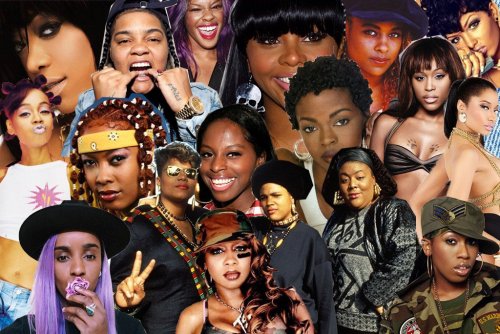
From Janelle Monae tippin’ on the tightrope in her well-tailored pant suits to Aaliyah being everybody’s 90s crush in her oversized Tommy Hilfiger gear, Black tomboys are gender-bending phenoms, defying the feminine-masculine binary. Though this seems normal in Hip-Hop culture, these women occupy a space that had to be carved by somebody, and one of the Black women who set the foundation for people like Missy Elliott, Queen Latifah, TLC, and MC Lyte is the force known as Stormé DeLarverie. 

A quick Google search of DeLarverie will garner countless hits for articles, but they’ll most likely be about her notoriety as the spark that ignited the Stonewall Uprising, the catalyst for the  gay rights movement in the United States. While this is a grand claim to fame, her impact on Black women and fashion is often overlooked because of it. 

Born in 1920s New Orleans to a wealthy white father and a Black mother who was his servant, the soul of jazz was infused into DeLarverie’s life at a very young age. Her life centered a love for entertaining as she wowed crowds doing everything from riding horses for the Ringling Brothers Circus to touring with jazz bands. Even then, while she presented herself as stereotypically feminine, her deep baritone voice both captivated the audience and transcended their understanding of what a woman should be. 

image4.png

by Amanda Wicks

DeLarverie’s world shifted in 1995 when she made her way to New York City and joined the Jewel Box Revue, a female impersonator company,as the only woman and MC. She invigorated the historic Apollo Theater in Harlem night after night and helped cultivate a space where everyone, specifically the LGBTQ community, could be safe and free. The creators of the Jewel Box Revue actually prioritized hiring an all gay staff since the other revues of the time weren’t as “gay-friendly.” They were known for being no-nonsense about homophobia while touring, offering protection to those who simply wanted to enjoy the show. The world outside those doors showed no mercy, however, and DeLarverie had to grapple with that reality. 

In her decision to become the first, and only, drag king in the company, DeLarverie was urged to reconsider. In an interview, she recounts this distinct moment in time when she says, “Somebody told me that I couldn’t do it, [be a drag king], and that I would completely ruin my reputation and that I had enough problems being Black. But I said I didn’t have any problem with it, everybody else did.” Despite pushback, she went on to do whatever the hell she wanted and became the star of the show. 

unnamed (1).jpg

Ironically, though, it wasn’t her masculine attire that garnered negative attention, it was her feminine street clothes. Between the 1940s and 60s, law enforcement drew upon legal codes against costumed dress, otherwise known as “masquerade laws,” to target the LGBTQ community, effectively arresting people for cross-dressing. Sexual deviancy and cross-dressing went hand-in-hand in the eyes of the law and the laws were their way of ridding the streets of “bad” people. DeLarverie was detained twice for dressing as a drag queen, so even when her garb “matched” her gender, she was seen as a threat to social normativity. 

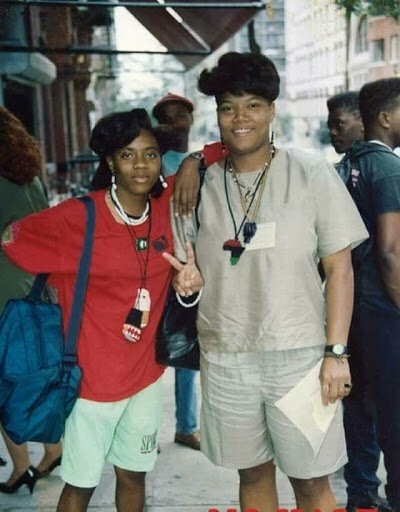
DeLarverie’s entire being represented a life suspended between masculine and feminine. Eventually, she became known for her butch attire. Well-tailored suits from London and men’s black leather jackets were her staples; still, however, the people closest to her asserted that DeLarverie maintained a stereotypically “womanly” presence. Her partner of many years, photographer Diane Arbus, captured one of the most well-known images of DeLarverie eloquently titled “The Lady Who Appears to be a Gentleman.” As noted in Arbus’ biography by Patricia Bosworth, Arbus once wrote, “[Stormé] has consciously experimented [with] her appearance as a man without ever tampering with her nature as a woman.” In this case, DeLarverie’s “womanly” nature was her inclination to help others. She was known by many as a caretaker of sorts, nurturing and protecting those around her.  

unnamed (2).jpg

Though one’s gender and sexual identity is often reduced to visible markers such as physical features and clothing, DeLarverie created a tension between perception and reality by tearing down the false dichotomy of masculine/feminine. Her suave yet tough exterior coupled with her gentle and loving nature subverted all understanding of what it means to be “ladylike.” DeLarverie’s unapologetic presentation of self is a manifestation of the Black feminist radical tradition that reimagines what resistance looks like. When tracing a history of rebellion, grand gestures are most applauded (I’m talking violently overthrowing slavery and leading a whole bus boycott), but it’s the resistance in the everyday that inches us closer to being able to live freely, especially for Black women. 

DeLarverie chipped away at respectability and the patriarchal standards for Black womanhood simply by showing up and showing out in her menswear. Her attire didn’t render her less of a woman, instead, it accentuated her feminine prowess—turning heads with an ethereal beauty while exuding a depth and strength that nourishes and fortifies. On the shoulders of her resilience and courage stands a whole generation of Black women who aren’t afraid to be tomboys. Whether rocking a red lip and a tuxedo, or some lip gloss and baggy jeans, they defy societal norms and still manage to be the baddest. As written in a poem dedicated to DeLarverie, “Sometimes war paint is made by Maybelline, and sometimes the King is a woman.” Gender-bending women in Hip-Hop and beyond can stand a little more firmly in their true selves because King DeLarverie stood firmly in hers. 
Hip-Hop Dynasties: Why Docuseries are Critical Storytelling

Ruff-Ryders-Chronicles.jpg

by Sade Hawthorne

Imagine a world where you had the choice to watch a marathon of compelling historical narrations of what was once the biggest musical acts in the world. In the late 90’s/early 2000s, you could find entertaining yet critical shows that displayed extensive musical archives. Take, for instance, VH1's hit show, Behind the Music. Airing from 1997 to 2014, the TV series allowed fans to take a deep dive into the careers of our favorite artists, across all genres. Many of the stories featured on the show were spoken of for the first time. Case in point, the Mad Hatter of Rap, Busta Rhymes. During his episode he disclosed his personal truths, like battling his way to mainstream recognition while dealing with the tragic loss of his son, among other setbacks. How else would we find intimate details about the likes of Busta Rhymes and TLC from their own point of view back then? When we think about Hip-Hop’s golden era, we usually pinpoint the mid-1980s into the 1990s. Hip-Hop docuseries are critical storytelling not only for the continued progression of the genre, but also for the community, especially as we look to an unpredictable future. 

Looking into a well-known episode, VH1 aired a telling of the iconic trio from those that knew them best for the world to see. On April 18, 1998, insights shared from Lisa 'Left Eye' Lopes, Rozonda 'Chilli' Thomas and, Tionne 'T-Boz' Watkins allowed those to connect with the artists on a deeper level in just 60 minutes. Not to mention the unforgettable moment where Left Eye opens up about the group's financial woes, "how can a group sell 10 million records and be broke?"

Alongside Behind the Music came The Greatest, another juggernaut curated by VH1 where each episode featured a countdown of songs, albums, moments, or musicians. A mini-documentary in its own right, each countdown was coupled with commentary from entertainment industry figures telling a quick story or a fascinating fact. A prime example would be the 40 Greatest Hip-Hop Songs of the 90s episode, which premiered in December 2012. This episode introduced a fair amount of new music to their audience from the likes of Big Pun and Arrested Development, especially for those that did not have the privilege to enjoy the music at its peak. Personally hearing "Who you trying to get crazy with ése/Don't you know I'm loco?" for the first time on this program was the reason why I went online and downloaded dozens of songs (with potential viruses attached). Outside of familial influences, shows like these were the catalyst for further research in Hip-Hop going as far back as the 1970s.

Fast forward almost a decade, and these documentaries and television series have diminished. Thus, imagine my excitement when I saw BET's promotional ad for a new docuseries highlighting No Limit Records. As someone who grew up in the South and watched BET religiously, hearing "Make 'Em Say Ugh" and "Ruff Ryders' Anthem" brings back a sense of home. From the moment I heard the news, I was hooked. Listening to Percy Miller, aka Master P, talk about his journey during the 5-part docuseries was nothing short of inspirational. Being a fan of Hip-Hop is one thing, but being able to receive valuable life lessons from these impressive feats only makes the music sound that much better.

Talking to Billboard, Master P expressed that he "wants to continue to inspire and educate my fans and introduce my journey to a new generation," and he did exactly that. The opportunity to get a more in-depth look from artists such as Silkk The Shocker, Mia X, and Mystikal provided a holistic approach to the 90s dynasty that was No Limit. We always see the glitz and the glam that comes from hard work and dedication, but through these docuseries we’re reminded that artists are regular people like you and I. Whether young or old, there’s a message for anyone wanting to listen. 

Immediately after came the stirring Ruff Ryder chronicles. Unless you live under a rock, you know of DMX. Still, through the installment, we're able to view how the music empire and all of its encompassing artists came to be. With interviews featuring label founders Joaquin "Waah" Dean, Darin "Dee" Dean, and Chivon Dean, the series peeled back the layers back with each defining episode enabling viewers to glimpse what it truly looks like to deal with the ugly side of entertainment. The first lady of Ruff Ryders, Eve, spoke on how she had to grapple with dealing with fame and the burgeoning pressure that eventually led to her leaving the tour early to get her mind right. Then there was DMX, the one to never shy away from difficult conversations, disclosing his continuing fight with mental illness. Regardless of their struggles, Ruff Ryders went on to create unforgettable history.

The recurring theme of both of these docuseries was family, and when you really think about it, Hip-Hop at its nucleus is a community that has influenced the lives of many just as a family would. Hip-Hop has as many as six elements according to scholars, the fifth being “knowledge”. So eloquently put, the Kennedy Center elaborated on the fifth element further:

“Hip-Hop’s fifth element of “knowledge” teaches the Hip-Hop community about its identity and ways to express that identity. It places great importance on claiming a stake in one’s own education. “Knowing where YOU come from helps to show YOU where YOU are going,” writes legendary MC KRS-One. “Once you know where you come from you then know what to learn.”

To the artist breaking through the industry or the inquiring kid who wants to learn more about Hip-Hop, these docuseries are needed more than ever. A discussion can and have been made between the quantity and quality of Hip-Hop as of late. There’s a place for it all, but there seems to be a disconnect between what was and what is. To truly advance, how can we continue to break barriers without a sense of direction? If we allow the past to be forgotten, then we are in serious trouble. However, there seems to be brighter days on the horizon. Looking at recent events, we can still see the influence of Hip-Hop's Golden Era making a comeback in all facets in today's music (see 21 Savage's Savage Mode II album cover.) Here's to honoring Hip-Hop history and the progression of the genre one documentary at a time.


How 90’s Black Teen Shows & Hip-Hop Ruled

GettyImages-111158160-1443278759.jpg

by Crystal Bridges

Growing up as a young preacher’s kid in the late 90’s and early 2000’s, I had no idea that any music for Black people existed beyond the gospel and oldies R&B my parents raised me on. One of my earliest encounters with Hip-Hop culture came when I watched the Sister, Sister episode of Mya and Blackstreet performing “Take Me There.” While the song technically falls into the R&B category, it’s charged with the same uptempo, beat-knocking rhythm that captivated me and so many other Hip-Hop heads at the time. When Netflix became the streaming home of classic Black teen shows like Moesha and Sister, Sister this past September, it reminded me of a time when Black teen shows were deeply intertwined with Hip-Hop. Watching cool, stylish and relatable Black characters embrace a culture specifically for us provided some semblance of self love and pride in my Blackness as a kid. The Hip-Hop theme songs, show scores, musical guest stars and performances and often the storylines themselves set the stage for the consumption of Hip-Hop music with millennials and the world. It was these Black teen shows of the 90’s that celebrated and embraced the culture in a fresh way that has yet to be duplicated.

Many Black teen show theme songs of the 90’s followed the classic Hip-Hop song formula: rapping and drums, a sampled song or baseline, a synthesizer. etc. Kenan and Kel’s intro performed by Coolio is the first to come to mind, with the rapper spitting rhymes about the pair’s schemes while reminding kids to tell their “homeboys and homegirls” to watch the show over a synthesized beat. Although All That didn’t have an all Black cast, the show’s diverse cast and content made TLC’s theme song a perfect fit. The R&B/Hip-Hop group’s use of the catchy phrase “all of that” became an indispensable part of the show’s identity, and a quick shout “oh oh oh” in a room full of people will surely be followed by the harmonization of “this is all that.” And I would be remiss to not mention The Fresh Prince of Bel Air theme song, the timeless “story all about how” rapper Will Smith’s eponymous character of the same name’s life changed, just as it did off of the small screen by charting the course for rappers in television sitcoms.

The theme songs weren’t the only pillar of Hip-Hop celebration on television. Moesha and Sister, Sister were both vocal about their characters’ love for Hip-Hop culture, made evident by the guest appearances from musicians-either as themselves or written in as a part of the cast. Appearances by artists like Lil Kim, Master P, Kid of Kid N Play, Bow Wow, Mc Lyte, and more, affirmed Hip-Hop as both a cultural powerhouse and pop culture period. And while many musical acts did indeed perform, they were also often characters with plot points that added to the drama and hilarity that ensued during the show.

After the 90’s the 2000’s saw a decline in Black television shows, as a result of the 2007 writer’s strike, the WB and UPN merger that led to the cancellation of many of our Black primetime favorites, and a general deprioritization of Black-centric sitcom content overall. it seemed that networks looked at Black teen shows and the Hip-Hop culture pulsating through them as a passing fad instead of the rich, resilient and ever-evolving culture they represented. With the inception of the CW network, television programming on the CW and Fox leaned back into shows that catered to mainstream, white audiences. In 2018, Sesali Bowen interviewed Kenan & Kel and Sister, Sister producer and writer Kim Bass, who said:

“Black teens are just like all other teens except how and where they are not. And how and where they are not, oftentimes, has to do more with perception, pride, and placement than any particular penchant for any particular programming.”

According to Bowen, companies are less concerned with delivering Black shows because “they aren't revolutionary or progressive to a generation of young people who have grown up watching these programs in syndication.” She says that Black teen stories being everyone's stories is no longer a new concept, affirming the aforementioned statement that Hip-Hop culture and more broadly Black culture are popular culture. As a result, while more calls can and will be made for more diverse representation in television, “diversity” is no longer predicated on casting when every character, no matter who they are, is given the space to occupy and perform our culture.

One could describe the introduction of shows like Insecure and Atlanta to our screens as a renaissance for Black people on television, and the same could be said of shows aimed at younger audiences such as Grownish and All American, whose incorporation of artists directly from the Hip-Hop culture like Diggy Simmons and Coop’s character rapping alongside a Hip-Hop score, respectively, incorporate the culture into the shows in a way that is somewhat reminiscent of televisions shows of the past. However most examples are far and few between, and the cancellation of The Get Down represents yet. another loss of the representation of Hip-Hop culture through Black characters. Lauren Cramer notes in “A Hip-Hop Joint” that:

Blackness and Hip-Hop exist in a recursive loop: Blackness generates the spatial organization of Hip-Hop and Hip-Hop is so racially charged that it produces blackness. As a result, Hip-Hop images can serve as the site for unexpected encounters with Blackness—specifically, visualizing Blackness in spaces that are not occupied by actual Black bodies. 

Therefore, the same Hip-Hop theme songs, show scores, musical guest stars and performances and storylines that once seemed to belong exclusively to Black people can. now present across all races and ethnicities. A quick scroll through your favorite streaming services or television channels will show you non-Black characters rapping and performing parts of Hip-Hop culture. Thus, we might never get a time as golden as the 90’s again. Thankfully, streaming services and video archives allow us to look to those shows and reminisce. And I personally hope that a writer, directors and producer will be inspired to use those Black teen shows to tell more stories that show the evolution of Hip-Hop and its ever present role in Black teen life.

Social Change, as Told Through Mics and Presented on Television

hiphoptv.jpg

by Elle McKenzie

Since the advent of television, the key issue associated with the medium has been representation. In a #RepresentationMatters study, as reported this past September by USA Today, 86% of Black Americans still yearn to see our culture told on both the silver and small screens. Let us rewind to the 1950s — the “Golden Age of Television” as they call it — when Black people were portrayed with large, red lips, wide noses, overly-exaggerated coarse hair, and more often than not, confined to subservient positions. This deliberate degradation at the hands of white folks forced our Black ancestors to struggle with telling our own stories, beliefs, opinions and identities. But make no mistake, though a ploy to cement the unwritten laws of the Jim Crow era, television also proved to be a strategic tactic for Black people to reclaim the power that we innately possess. The timely birth of Hip-Hop, conceived stylistically through the poetic-sultry sounds of bebop jazz and rhythm & blues, presented the visual awakening for artists to convey our stories in a positive (and televised) light.

The political radicals saw overwhelming whiteness in institutions of power and fought for multiculturalism and diversity. I mean, damn, the 2016-17 tv season was oversaturated with white showrunners — and a great majority of these gatekeepers were white, cis men. I think we can speculate what the percentage was at the onslaught televisions began to enter the American home. Similarly, the cultural radicals saw an ocean of negative images and tried to reverse the tide with their own visions. When Dr. Martin Luther King led thousands of protestors to the steps of the capitol in Montgomery, Alabama, they knew they would be met with force. And television would capture it all, instilling the notion of an antiquated, injustice time that can no longer be restrained. It’s not far off to imagine the generation of Chuck D and Public Enemy emphatically portraying their rightful, passed-down frustration in the visuals of “Fight The Power.” For the Hip-Hop generation, popular culture became the new frontline of our struggle.

In the 1970s, we began to see The Jeffersons, Good Times, and Soul Train grace Zenith’s televisions (imagine, first wireless remote controls!). Outside of “dy-no-mite” humor and Soul Train lines, we, as a Black culture, were also introduced to the essential, spiritually elevating teachings of Tony Brown’s Black Journal and Petey Greene’s trailblazing, ingenuity for the future of Hip-Hop in Petey’s Greene Washington. Positive illumination was jolting! And from these programs, each episode absorbed, ignited Black people’s will to shed the layers of false, oppressive  societal norms ingrained in our psyche. The Black experience was undergoing a new renaissance, and this time, was televised for the world to consume.

While the victories of the civil rights and Black Power movements had expanded the consciousness of Black people, we had not yet entered the proverbial promised land. Historical representations of Black people in the media, specifically in prime-time television, as poignantly expressed by author and social activist bell hooks, still imposed “stereotypical depictions that reinforce negative perceptions of Black men and women and too often serve as justification for racist behaviors, attitudes, and social practices.” It is important to gauge accurately the level and nature of prejudice and stereotyping of Black people in contemporary society if one is to intervene effectively in these areas. The overall objective, curated by Black artists, was to offer and influence actual self-perceptions among Black people. Black people for self-preservation, Black people for self-expression, Black people for self-affirmation are all, ultimately, the leading battle cries that hone the vanguard for the generating Hip-Hop movement we witness and indulge today.

During the Ronald Regan era, when crack cocaine was irreverently pushed into our communities, MTV burst onto the scene by championing rock and new wave — all by excluding Black artists. Only after Columbia Records reportedly threatened to boycott the young network, in 1983, did MTV begin airing Michael Jackson music videos. Winning and achieving the objective to influence our self-perceptions meant desegregating radio and television. The seismic 1986 arrival of Run DMC kicking down the industry’s doors in unlaced, low top Adidas and bucket hats to their own rendition of “Walk This Way” could not have been more metaphorical. A true cultural reset, to be honest.

While the new political radicals were out in the streets and on the campuses fighting apartheid and racism, Public Enemy and Boogie Down Productions (BDP) provided the soundtrack and repped the new cultural radical forefront. In preparation to emerge from the darkness, Hip-Hop pioneers alike demanded to be heard (and seen) as the expression of a new generation’s definition of Blackness. “Coming to you live!” was more than an introduction we regularly heard from Fab 5 Freddy on Yo! MTV Raps. Rather, transported through the air waves, the visuals of Hip-Hop — bleeding-edge music conceiving the discussion of social implication — offered a much more radical, much more successful voluntary desegregation plan to turn our culture into a weapon of resistance. Through the machines of television, Hip-Hop was our guerilla strike to not only take our message to the media, but also, take over the media with our message.

The rallying “FTP” chant of today’s protests, once eloquently spit through the words of five Niggaz Wit Attitude, resounds the fervor to publicize our political and social message to secure our civil rights and liberation embedded in the Constitution. It’d be wise for white folks to abandon their incessant need to appropriate our culture and revisit the socially-conscious report of Grandmaster Flash before we reach our brink and finally do go over the edge.

Representation in the media is a result of experiential contexts that help people to understand racial identity. These direct experiences, that we live through everyday, demonstrate that racial identity is (and always will) be influential to self. Black people, let us forever remind ourselves that racial socialization involves a transfer of messages about how to adapt to living in a racist society without internalizing how others perceive you. It lays the foundation for the development of identity frames. Personally, when I absorb the visuals of Queen Latifah injecting social change practices of unity or Kendrick Lamar calming my anxiety that we’re gonna be alright, I find myself in tune with the reciprocal deliverance of self- and communal love our political ancestors fought so hard to achieve. By suspending our disbelief and seeing our stories told through the artistry of Black individuals rather than through the lies of preconceived stereotypes, we can continue this change on an unapologetically Black, collective level.

Making "The Cut" On MTV's Hip-Hop Competition Show

screenshot_2017-02-01-00-39-07-1.png

by Charne Graham

The act of cozying up on the couch to watch aspiring superstars perform from the comfort of your home has persisted for nearly 72 years. The Original Amateur Hour, one of the first audition-based music competitions, aired on television in 1948. Hosted by Ted Mack, the televised version of what was originally a radio show featured legendary acts like Pat Boone and a young Gladys Knight, the only Black person on the show at the time. At just 7 years old she charted the course for Black women and Black people as a whole to participate in music competitions on television, a space that would showcase Black talent and shape music television for years to come.

Musical competition shows have dominated television for years. BET’s 106th and Park hosted a segment titled Freestyle Fridays that premiered in 2000, a segment that allowed aspiring, up and coming rappers to battle in front of the audience and three judges. Prior to the NY-based countdown show was another legendary program that happened further uptown, Showtime at the Apollo. Apollo, which aired late Saturday nights from 1987 to 2008, allowed artists to perform for the theater’s crowd, in the hopes that they would receive praise instead of “boos” and being dragged off of the stage by The Sandman.

The timeline of the emergence of Hip-Hop as popular culture and shows that placed the culture at the forefront coincided. But while CBS’s Star Search-the renowned program that featured contestants like Aaliyah and Destiny’s Child-existed as the premiere music competition show, there was not much of a focus on the genre emerging that was shaping the culture at  large. In fact, music competition television went years without a show dedicated to finding the next big superstar artist in Hip-Hop. So while the shows existed as a site for potential stardom, a space to build a relationship with viewers, and the opportunity to find professional guidance and feedback from industry professionals as judges, Hip-Hop was virtually missing from the music competition lineup during primetime.

On September 28th, 1998, the first episode of The Cut premiered on MTV. Airing right after the network’s illustrious music video show, Total Request Live, The Cut set a precedent for music competition shows to come. Hosted by the late rapper of the multi-platinum selling group TLC, Lisa “Left Eye” Lopes brought with her a charisma and quirky supernova style that gave The Cut a unique edge. Not only did she style herself in some of the most innovative fashion, makeup and hairstyles each episode, but she also brought with her a level of honestly and support that could only come from an artist themselves-and a Black woman more specifically. 

The 30-min show consisted of 4 musical acts, with more than half of the featured musicians coming from Hip-Hop or a sub-genre inspired by it. The performances varied from solo to group acts, after which a panel of 3 alternating judges record industry executive professionals and one entertainer-would give scores based on what they would. “hear and see.” The scores were given on a scale of 1-10 and would decide the winner. The person with the highest score at the end of each episode would also advance to the finals. The overall winner of The Cut would receive an undisclosed record deal along with a $5000 sponsored wardrobe and a music video funded by MTV that would be put into Heavy Rotation.

The Cut
introduced the world to a few contestants who later continued to pursue a career in music. R&B singer and songwriter Ne-Yo who then went by his first name Shaff performed in a group called Envy. The third-place winner of The Cut finals singer and dancer Anastacia later got a record deal after the show aired. The grand prize winner of the show was a Bay area Black female rapper and singer by the name of Silk-E, who performed alongside her hype man G-Nut. She impressed the judges so much that the celebrity judge KRS-1 offered her a record deal on the show if she didn’t win. She released her debut album Urban Therapy in 1999.

The Cut made history with MTV being one of the first reality music competition shows airing primetime, with a Black woman host and Hip-Hop at the forefront. Audiences got to see another side of Left Eye outside of being an artist, music industry feedback and backstories. With Hip-Hop artists like KRS-1 as judges, audiences also got to see a Black woman rapper like Silk-E win the competition with a major artist co-sign. Moreover, the show was conceived by a Black woman, Edna Sims-Bruce, who knew that The Cut’s structure was unlike anything that had ever been seen on television: 

The backstories give you a sense of who you're seeing and what they're like outside of the music. Having the judges tell them why they scored something can give the kids and the audience tips on things that can really make a difference in advancing their career. Yes, judging is always about people's opinions, but all of the judges are music-industry professionals.

There was a special kind of care and attention paid to the artists, that one can argue dissipated as more and more shows hit our television screens. 

After the first season of The Cut wrapped, Adam Tyler wanted Left Eye to return as the host. She declined as she was in the midst of working on TLC’s Fanmail album in addition to her solo debut album Supernova, and as a result, the show never returned for a second season. In the new millennium, we were introduced to music competition shows like American Idol, Making the Band, P. Diddy’s Starmaker, The Road to Stardom with Missy Elliott, The Voice and America’s Got Talent. Although it had only one season, The Cut became the very first of many shows that gave us an origin story of the contestants with Hip-Hop and R&B/soul backgrounds along with celebrity judges and hosts. The Black woman-created show opened the doors for Hip-Hop and many other different styles and genres to be featured in primetime television talent competitions, and put one of our most beloved Black women rappers at the helm. On the show, Sims-Bruce told the Star-Bulletin:

I want to teach the kids that the music industry doesn't just consist of a record company and the artist. The artists who judge have been where the contestants are, and a lot of times they're harder judges than the industry representatives because they know what it takes to make it in the music industry.

It's Time To Discuss The Impact of UPN's 'Eve'

p184943_b_h6_sb.jpg

By Njera Perkins

Eve, the Grammy-winning, Philly-bred rapper deemed Ruff Ryders’ First Lady, had already secured her place in Hip-Hop by the early 2000’s as a standout talent. Her skills as an emcee were undisputed – she could outrap many of her male counterparts – and her success manifested in chart-topping singles and platinum albums. A year after her breakout performance in Barbershop, a television opportunity came along that added another layer to her “eve-olution.” Every Monday night on UPN she tapped into another lane on the path of Hollywood success at the height of her music career, bringing her Hip-Hop starpower to the small screen. Her show further cemented what most should have already known: that women in rap didn’t have to compromise themselves, and could exist across professions triumphantly.

On September 15, 2003, the avowed pitbull in a skirt stepped into the world of television and debuted her self-titled sitcom Eve. Originally pitched under the working title The Opposite Sex, the show – which followed the lives of a bubbly Miami fashion designer named Shelly Williams and her group of friends – was the successor to hit series Moesha, with the network looking to capitalize on the starpower of another successful Black woman in music. Shelly – fashion-obsessed and girlier than most – may have appeared to be the complete opposite of the Eve we knew, but the rapper and her character shared a lot of similarities. Both had a true passion for their crafts, fashion design and music, and represented women who rejected the expectations society set up for them. The theme song, performed by Missy Elliott, encapsulates this entirely:

She's the kind of chick who likes to look fly
Can pick up any guy with a slick rap line
Give him the eye, get the keys to the ride
And live the single life, a little teasing on the side
She's the type of chick who likes to wear fly clothes
Who rocks stilettos, but will be ghetto
If anybody knows, let me tell you who knows
Who would spin the cash flow, let the story be told
E-V-E, how you do that?

In spite of the obstacles they each encountered in their careers and personal lives, they were determined to thrive through it all. And thrive they did.

On her debut album, ‘Let There Be Eve...Ruff Ryders' First Lady,’ Eve revealed a vulnerable side of herself rapping about heavy subjects like domestic violence, rape, revenge, love and heartbreak. The same topics manifested in the Eve scripts, with episodes of her show exploring the depths of friendship, gender roles, and the hectic relationships in her character’s love-life that took center stage. It should come as no surprise that the show had incredibly high ratings amongst young Black women, as the sitcom tackled the same issues that existed off-screen.

Outside of Queen Latifah’s role on Living Single - which ended five years prior to the start of Eve - there have been little to no Black women rapper led sitcoms, with the few Black women rappers we would see on tv appearing as cameos or guest performances. Eve’s sitcom carried the torch that declared women in Hip-Hop as multidimensional and capable of obtaining multiple bags, with Brian Josephs of Spin declaring Monday nights on UPN as the place "where Eve transformed from Ruff Ryder to sitcom actress." And transform she did, but she never strayed from the tough, honest, Black woman that was so authentically Philly. This was important, because Black Women in Television: A Short History asserts that creative control over the images of Black women in mass media remained, for decades, in the hands of white men who perpetuated stereotypical representations of Black women as mammies or sapphires. Actresses like Diahann Carroll and Phylicia Rashad came along and helped reshape our narrative on the tv screen, and much like the actresses before her, Eve used her show to combat the the anti-feminist rhetoric that trapped women in Hip-Hop and television since their inception. 

The show was cancelled after three seasons, in a move that Fern Gillespie of The Crisis described as detrimental to the future of Black sitcoms. "Without that opportunity for some of the younger artists to hone and develop their skills, it will potentially have a generational impact,” he wrote. A quick look at the Black actors in network television lineups in the years thereafter - or lack thereof - will confirm this as true. The cancellation was widely accepted as a result of low overall ratings, but a few weeks ago Eve offered up another potential reason for its cancellation to TV One’s Uncensored:

Having my own sitcom was everything. It was pressure, it was fun, it was stressful. It was amazing. I was the youngest at the time, of the cast. And a lot of them were just getting married, just having babies or just buying their first house. I was still going to the club trying to get to set at 9 a.m. Trying to get to a table read, which was—don’t do that, ever.

It took me a minute to figure out that rhythm because I had always been on tour, all my life, pretty much, up until that point. I think for me to offset some of that, I was still trying to hang out at night. Which was not good.

When the show ended, it was definitely heartbreaking because at that time, we had done three seasons and we were family at this point. I do believe a lot of it had to do with the fact that I was trying to straddle both sides of my life, still trying to hold on to kind of hanging out. And I was late a lot. That’s not cool. I do think a lot of it had to do with my actions at that time.

And I do think about it sometimes. When I look back on it, I’m like, wow. I don’t believe in regrets but that is one time in my life where I wish I would have taken it a little more seriously than I did.

Nonetheless, Eve and the actress-rapper were able to rack up several award nominations. Eve was nominated at the 2004 Teen Choice Awards for Choice TV Actress: Comedy while the show earned a nomination for Choice Breakout TV Show that same year. She was nominated for the same award the following year along with two nominations for the Blimp Award for Favorite Television Actress at the 2005 and 2006 Kid's Choice Awards. Moreover, the show earned Eve a 2005 Image Award nomination for Outstanding Actress in a Comedy Series and Outstanding Lead Actress in a Comedy Series at the 2005 BET Awards. Moreover, Eve would go on to land other acting roles, including The Cookout, Barbershop 2, Single Ladies, and most recently becoming a daily fixture on The Talk alongside co-hosts Sheryl Underwood, Sharon Osbourne, former news anchor Julie Chen, and actress Sara Gilbert. 

To this day, Eve is considered a signature sitcom that arrived at a time where Black talent were given the space to exist and more importantly explore television. Eve, becoming a trailblazer in her field, doubled-down on representation as a Black woman in Hip-Hop who broke gender norms inside and outside of the genre. By exploring uncharted territory on behalf of Hip-Hop, Eve was one of many who affirmed Black women in Hip-Hop could exist in and explore all of their interests wholeheartedly. 

Santigold’s Liminal Space within Hip-Hop

Screen Shot 2020-09-22 at 12.29.44 PM.png

by Beza Fekade

Hip-Hop can be fundamentally understood as a resistive cultural production fusing new and old, past and future; merging artforms widely known as sealed off from one another. It foregrounds the necessity for retrieval and repurposing in order to sustain itself. And through Hip-Hop’s constant alterations yields emergent challenges to its style. Santigold, born Santi White, journeys a defiant road that cements her as an initiate of fusion and originality. Without the familiarity of lyricism and word play, she evades Hip-Hop’s customary structure of rhyme, dispositioning her from the women who we deem instrumental in the artform’s expansion. However, with a closer listen and a stretch of time spanning twelve years, we can hear her more clearly in the sounds that have surfaced, post her exalting debut album. On the surface, we find her at the margins of our understanding of Hip-Hop, however as we begin to dig deeper, she seamlessly melds into the very fabric of its innovation. 

In the 2003 text Theorizing Diaspora, Stuart Hall states that cultural identity is a matter of becoming and being, and is not intrinsically defined nor something that already exists; it adheres to critical points of deep and significant difference in order to map the “unstable points of identification, or suture.” For decades, Hip-Hop music has been a global site of cultural formation amongst African-descendant communities to engage in the state of “becoming” and “being.” Santi White is a testament to this cultural ecosystem, molded within Hip-Hop’s reach, and at large the African diaspora. What ensues is an intimate process of cultural identity that equips her to tap into new and unpredictable points of becoming.

 Born in Philadelphia, White grew privy to a variety of genres as a child, such as reggae, jazz, the legendary Fela Kuti, the great soul singers Aretha Franklin and James Brown, and punk artists such as Devo and Siouxsie and the Banshees. In a 2012 interview with Spin Magazine, writer Caryn Ganz shared that White had a dream of becoming a professional musician at the age of 15, but it wasn’t realized until a decade later. Throughout her adolescence she roamed between an all-black school to an all-white girls school, and later, public school to prep academy. Parsing through her early life, she realized the ease of her mobility; she understood that she remained as a constant, the bridge to multiple localities. “I was a connector, because all these different people would never hang out together, but they’d be together with me…That’s what my music does. And that’s what I realized" (Spin Magazine, 2012). Just as Hip-Hop engages in the process of joining two or more things to form a single entity, so did White’s construction of her artistic performance. 

White spent most of her summers working at her father’s law office in downtown Philadelphia where she discovered “fly girls,” the dance troupe on the sketch comedy In Living Color. The ladies would perform hard-hitting choreography to notable hip-hop and R&B records during intermissions and before commercial breaks. White immediately found herself emulating their wardrobe and demeanor.  Here, she engages in Hip-Hop’s production of cultural and aesthetic performance by re-inscribing the appeal of “fly girls.” Although small, it points to a series of sutures in her ever-evolving artistic form.  

After the completion of high school, White attended Wesleyan University and double majored in music and African American studies. She eventually began her musical career as an A&R representative for Epic Records. In 1999, White collaborated with GZA of the Wu-Tang Clan on the titled track of his album Beneath the Surface. The following year she made another collaboration with GZA with “Stay in Line,” featured on the album Legend of the Liquid Sword. Her musical influence began to find footing with Philly rock-soul singer Res, as she co-wrote and produced her debut studio album How I Do. Res’ debut album stands as an early indication of White’s refusal to be categorized, with the project merging pop, Hip-Hop, Rock, and R&B. 

As lead singer of the Philadelphia-based punk rock band Stiffed, White and her bandmembers released the ep Sex Sells (2003) and album Burned Again (2005), incorporating new wave and no wave musical elements. The group soon disbanded leading to White and former bandmate, John Hill, joining forces to begin working on her solo self-titled debut, Santogold (later changed to Santigold due to a lawsuit dispute). Like her work with Stiffed, the album blends sounds of new wave, as well as reggae, dub, punk, electro, Hip-Hop, grime, indie, and more. White’s aim was to create a genre-defying album that blurred sounds and artforms deemed frictional in relation to one another. What culminated was a gaudy no-skip assemblage that positioned her as a spearhead toward dismantling rigid musical genres. 

Ironically, her music became easy pickings for commercialization and pop culture. Santigold’s songs could be heard in Bud Light ads and television shows like Grey’s Anatomy. Conversely, White collaborated with Jay-Z and Kanye West for the record “Brooklyn Go Hard,” which sampled “Shove It” from her album and included an additional verse from the artist. Although White denounced, in 2008, that her music is solely Hip-Hop, the collaboration reinstates the essence of Hip-Hop’s re-mixing while highlighting the dexterity of White’s sound and rebellion

 Dating back twelve years to its release, Santigold still proves as a pivotal shift in Black women’s contributions to performance and music. Subsequent to White’s 2008 release, the ensuing decade brimmed with new, adventurous talent. The likes of Tierra Whack, Rico Nasty, Kari Faux, Leikeli47, and others, altered standards of sound and rhyme. Although listeners may not label her within Hip-Hop’s pantheon, her proclamation of connector reigns true, as evident by the ladies she precedes and comes after. Without realizing, White’s emergence as a rioter of category and sound, cloaks her with intersecting musical styles that inform the interrogation of Hip-Hop music. Her subversion unsettles normative identifiers of genre and challenges the idealistic players that occupy its arena. Like her predecessors, White challenges the implications that race, sexuality, and gender often present in the realm of Hip-Hop and its misogynoiristic habits. She runs from definitive labels and shares in a tradition of deviation; she is as just a part of the past as she is bound to its future. Santi White’s musical entrance created and continues to create a breeding ground for hybridity, rupture, and infinite becoming.


Sources:

Ganz, C. (2012, May 17). Santigold's Killah Instinct. Retrieved August 02, 2020, from https://www.spin.com/2012/05/santigolds-killah-instinct/

Hall, S. (2003) Cultural Identity and Diaspora.  Theorizing Diaspora, Blackwell Publishing.

MC Lyte Made Hip-Hop Take Notice

mc-lyte.jpg

by Sibylla Nash

Before there was Megan, Nicki, or Lil' Kim, there was MC Lyte. 

It was 1988 when Lyte, born Lana Moorer, made Hip-Hop take notice with her debut album Lyte as a Rock. At the time you could count the number of solo women emcees on one hand, and when she came on the scene, she kicked down doors and paved the way as the first woman rapper to drop a solo album. Lyte accomplished a lot of firsts. She was the first Hip-Hop artist to perform at Carnegie Hall, first woman Hip-Hop artist to have a gold single and solo Grammy nomination for her 1993 track “Ruffneck,” and first solo woman rapper to be honored/inducted on VH1’s Hip Hop Honors.

I don’t remember when I first heard her, but I remember how I felt. Emboldened. Empowered.  Ready to kick some…booty or get some. I dare you to listen to “Ruffneck” and not want to bust a move. After being inundated with male rappers' bravado, it was liberating to hear a woman emcee flip the script with her lyrics. She eviscerated the fragile male ego in “Paper Thin.”  Her 1989 single, “Shut the Eff Up (Hoe),” another diss track for her rival Antoinette (in case “10% Dis” didn’t get the point across) let you know she was battle rap-ready. Her distinctive voice, smooth with a punch of bass, head-nodding beats, and lyrical wordplay were hypnotic.  

She was hard, yet owned her femininity, and was unapologetically talented. She was the Mike Tyson of rap; she didn't come to play. Stripped of embellishments with her t-shirts, sweatsuits, and sneakers, she’d knock you out with a lyrical one-two punch. She set the bar for all rappers, with her complex storytelling and lyrics that sometimes straddled political subject matter yet still got the crowd hyped. 

She achieved platinum sales, both domestic and international, with the 1996 singles “Keep On Keeping On” featuring Xscape and “Cold Rock A Party” with Missy Elliott. She has collaborated with ground-breaking artists including Beyonce, Sinead O’Connor, New Kids on the Block, Janet Jackson, Sinbad, Brandy, Missy Elliott, Gerald Levert, Keith Sweat, Johnny Gill, Xscape and Jamie Foxx to name a few.

You get the picture; she's dope.

But before she was MC Lyte she was just a girl with a notebook who loved dancing, acting, theater and chronicling life in Brooklyn as she saw it. She and her mother went to museums and found all sorts of free things to do in the city. Her mother had a friend that worked at one of the theaters.

“I went to a lot of plays. Heard a lot of music. Through a bunch of different relatives, I was introduced to hip hop in Harlem in the late 70s,” remembers Lyte. 

“I Cram to Understand U (Sam),” her first single, was the first song in her rhyme book and put her on the map. It detailed the effects of crack cocaine and how it destroyed a burgeoning relationship.

Her origin story, as told, was one of destiny. Her brothers Giz and Milk Dee of Audio Two had found success with their 1987 hit, “Top Billin’” (still sampled today) on their father’s label, First Priority. They turned to little sis when the time came to release another album.  In reality, DJ Clark Kent (before he was DJ Clark Kent and was just Tony) helped her with a demo of “I Cram to Understand U."

“He was friends with a co-worker of mine who took me to Latin Quarter, [a club in New York City]” says Lyte. “We met there and talked about music and recording. I told him I had a rhyme written, and he had a studio at his house. We recorded ‘I Cram 2 Understand U’ there first. He was extremely supportive through my journey.”

When she was a junior in high school, Eric Cole, who had been a classmate in junior high and was a member of the rap group, The Alliance, took her to audition for First Priority Music because they were looking for a female emcee.

“I can’t remember what time of year it was, but it was cold because it was in Staten Island. I remember the frost over the water taking the ferry over... I auditioned,” she chuckles, “and it worked out.”

After he heard her demo, Nat Robinson, founder of First Priority, remembers thinking, “This girl is a hit, she’s going to blow up. I told Milk, ‘she’s going to take over the female part of the game.’ She was unique, had a raw, powerful voice that just dominated.”

Robinson put her in the studio, and she re-recorded the track with Milk Dee as a producer. 

A former corporate executive and club promoter, Robinson worked his magic pushing the single from his storefront on St. John's in Brooklyn. He plastered the city with stickers on subway cars and phone booths, and stood in front of clubs to give away records. It paid off. 

Lyte stayed true to her Brooklyn roots and included the track, “Kickin’ 4 Brooklyn,” on her debut album: “That's the thing about Brooklyn, they never get enough, Of the rap and the music and all the good stuff.”

Her lyrics were prescient as Brooklyn has consistently gifted us with Hip-Hop legends like Notorious B.I.G., Lil Kim, JAY-Z and so many others. Since Lyte’s debut over 30 years ago, she’s added actress, entrepreneur, and philanthropist to her resume. And she’s never compromised as an artist and keeps her Brooklyn roots close. 

Her firm, Sunni Gyrl, handles production and development of television and film projects. She also manages several artists, performs voice over, and acts.  

“I’m grateful to do what I love,” says Lyte.

Her non-profit, Hip Hop Sisters Foundation, has given away over a million dollars in scholarship funds to young women and men attending college. 

“It’s a beautiful gift from God to be in a position to give!”

Gangsta Boo, The Southern Rap Pioneer

Screen Shot 2020-09-10 at 11.08.57 AM.png

by Precious Fondren

A few weeks ago, following the release of Flo Milli’s Ho, why is you here?, I tweeted, “Women rappers are carrying the year of music on their backs AGAIN.”  The Alabama bred-rapper’s release comes a little over a month after the City Girls’ second album City on Lock.  And as women like Megan Thee Stallion, Cardi B, Mulatto, Flo Milli and so many more continue to use their music  to advocate for sex that centers their pleasures and equity amongst the genders, most of the conversations about the women who influenced them often only center Lil’ Kim, Trina, and Nicki Minaj. 

While the impacts of these women along with Queen Latifah, Foxy Brown, and Mia X are evident, one vital woman from the South played her part in influencing the new rappers with little to no credit: Gangsta Boo.

Born in Memphis, Tennessee, Gangsta Boo-real name Lola Mitchell-was the only woman part of legendary rap group Three 6 Mafia. She made herself known with her hit single “Where Dem Dollas At?” from her debut album Enquiring Minds, and left the group after her second album Both Worlds *69.

So how does her impact manifest in the women of rap today? With her debut album Enquiring Minds, there’s a gloomy trap sound, lyrical content that centers money, sex, and work ethic, and overall braggadocious nature that is seen in many of today’s women rappers, whether consciously or unconsciously. 

Released in 1998, Minds was the soundtrack for many southern Black women looking to find their voice in a rap community that was hell bent on using them as just props in music videos. Although Minds is clustered with plenty of features from her male counterparts, it still manages to pull off the task of sounding uniquely feminine. 

Boo repped for the girls that did everything the boys did. That headstrong ability to be the only woman in rap crews or on songs has endured since Boo’s time with Three 6 Mafia, and there’s no doubt many looked to her for inspiration. 

Before “W.A.P” got politicians’ and men’s panties in a bunch, Gangsta Boo did her part in advocating for pleasurable sex.  On “Suck a little D*ck” featuring Dj Paul and Juicy J, Boo proudly proclaims “Eat a little cat or something” before launching into a lyrical breakdown of her sexual desires.

And as Three 6 Mafia were pioneers in perfecting the trap rhythms and beats that we hear today, it’s important to mention that Boo’s early sound is also prevalent. 

It’s evident that Megan Thee Stallion’s Fever was influenced by the sound of Three 6 Mafia, with Megan even nabbing a couple Juicy J produced songs on the project, but a closer listen to the project nods to Boo's content and sound. 

On “Where Dem Dollas At” Boo asserts her position on money and romance as one that can’t be achieved without the other. Don’t look her way if you don’t have the pockets to match as she is not the type to “to be looking sad and broke.” 

Enquiring Minds isn’t a rap album hell bent on preaching women to respect hypermasculinity, the fragile male ego or respectability politics as a whole. Through song and lyric, Boo was on a mission to insert herself in the bigger conversation of best women rappers.

Gangsta Boo is a pioneer whether given her flowers or not. Her style, cadence, and lyricism have left an enduring and familiar mark on much of today’s women in rap. With Enquiring Minds, the Queen of Memphis challenged all of us to never lose sight of the hustle in our everyday lives. 


Lucille Bogan's Dirty Revolution

lucille.png

by Tarisai Ngangura

I’d like to believe that Lucille Bogan never had bad sex.

That this woman born in Armory, Mississippi—home of languid, sticky Summer nights, and equally humid Winters—knew what made her feel good and was unashamed to expect it. To demand it. A child of Blues and a contemporary of Ma Rainey and Bessie Smith, Bogan is an oft-forgotten but no less remarkable pioneer of the era, notable for making a name for herself as a “dirty” Blues singer. In the after hours, when bars were smoky from cigarettes and the mood hazy with strong liquor and limp inhibitions, Bogan would take the stage and sing you all the way to bed. If you wound up there alone, it was no one’s fault but your own. With Bogan on the mic, lust was inevitable, consent unnegotiable and ecstasy the end goal. I’d really like to believe she never had bad sex.

A laughable amount of articles were published following the release of “WAP,” the Cardi B-helmed anthem featuring Megan Thee Stallion. Political pundits recoiled in conservative shock and disbelief at the ways these two women rappers proclaimed their arousal. Former congressional candidate DeAnna Lorraine tweeted that the song was “disgusting” and “vile,” while GOP candidate James P. Bradley wrote “Cardi B & Megan Thee Stallion are what happens when children are raised without God and without a strong father figure.” The personal offence that listeners took to the song was comical, but also a deeply insidious policing of Black women and their right to assert pleasure, revel in expressing desire, and declare that sex is a regular part of their everyday lives. The outrage made it seem like what the artists did was new; a novel approach to creative expression aligning with the Black feminine. But in the early 19th century, Lucille Bogan was singing about sexual healing long before lyrics could be hashtagged and turned into tongue-in-cheek Instagram captions.  

It was during a 1923 stint in Atlanta that Bogan released some of her vaudeville-inspired songs, including her popular hit  “Pawn Shop Blues,”  known for being a Blues Ballad recorded beyond the genre hubs of Chicago and New York. She would be most prolific in the early 1930s, around the same time that her work became more explicit. It was then that she settled into the type of artistry that let her sing for queer folks, sex workers and the woeful, unsatisfied women. “Tricks Ain’t Walkin No More” is a somber, yet oddly charming track released just as the Great Depression was taking its hold on Americans, destabilizing the middle class and utterly devastating the already marginalized poor and Black. On the single, Bogan is the narrator—a down on her luck sex worker who can’t go about her business because the economic crisis has robbed her of her clientele and forced her to make money in less desirable ways.

“Times done got hard, money done got scarce/Stealin’ an’ robbin’ is goin to take place/ Cos tricks ain’t walkin’, tricks ain’t walkin’ no more.” She sounded desperate but resigned, ready to do what she needed to make it by, but also aware of the deeply trying times ahead. She sang like a woman who knew her world had drastically changed and she either needed to pivot quickly, or be carried away off into complete ruin. Her voice wasn’t as melodic or as powerful as the belting Ma Rainey, but there’s an ease to her delivery, a quiet assurance in her tone and a recognizable comfort with the subject matter. She didn’t sing to be scandalous, but to share what she saw, what she might have lived and what interested her about the needs of people.

B.D. Woman’s Blues,” the B.D. standing for “Bulldagger,” is the kind of hit that turns into a local legend when performed—the type of show where you can remember your location and response at first listen. When I first heard the song I was searching the Internet for archives completely unrelated to music and I came across an audio file with a photo of a Black woman with a wide, almost cheeky smile, wearing a large headwrap. Fast playing piano keys made way for the confidently stated first line: “Comin' a time, B.D. women ain't gonna need no men.” She then goes on to sing, “Oh the way they treat us is a lowdown and dirty sin/B.D. women, you sure can't understand/ B.D. women, you sure can't understand/They got a head like a sweet angel and they walk just like a natural man.” Bogan had no trouble with performing the “obscene” as seen by her turn on the Ma Rainey single, “Shave Em Dry,” proclaiming “I got nipples on my titties big as the end of my thumb/I got somethin' 'tween my legs 'll make a dead man come.” 

Bogan could be as vulgar as the best of them—”Now if fuckin' was the thing/That would take me to heaven/I'd be fuckin' in the studio/Till the clock strike eleven/Oh daddy, daddy shave 'em dry/I would fuck you baby/Honey I'd make you cry,”—hollering and screaming words that would raise eyebrows and garner smirks. She could make you squirm in your seat, for a variety of reasons. “Now your nuts hang down like a damn bell sapper/And your dick stands up like a steeple/Your goddam ass-hole stands open like a church door/And the crabs walks in like people/Ow, shit!”— but she shined best and was most disruptive when she dabbled in subtext. With a wink and a nudge, an intentional turn of phrase and a slight shift in cadence she told you something other than what she was singing. “B.D. women, they all done learnt their plan/B.D. women, they all done learnt their plan/They can lay their jive just like a natural man.” 

Again, this was Depression-era America. So while times were rough and many were forced out of their comfort zones, societal expectations still dictated that women should practice modesty, raise children and take care of the home, while making weekly appearances at church services to receive blessings and nods of approval. For Black people, a desperate need to assert humanity meant these types of respectability politics were even more severe and women carried the brunt of the suffocating weight. 

Not one for leaving out any type of “wayward behaviour” she also lent her voice to the woes of the “Whiskey Selling Woman.” Those who skirted convention and joined the sordid industry of the illegal booze trade, turning their homes into production factories and taking care of their own with prohibition green.

Cardi B and Megan Thee Stallion are successors of the creative legacy that Lucille Bogan carved in stone, drenched in whiskey and laid alongside spent, sweaty, satiated bodies. Bogan made it possible for Foxy Brown, MC Lyte, Roxanne Shanté and the City Girls to come on the scene and à la Lil’ Kim squat for a photo while wearing leopard-print lingerie. She made it possible for 2 Live Crew to argue in the American Supreme Court that their explicit music was not mischief and profanity but part of a long line in African-American oral storytelling and vernacular. Bogan is the blueprint.

“buT bAck iN tHe DaY My gRanDmoTHer diDn’t Do it LiKe thAt.”

No, they did it even better and louder. 


A Conversation with Rileyy Lanez

rileyylanez.jpg

by Nadirah Simmons

Born and raised in The Bronx, 19-year-old Rileyy Lanez is poised and ready to take the music industry by storm. Last year she dropped “I’m Leaving,” a song about exiting a relationship that no longer serves you, whose video is nearing 8.5 million views and counting. The resulting visibility and fame have made it impossible for her to walk anywhere alone, and now venturing out into her neighborhood means getting recognized and asked for pictures. It makes her feel proud, because in her words, she says, “I’m really doing this.” And doing it she is.

Earlier this month Lanez dropped her EP Beautiful Mistakes on Columbia Records, on which she confronts the ending of a relationship, growth and self worth. For Rileyy it was important to tell stories that would relate and speak to people. She says, “I used to have followers that would text me like, ‘Rileyy, this song helped me through this relationship. Like, I was really in a bad place but now look at me. I’ve grown.’ This is really important to mention, you know? Because I know people are really probably going through that as we speak, you know?”

We spoke to the artist about releasing music and creating during a pandemic, “real R&B.” creating music in the digital age and more.


The Gumbo: Your new EP Beautiful Mistakes has been out since May 1. What have these past two weeks been like for you?
Rileyy: I mean, it’s been good because something that I’ve been working on for so long finally came out and the responses have been good. But, it’s also saddening because I can’t be out in the public, you know? I can’t promote it how I really want to promote it. Everything’s limited now.

It’s crazy. Were you nervous? Because I’m sure when you have a project you have something lined up, you have your rollout and you have a time table and you have your promo. And all of that has essentially been scrapped for everyone because of the pandemic.
I was a little nervous because, like I said, everything is limited. We really had big plans for this EP but it’s going to resume when quarantine is lifted, hopefully. (Laughs)

Now, I read your interview with DJ Booth and you described “a beautiful mistake” as the growth that comes after a bad relationship and coming out of something that wasn’t necessarily good for you as a better person. How important was it for you to talk about this on your EP?
It was really important. Sometimes when people are going through a heartbreak, they tend to lose all hope and give up. And sometimes they never really get to escape their pain and the sadness. So, when I say that there’s growth after a bad relationship, there is. People really need to know that. They need to know that.

Definitely. And you’ve cited Alicia Keys and Lauryn Hill as two of your influences. How has their music influenced your process and your sound?
[When] Alicia Keys and Lauryn Hill sing, you can feel. They sing from their hearts. And that’s really what I’m trying to bring to the table. I’m trying to sing from my heart. Yeah, you could listen to my words, you know what I’m saying? But you’re gonna feel my pain. You’re gonna feel the words that I’m singing, you know? So, I really try to bring that to the table. That’s really how they influenced me.

Have you been watching these Verzuz battles and seeing how everybody talks about them online? [A lot] of times people get so caught up in the conversation around what’s real R&B, and who’s real and who’s not. What is real R&B to you?
I feel like real R&B, it really got lost. (Laughs) It really got lost. A lot of people come around with new voices and sounds but that’s not much. Where’s the soul? Where’s the emotion? That’s what I’m trying to bring to the table. I’m trying to bring it back.

Now I know you’re from the Bronx. Born and raised?
Yes! Born and raised in the Bronx.

What’s it like for the people you grew up with and your family to see you grow into this star?
I mean, they’re really proud of me, you know? They’re really proud of me. Sometimes when I walk in the street, I get recognized. They’ll be like, “Oh my god, can I take a picture with you? I love you so much,” And it makes me feel proud of myself. I’m really doing this. People are really listening to my music. They’re definitely very proud of me and they support me 100%.

That’s awesome! Has the visibility been difficult for you at all?
Yeah. Certain places I can’t go by myself. (Laughs) I can’t do that anymore. I have to have somebody with me because people recognize me.

Does that scare you at all? You know, the bigger you get and the more music you put out that could only increase. Does that make you nervous at all?
No, that doesn’t really make me nervous.  What really does make me nervous is that I feel like I’m going to stop finding genuine people. I feel like, during a certain stage of my fame, people are just gonna want to be around me because of my money or my status. I feel like I won’t find genuine people anymore. That’s what I’m really scared of.

That’s understandable. So, I wanted to switch gears a little bit. You also used to dance. What made you decide to pursue singing as a career and do you still dance?
Of course I still dance! I love dancing. It really helped me find my voice and my passion for music and being able to create my own music. That was literally the rush I was looking for. I love dance, you know? I’ll always dance. Dance will always be in my blood but making music and being able to sing-that’s a rush and I love that feeling.

That’s awesome. Who are some people that you would like to collaborate with or work with? Whether it’s a producer or songwriter?
Ooh, it’s a lot of people. (Laughs) I want to do something with Jhene Aiko. I want to do a song with her. I want to do a song with H.E.R. I want to do a song with Daniel Caesar. I want to do a song with Trippie Redd. It’s hella diverse. Sorry, I want to work with a lot of people

No, that’s really, really good!  What does success look like for you?
That I’m stable, and healthy, happy, you know? In a good place.

That’s good. One of the last few things I want to ask you is, a young Black woman, it’s so important for other young Black women to see role models and to see people that they can look up to and have a vision of as far as success. How important is it for you to represent young Black women in a music industry like this?
It’s really important. Especially as a singer, it’s really hard for a young Black girl to get control...I guess you can say control in the music industry. Some people tend to walk over us and I’ve noticed that since I’ve been in the music industry. But, you’ve got to be headstrong. Fight for what you want. If that’s your sound, that’s what you want to do with your sound, this is what you want to do with your career, you know what I’m saying? Speak up. It’s really hard to really represent for Black women but I’m doing the best I can.

No, that’s great! I agree. It is hard.
Yeah, certain stuff I still need to learn, though. It’s a learning process too. Like, everything right now is really new to me so I’m just trying to get my head wrapped around it.

Well, look. You’ve got all the time in the world and we definitely ain’t going nowhere anytime soon so you’ve got even more time to learn whatever else it is you’ve got to. I want to know, let’s say we talk again five years from now. Where do you hope to be musically and personally?
Personally I see myself out of the hood. (Laughs) Honestly, I really wanna bring my family. I know it’s cliche to say, everybody else is saying this, but I mean this genuinely. I really want my family to get out of this place. In a better place, you know? Right now, that’s really where I see myself in five years. Just out of this place.

And what are the things that inspire you to keep going and making music? Is your family what inspires you to keep going or are there a bunch of other things, too?
Yes, definitely. I have two nephews, one niece, an older brother, a sister, and my mother. And we’re all living under the roof. They really inspire me to keep pushing. I really want the best for my family and for myself. So, they really inspire me. They help me, support me, whatever I need. They always bend over backwards for me and I appreciate it.

That’s awesome. I’m excited. Are you working on more music to come out this year, too? What else are you working on?
Yes! I’ve been writing, writing, writing this whole quarantine. Hopefully when this lifts, I can go to the studio and lay some tracks down.

Listen to Beautiful Mistakes here: https://rileyylanez.lnk.to/BeautifulMistakes


Some questions and answers have been lightly edited for clarity.

How D’Angelo’s “Untitled” Unearthed My Sexual Power Cloaked Behind Church Girl Expectations

tumblr_f9f592aadbfdcb47149315aa24f5ac12_a8dbd4ce_2048.jpg

It’s been 20 years, and D’Angelo’s album ‘Voodoo’ still has me cast under a spell.  

By Charise Frazier 

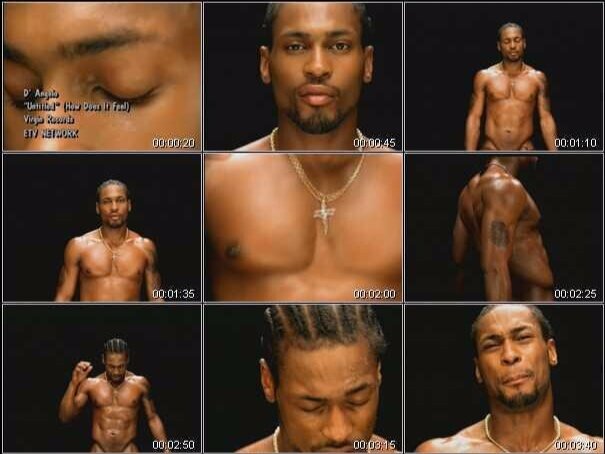
I can’t remember if it was the click of the snare, the tingle of the hi-hat, or the robust bass line, but one afternoon in January 2000 I was lured into watching D’Angelo belt out "Untitled (How Does It Feel),” one of the biggest singles off of his sophomore effort, Voodoo. My eyes averted to his body, shirtless and showcasing his muscles and perfect brown skin. I was a 14-year-old high school freshman filled with shock and intrigue, experiencing pure lust for the first time. 

At the time, all of the adults around me invented stake in my body and virginity, causing me to weigh my worth in it. A year prior, I had symbolically married God in a vow of chastity ceremony at my church, heavily promoted by the male youth pastors and equally encouraged by the women. During the ceremony, we wore all white and were given gold wedding bands to wear on our ring fingers. I was embossed in a feeling of validation, provided by a sexist and misogynistic ceremony that assured my parents and my God that my legs would remain closed until marriage. 

I was also reckoning with the dynamics of growing up in Southern California, a place that could, and often did, strip me of any semblance of romance. To many of the Black boys around me my dark skin, African features and coarse hair removed me from the realm of courtship. Friend? Yes. But the object of affection? Not in the least. Thus, it was easy for me to run straight into the arms of chastity, because there was nothing to compromise it.

27.jpg


Yet there D’Angelo stood on that particular afternoon, naked and confident in his delivery, singing a song to an unnamed woman with unbridled passion. As I watched his frame thrust against the black abyss, it felt like it was just he and I in the room. If he looked anywhere on camera, I looked too. When he stared straight on, I felt his eyes directly fixated on me. And I wasn’t alone. Friends of mine came to a similar awakening because of this video, getting as close as we could to the TV screen while the camera slowly panned south, revealing nothing but his Adonis belt. Writer Danyel Smith recalled a similar experience while watching the video at a hair salon:

“Last week, I was at the hair salon, which is always a bustle of activity, people hollering for hair dye...BET and MTV are on all day long with no one paying too much attention, but when that video came on, you could've heard a bobby pin drop. All the women just watched in silence, and when the video was over, there was a collective sigh of 'Oh my God! He is beautiful!’”

tumblr_p46pqp5Fdk1vzb54yo8_640.jpg

The word “voodoo” is defined as, “a Black religious cult practiced in the Caribbean and the southern U.S. characterized by sorcery and spirit possession,” which accurately describes what happened next. I knew I had no Black ass business watching the video, but I was enamored and looked for ways to feed the beast. If there was a photo of D’Angelo in a magazine, I ripped it out and taped it to my wall. If there was an article written about him, I read it. I became possessed by some force and seemingly created an altar to D’Angelo, the source of my lust and the object of my affection. What previously felt like a feeling reserved only for the marital bed now felt both acceptable and attainable. 

The feeling was complicated for me. And I would later learn it was for him as well.

The newfound assertion of D’Angelo as a sex symbol because of the video contributed significantly to the album’s commerical performance. At the same time, the “Untitled” video was as much of a stark departure from his chaste church upbringing as it was for me. Questlove, who served as producer for Voodoo and musical director for "The Voodoo Tour," claimed that D’Angleo, as a result his sex symbol status, “...wants to get fat. He doesn’t want his braider braiding every nook and cranny of his hair. He doesn’t wanna have to have ripples in his stomach. He doesn’t want the pressure of being 'Untitled' the video.”

20 years have passed since D’Angelo gave us Voodoo. For nostalgia's sake, I listened to the album the other day as a now 34-year-old woman, reflecting on D’Angelo’s duality, as well as my own. It goes without saying that our experiences and expectations as a Black man and Black woman in the eyes of God were, and are, different. But what is true for the both of us—children of the church taught to honor and glorify God in all that we do, is that Voodoo proved to be a stark departure from the word. Within this classic body of work, he sought to reckon with sexuality, drugs, fatherhood, romance, mental health and generational curses. In Voodoo we are presented with an artist examining the origins of his beginnings, being in the world and fighting, fighting, to not be swallowed up in it. And “Untitled” for me, remains a pivotal moment in my unique, yet beautiful transition into understanding my sexual power and autonomy. “Untitled” represents the mark where I learned the power of lust—reclaiming my sexuality as something that was indeed sacred, but ratified through my own will. 

On Megan Thee Stallion And Body Acceptance

tumblr_prv8ngTrmt1t1k6p7o8_500.gif

by Fullamusu Bangura

Somewhere in the gap between sixth and seventh grade, my titties made a dramatic entry into the world, earning me the nickname “Implants” from a friend. Older boys who never talked to me suddenly became intimately familiar with the curves of my body, with childhood games turning into bra-snapping and National Grab Ass Day. Outside of the classroom, men stopped their cars to harass me and followed me down neighborhood blocks after school. Every mirror session became a site for scrutiny, with me trying to figure out how I could minimize the changes and just go back to living as my normal self. Existing in my body was a particular kind of hell and the more it developed, the more determined I became to shrink myself into invisibility. I walked with my shoulders high to my ears hoping if I raised them high enough, they would cover me entirely. My dedication extended to oversized tees and flared jeans, leading to a very serious talk with a concerned older cousin about the fact that I “dressed like a grandma.” 

I continued this disappearing act until college when the Freshman Fifteen hit and I couldn’t hide anymore. My jeans wore tighter around my hips and my guy friends started looking at me differently. That Thanksgiving break, my mom gasped when I walked in the door and urged me to go to the gym. In my seminars, I learned all the language to liberate myself but still found myself bound to my own body. Instead, I got angry. I punched boys who grabbed me at parties and was front row chanting at Take Back The Night events. It was easy for me to understand that no one had the right to claim my body but less easy to believe it. I judged myself for craving sex and convinced myself that things would be fine if I kept my number of sexual partners under some arbitrary threshold instead of just allowing myself to enjoy the freedom of college.

After graduation and somewhere in between a whirlwind year that involved psych meds, weekly therapy and dropping out of grad school, I discovered Megan Thee Stallion’s “Stalli Freestyle” and became, in a word, obsessed. While her sharp lyricism is what drew me in, I was especially fixated on her Instagram Live moments where Megan, usually in her kitchen listening to music, completely enthralled me in the joy of her own body’s movement. I watched her grin as she turned her back to the camera and clapped her cheeks at an unseen audience. And then there’s the athleticism of her live performances, personally one of the most awe-inspiring qualities of Meg’s star power. I have watched dozens of clips of Megan on stage and am always amazed by how much she trusts her body. Every time she drops it low it is with the utmost confidence that her body got her, gravity be damned. To me, it is peak self-love. The complete faith in yourself and all you have to offer. 

Watching Megan taught me the beautiful intimacy in knowing every inch of your body, and there’s something really special about having found her when I did. In the span of my musical lineage with her I have been in my lowest points of depression, came out to my family, and explored new ways to define my romantic relationship. I gained twenty pounds and stopped starving myself under the guise of healthy eating. I started doing yoga and weightlifting. I twerked on stage with Big Freedia and wore a wire bra and thong in front of thousands of people at Notting Hill Carnival. I had lots of sex. I tattooed, pierced, and adorned my body with whatever made me feel more beautiful and more like myself. I rediscovered birthmarks and scars in the mirror, remembering the stories that formed them.

Perhaps the most humbling part of this journey into body acknowledgement is the realization that no matter how much ownership you claim of your own body, people will overstep and try to find ways to possess you. There is an eeriness to how we know nothing of our own bodies but want to claim the bodies of others, whether through fatphobia, slut-shaming, or the hyper-fixation on other’s aesthetic choices. I see this with overly aggressive men catcalling me in the streets and the audience of Megan’s shows, grabbing her body without permission or starting arguments about whether or not she has surgically altered her body. Above all, I’ve learned that human existence is so much less exhausting when a body isn’t just baggage you're carrying around. 

For the past month, I’ve been practicing my “stallion knees,” Megan’s unofficial signature dance move. Every day after work, I’ll put on music, claim any given space in my living room, lower my body closer and closer to the ground, and trust that I will make it back up again. To say I’ve mastered it would be a lie but to admit that I’ve grown to love the process of falling, getting back up, then falling again would be closer to the truth. Each time, my body feels lighter and more like an entity I have known for a lifetime. Each time, she feels freer. 

A Conversation with Georgia Anne Muldrow

Screen Shot 2019-10-10 at 11.36.12 AM.png

by Brooklyn R. White

Soul is all you’ve got. It’s ever knowing, ever growing, and the key to the greatest magic the heavens have to offer. It’s the delicate finger touch between the divine and humanity. The hot tear racing down your cheek, the tightest hug during the winter months, and the groove in your heart. That’s why soul music is as rich as it is, because it comes from the most central, sincere core of one’s self. And no one captures these emotional, electrifying soul experiences quite like Brainfeeder signee Georgia Anne Muldrow. 

In June 2019, Muldrow dropped VWETO II, her 18th album in 13 years. It’s a collection of funky instrumentals, perfect for late night excursions with the windows down and a windswept hair-do poking out. In this phase of her career, Muldrow is embracing herself fully, as well as welcoming the idea of taking up space, and she encourages others to do the same. 

“[T]hat’s the thing, with us being [in] production, is the taking up of space. We gotta be cool with that. Whether it be in the studio..., or you’re presenting your beats, or presenting your work, you’re taking up space…” she said over the phone. 

When we talked Muldrow was in high spirits, as she spoke to me about motherhood, the most important lesson she’s learned over the years, and more. Read our conversation below. 


Brooklyn White (BW): How has motherhood influenced your work?

Georgia Anne Muldrow (GAM): Oh, it’s everything. I love kids...It’s everything that I am, so sometimes it’s like describing water. It’s my first instinct. [Motherhood] and being in a relationship for 15 years gives me so much. One thing that [it’s for sure given me] is the sense of play in my music. Motherhood made me more funky. Cause [in] funk, you gotta have fun, it’s all about comedic singing.. To really be funky, you gotta have a sense of humor man. [Funk] is the [combining] of pain and pleasure - it’s the pain of the blues and the playfulness of children. I think that’s the secret recipe for the funk....I think kids are so hip.

BW: You moved to New York City as a teenager - what was that experience like for you? 
GAM: I was like what? 17/18 [years old] going out there...I feel as though I was still a child. What happened was, all those sounds of the street, and on the subway, you know it merged into an orchestra for me in the streets of New York. It was before I really heard nature in [that] way. [B]efore I heard the literal song of nature, you know what I’m sayin? I remember the day it happened. There was a “wooooo”, like some type of air horn or a train or something. I heard cars beeping, people talking… I heard the subway going, it was like a symphony. 

It opened my heart to what was possible. Everything was in harmony, but not a conventional harmony. But it [brought] my mind into a new way of thinking of harmony, and that was one of the elements that helped me survive New York. 

I was already in love with production and [being in New York] really made me turn to it as a spiritual place. It made me turn to music as a place of comfort. 

BW: Are there any pertinent messages that you’ve carried with you over the past 20 years of your production career? 
GAM: I think the most important one [message] is [to] start where you are. Use it. Start with where you are, whether that’s an emotional state, or  a question in your mind...Whether it’s a “I don’t know how to begin” or “this is stupid” or “I hate how I sound” - start with that. How you actually feel, not how someone else thinks you should feel or what is marketable. It’s like a sculpture - you have to make a decision to hit the fucking rock. You gotta hit it. The first strike that you make on that piece of stone is not going to complete the sculpture. 

I mean, seriously, my whole production style is based on error. It’s based on what happens if I just free myself from what I think I should say. 

BW: Lastly, how important is feeling when you’re producing?
GAM: I say it like this - technology is only echoing what you have to give. So, whether that be a 2-inch reel, I don’t care if we analog it, because it’s still technology right? 

BW: Yes ma’am. 
GAM: If you ain’t feeling it, how I’m gone feel it? How I’m gone believe you? I think that what you put in, you get out of it. I love feeling, it’s very important to me. To the point where I’ve been blessed to have a signature feel. From going off the rails..,going off the grid and trying to figure out where I’m coming from rhythmically. 

Feel comes from taking a chance on yourself over and over again.

This interview has been edited and condensed for clarity. 

Stream VWETO II here.

Meet Ania Hoo

Ania Hoo’s EP Dandi-Tapes showcases her multidimensional sound and lyricism. At only 18 years old, the New Brunswick-bred artist takes notes from Solange and Marvin Gaye, and it’s evident in her cadence and beat selection. Listen to the project up top, and get to know more about her below.


How did your upbringing and your environment influence you being an artist?
In my household there was not just one type of music playing it can go from roots reggae to Jazz to Disco. This influenced me now because I love mixing different sounds of music. My first song was a trap beat with very melodic singing on top.

Who are some of your biggest inspirations musically?
My biggest music inspirations would have to be Marvin Gaye, Prince, and Solange.

What is your creative process like?
I really don’t know when I’m gonna write and create a song. I could write a bunch of songs at once. And then for weeks not write anything. It really depends on what inspiration hits me. Like with “Wild Child,” that was inspired by Jan Gaye, Marvin Gaye’s wife. I just read her book and then came up with those lyrics.

How do you identify, and how important is your identity when it comes to creating?
I identify as a Black women, which is very important to me. My music deals with a lot of anxiety which I feel is some times hard for black women to express so I try to express that for them through my music.

What inspires you to keep going?
Feeling so close. Also my family and  very close friends who continue to encourage me, even when I just want to give it up. I know everything has a moment, and my moment will soon be here!

Where do you see yourself in 10 years?
In 10 years I see myself with a Grammy .

On The Incomparable Quincy Jones

tumblr_olzxnjwWzI1viv4d5o2_640.jpg

by Melissa Kimble

There’s a moment occurs in the middle of the desert during the summer of 2018 that ends the debate on Quincy Jones vs. any producer out today. It’s the very first day of what is now known throughout live music history as Beychella. This is before the multi-million dollar deal with Netflix, the Adidas announcement, a long awaited surprise joint album with JAY Z, The Lion King promo, before the announcement of her husband’s billionaire status, a moment right after having the twins, hallowed into the opening sequence where the Coachella audience has no idea what to expect. The drum pattern drops. A horn section sounds off. Beyoncé Giselle Knowles-Carter appears as the center of the universe draped in regal attire. The biggest music star on the planet, the first Black woman to headline Coachella had arrived with all of her culture and all of her ancestors on her back. In 2018. If the opening alarm sounds familiar it’s because it belongs to the 1978 Black film classic, The Wiz

How is it possible that a forty year old soundtrack is still relevant and very necessary in today’s times? 

It’s because of the mind of Quincy Delight Jones Jr. Through music, he makes the impossible possible. 

“Quincy Jones isn’t simply a producer. He paved the yellow brick road full of possibility of what a producer could be,” shares Hip-Hop archivist Syreeta Gates. The Southside of Chicago born musician, composer, and producer has created across multiple lifetimes, leaving an impact on every single decade and genre. 

In her work, Gates often studies the correlation between Black music history, how it arrives to popular culture and how it is consumed in today’s digital age age. As someone who has interviewed the legend herself, Syreeta says his impact goes beyond having something that every age range can connect to: “Quincy Jones has over six decades of work that is simply unmatched. The Wiz, Michael Jackson, Frank Sanatra, ‘We Are The World’ - we are living in a world that has literally been curated by [Quincy].”

There’s a huge difference between being hot in the moment, and being an innovator. One works amazing well inside of a few summer hits, the other helps to define a body of work. In the 300+ albums that he’s worked on, Quincy didn’t just collaborate. He’s built mutually beneficial relationships with a three point impact that involves himself as an artist, the artist he’s working with, and the listeners of the world. He met Ray Charles when they were both teenagers, setting the foundation for his entire musical career - aiding in the crossover of Black music. His arrangement of "Fly Me to the Moon" with Frank Sinatra & Count Basie was the very first song played on the moon. There’s not an artist born in the 80s and on that hasn’t been inspired by his production hand on Thriller, the world’s best selling album. 

His partnerships aren’t set on Billboard numbers or accolades, they are grounded in a dedication to evolving the art form and pulling up others, breaking down barriers so that music continues to flourish. Want to bring Hip-Hop into mainstream film and television and create new career paths for Black music artists? Let’s create The Fresh Prince. Interested in recording a new era of Black music and contributing to its expansion? Here’s VIBE. There’s not a writer working in entertainment media today that wasn’t inspired by that magazine. 

What producer today can measure up to those contributions? Even if we’re talking about markers that matter in today’s times, he still has the receipts to back that up. He’s done Saturday Night Live - in fact he curated the most artists the show has ever seen at one time. He’s been awarded a national honor by President Obama. He was a fixture in the opening the Smithsonian’s long awaited National Museum of African American History and Culture. And at 86 years old Quincy Jones and his work is the gift that keeps on giving. He’s not doing it for clout or to prove a point, he’s simply doing it from his soul. And he does it relentlessly.

“I’ve been told all the time that ­something’s impossible or nobody has ever done ­anything like that before,” he told Billboard. “I’ve since realized how important it is to be ­underestimated. When you’re ­underestimated, people get out of your way. Let it be noted that throughout his career, Quincy Jones has created a way where there was no way - especially for Black artists and creatives in the entertainment industry. Because he isn’t just for the culture, he IS the culture. 

What Are We to Do with the Term "Female Rapper?"

tumblr_om79rdSUhf1qipgcx_og_500.jpg

The phrase “females” is word drenched in disrespect, but “female rappers” provides a seemingly necessary differentiation, a question on the latter’s place in Hip-Hop’s lexicon demands a discussion. 

The word “female” in reference to human women, is simply not it. The adjective, which has transformed into a “bronoun” as described by rapper Le1f, has a stench to it. Firstly, “female” reduces a person to biological anatomy, making it inherently transphobic. Also, when men say “females,” it feels as if there’s a disconnect and the respect that every person should be entitled to, is missing. The term was present during Jermaine Dupri’s recent interview with People-yes, the one where he disrespected an entire collective of hardworking artists.Dupri lightly sighed and said “females?” after the hosts asked who his favorite woman in Hip-Hop was. Only the hosts didn’t say “woman in Hip-Hop.” They said females, too. And that’s the issue.

In 2012, during one of the BET Hip-Hop Awards’ cyphers, South African rapper Jean Grae started her verse with the line “2012, stop saying femcee.” Four years later, The Source published a piece detailing the importance of the word, saying “...naysayers claim the term takes away from the important contributions women have made to the genre and makes them seem less important than male artists by putting them in separate categories. Others approve of the colloquial nickname and see it as a form of empowerment. Why wouldn’t female rappers want to be associated with the other trailblazers of the femcee movement?” It’s confusing - there are times when one would want it to be clear that they are exclusively referring to the women of the genre and “femcee,” a less cringeworthy, yet still uncomfortable version of “female rapper” gets the job done. But what do you do when “female rapper” is a tactic used to subtly attack all of the successful women, past and present

Law professor, Seiberling Chair of Constitutional Law, and Gender and Law editor Professor Tracy A. Thomas, penned an essay calling for the demise of the word “females” in reference to women in 2017. She wrote, “[l]inguists have long documented the innate misogyny of slang, where thousands of disparaging terms for women have proliferated over the years, with scant male equivalents. Indeed, the Oxford English Dictionary (OED) lists “female” as a disparaging term for men...since 1400 [A.D], female has occasionally been used to describe one’s mistress, which which could be seen as pejorative — as a sex object.” By that logic, “female rappers” has a sexual undertone to it, even when a particular woman’s content is not about sex. Women simply don’t have the luxury of subverting sexualization, making Dupri’s comment about all modern women rapping about the same thing that much more off. Not only is it not true, but it indicates the way women are seen as carbon copies of another, for no reason other than existing and making music. 

The sexualization of women who make rap music was evidenced in Rick Ross’ 2017 interview with popular radio show The Breakfast Club. When asked by Angela Yee if he would be interested in signing a female rapper to Maybach Music Group, Ross responded with, “[y]ou know, I never did it because I always thought like I would end up f-----g the female rapper..[and] f-----g the business up...You know, she looking good and I’m spending so much money on her photoshoots...I gotta f--- a couple times,” with laughter interrupting him more than once. It was a disturbing series of remarks, which were met with backlash, followed by an apology. The damage was already done though, and women were made privy to the types of thoughts and conversations had regarding them, when all they’re doing is taking care of their business. 

Another issue with the usage of “female rapper” is that it often reinforces the idea that women are naturally less skilled than men. It’s the same “you’re good, for a girl” thinking that men somehow have warped and meant to replicate a compliment. Even at the phrase’s birth, which can be attributed to battle rapper Roxanne Shante, there was misogynoir (coupled with ageism). As stated, it’s become a part of women’s vocabulary, too, doing the dastardly work of internalized misogyny so sneakily that some don’t even know the implications behind the word “female”. Saying that someone is your favorite female rapper means that they’re not talented enough to just be your favorite rapper. They need a header, to let others know that they beat out their gender, but not their competition at large. 

So where does that leave us? How do we let people know that we’re just talking about women who rap, while laying “female rapper” to rest? I’ve said it, you’ve said. I know that people will continue to say it. Not even out of contempt, but because it’s ingrained in people’s minds and has been for over three decades. But, it has served its purpose, and if the distinction must be made, there are other ways to say it. There’s no need for dramatic performance art meant to formally bury the word. We can just move forward and let the women behind the mic do their thing, and respect them while they’re doing it. 


A Conversation with AJ, The One

Screen Shot 2019-08-08 at 10.48.31 AM.png

by Taylor Crumpton

AJ, The One is goddess trap. Defined as an “ass shaking and hip winding experience, filled with stimulation of the mind, body, and spirit,” the Inglewood, California multimedia artist and creative director is an embodiment of radical sexual politic principles. Her latest EP Womxn is a melodic ode to Oshun inspired by the deity’s strengths, AJ, The One, adorned in crystals, under the celestial energies of the Moon, is listeners first glance at her spiritual abilities. 

“Vagina Vibe,” the EP’s opening track, is an ethereal display of yoni energy, with the rapper calling upon her sisters to stand in solidarity against misogynist attackers. Music is her chosen platform, born out of a vulnerable and community-centered love and rooted in Black womxn experiences.

AJ, The One’s songs are an interdimensional portal into an Afrofuturist led future where sexuality and eroticism for Black womxn are embraced, rather than demonized and hypersexualized by patriarchal oppressors. Her musical projects are bold reclamations of space, with the duality of her freestyles operating as both a rallying cry and hymn. A Los Angeles tongue, her intensity leaves a burn mark at the end of every verse as a potent remainder, and in some cases, warning about the development of her intrinsic rapping ability. 

At dinner, we talked about the emergence of womxn rappers, the release of her first mixtape, and vaginas.

If you could categorize your rap in three words, what would they be?
My rap would be sensual, eclectic and stimulating. I want to choose another word than sensual. So stimulating, eclectic... colorful.No, not colorful, because eclectic and stimulating is also colorful. Could be... I'm just very much inspired by the erotic, but I don't necessarily want to say erotic, and I don't necessarily want to say sensual. And I definitely don't want to say sexual.

Yo, I think erotic is it. It's like that. Erotic because erotic isn't always about sex. It's about connection. That’s why I say erotic. An instrumental can be erotic too. Like, not even words, "Oh this shit makes me feel something." That's what it's about. It makes you feel something, and that's why I say stimulating too.

In a Berkeleyside interview, you said “my music is for womxn.” Why do you center your artistry on the lived experiences of womxn?
One thing that rules my life is the deliberation of silenced identity. I said silenced, but in reality we’re not silent. We’re disregarded. They tried to bury us. We’re muffled. At a young age, I realized that Blackness was somehow better than anything else. When I got into consciousness in the fifth grade, and won my school’s Martin Luther King Jr. speech contest, my first time performing on stage. I was able to formulate words about muffle identities, and found representation. In high school, the code of conduct for women and girls was very bad. Myself, I contributed to misogyny, because that’s what we were taught. We internalized it. I remember like, "Sexual freedom? What is that?" You know what I mean? "That's not cool, you're a hoe." You know what I mean? Who is it that taught you that? So, I chose women because I needed it.

Four years ago, you moved to the Bay from Inglewood and released a “0 to 100” freestyle on Soundcloud.
I had this infatuation with Oakland. They were my representation, and lived in Oakland. I told myself, “Yo, I need to move out there, so I can really express myself. I got to the Bay, honey, and had a studio apartment and I was like, "Don't nobody know me out here." You know you get that feeling? Then I said, "I'm going to start putting my poems on Soundcloud." My first poem was a “0 to 100” freestyle by Drake, and very AJ The One.  It just was very, "You niggas is this, women are this." And I was just like, "Wow." I felt so good. It's so bad quality. I think I recorded it on my iPad. It’s good, and my first time recording a song. It said this is who I am. 

I can't not not make music about women. I've literally tried.

I'm going to put in the review, this is all vagina inspired music. 
Right? It's such a strong reclamation of space. And it was “Bitches Ain't Shit” by YG and Nipsey Hussle. 

Nipsey is your dude. I saw you went to his funeral.
He is my guy.  It's a long story of how our families are connected, but in terms of an artist, he was one of the people that pushed me to rap. It was [“Bitches Ain't Shit”], that questioned me to say "Why aren't women making songs like this?" I liked the song, it's cool. But then I had a situation where, I'll never forget the situation.

Is this essential content right here? 
Yes. In high school, there was this very popular girl who had cheated on her partner. His friends played a hella loud song, and followed behind her as she walked home. She was in tears, and because there was a power difference between us; she was a senior, and I was a sophomore. I can’t be like “Are you okay?”. Back then, it was different. I felt so helpless. I fucking hated them. I was so mad. I didn’t know what she did, but they followed her for blocks until she was out of my sight. 

That song had me like, “I gotta go make some shit like this”. You know what I’m saying? I don't know, maybe one day I'll shake it out of my system, but it doesn’t seem like it's going away.

As a rapper, do you feel being a womxn gives you an additional strength or secret talent? Historically, critics have downplayed womxn rappers and accused them of using a male ghost writer.
As a womxn rapper, It’s a superpower in general. I have a very deep purpose and intentionality in everything I write and say, it makes me feel invincible. I can rap, but I can make you think about something, and have you thinking about it that night. Like, “Did this bitch really just say? "This bitch really said shit right here?”

There’s several meanings behind a womxn rapper’s bars. At first listen, you believe to have an understanding of the meaning. Once you study the rapper, you gained an additional depth behind the bar. If you speak to them in-person, you receive an additional third meaning.
That’s what I love to do. It makes me feel invincible, and part of a girls club. In this time, I feel so held too. It feels like all of us are like “We’re here?” City Girls, Megan Thee Stallion, Tierra Whack. Even though I don’t know these people, I am invincible. We are The Incredibles.

That's what I love to do. It makes me feel definitely invincible, and it makes me feel like a part of a girls club. I don't have a lot of other woman rapper friends, but I still feel so held, especially in this time.

So, you’re working on a mixtape?
My next project is a mixtape, packed in with a lot of different flavors. I’ve only had one project, and never dropped a mixtape. These twelve tracks are going to be filled with full personality. On my first project, I did a good job on crafting a narrative. Now, I want to show a lot of my personality, who I am in my everyday, and what it’s like to be AJ The One. Yeah, I'm excited. Really good producers, like... I'm just excited, it's going to be awesome. Can't wait to hear it.

Mask Off

Future-Daughter-BET-Awards.jpg

by Brooklyn White

In 2017, hedonistic rap star Future released “Mask Off” - his flute-heavy ballad about molly, percocets, and fearless robbery. Out of all of the singles shared over the course of his decade-long career, it is the highest charting one, peaking at #5 on the Billboard Hot 100. Why were fans especially drawn to the elaborate celebration of drug use and theft? Maybe it has to do with Future’s theme, masks. The subject is two fold, as one Genius user points out. Not only is the Atlanta rapper undeterred by the possible consequences of his crimes, he is completely open about his habits and thought processes. This has been a recurring theme in Future’s career - the notion that no matter the depth of your perceived sin or world views, as long as you are able to confess and show the people the person behind the mask, then all is well. When Future showed up to the 2017 BET awards with his young daughter, he wore a $3000 mask (as did she), and performed in one as well. The implications were still present, but this outing was more of a fashion statement, as masks are sometimes, especially within the Hip-Hop community.

Rico Nasty in her “Block List” video

Rico Nasty in her “Block List” video

Masks have been around since ancient times, and there is proof of their existence in the Stone Age. According to the History of African Masks, the role of a mask maker (and wearer) was a sacred one, as people viewed this being as someone who had contact with the spirit realm. These masks, made from wood, copper and other materials, were used as part of a ritual, often in preparation for an important occurrence like “war preparation, crop harvesting, marriage, fertility, and burials.”

Roots aside, masks may also represent the parts of ourselves that we hide, either to benefit others, or because we are afraid to face ourselves. But it’s not a standalone psychological issue, instead resting under a larger problem. “Masking is not a term used in a professional mental health setting,” according to mental health specialist Hazel Smith. The concept is filed under defense mechanisms. When asked about defense mechanisms, Smith said, “Defense mechanisms are learned behavior that we use to deal with uncomfortable situations to get us to a point of comfort in any given situation.” That is exactly what wearing a mask is, trying to cope with some type of discomfort by putting on a front. But, it doesn’t have to be this way. Smith wrote, “[it] can be transcended when one decides to be their..authentic self without fear of judgment.”

Masks in rap sit at the intersection of style and anonymity, which is ironic given the boastful and self-centric tendencies present in rap. Masks remind us of our humanity and collective consciousness, even though we are all individuals, when you take away our name and status, we are the same. Mask on, mask off.

Below are some rap stars who have either been spotted in masks, or wear them full time. 


Leikeli 47

Screen Shot 2019-07-18 at 11.31.57 AM.png

Leikeli 47 wears a ski mask to keep the attention it on her content. In a 2015 interview with Highsnobiety, the rapper said,“this mask is my cape. I tell people that all the time. I also just wanted to keep it fun and fresh. It’s just like you said though, the mask keeps the focus on my music. It helps me with performing, too. I was definitely a very shy kid growing up in New York.”. Leikeli doesn’t overindulge in social media either, so her keeping a low profile isn’t a stunt, it’s her life.

MF DOOM

Screen Shot 2019-07-18 at 11.33.31 AM.png

While a part of a rap duo with his brother, MF DOOM showed his face without care. But after tragically losing his brother, and being dropped from Elektra records/falling out with the politics of the business, he began covering his face. An article for The Hip-Hop Foundation shared, “drawing similarities between his own life and the story of the fictional Doctor Doom, who’s face was deformed after a laboratory accident and donned a mask while seeking revenge against the world, Dumile himself began wearing a metal mask and re-titled himself MF Doom. Swearing revenge against the industry that badly deformed him (his own words).” He has taken the game of hidden identity even further by sending out masked fake DOOMS to perform in his stead. 

Schoolboy Q

Screen Shot 2019-07-18 at 11.36.01 AM.png

I first began noticing Schoolboy Q as a standout artist in 2013, as he prepped to release his third studio album, Oxymoron. The cover art featured Q wearing a mask, while his following album featured a man with a concealed face on the cover as well. His most recent work, Crash Talk shows the artist wearing a paper bag over his head, a common reference to unattractiveness.

Nicki Minaj

Screen Shot 2019-07-18 at 11.38.12 AM.png

Nicki Minaj has worn a number of masks over the years. Perhaps her most famous one is the colorful surgical mask (designed by Shojono Tomo) that she wore at the 2011 MTV Video Music Awards. Tomo and Minaj worked together a number of times during the Pink Friday era, putting together some of Nicki’s most elaborate looks yet. She also wore glitzy masks in her videos for “Only,” and more recently, “Chun Li.”

Tyler, The Creator

Screen Shot 2019-07-18 at 11.38.27 AM.png

You may argue that Tyler, The Creator is in the running for one of the best rap masks of all time, given his intense rebrand over the past 5 years. The California native went from detailing murders, to singing about the softer, flowery aspects of young, rich life. His mask was metaphorical as well as physical, and it seems as if he’s traded in his ski mask for something greater - love.