How Kelis Gave Us A Glimpse Into A New World with 'Kaleidoscope'

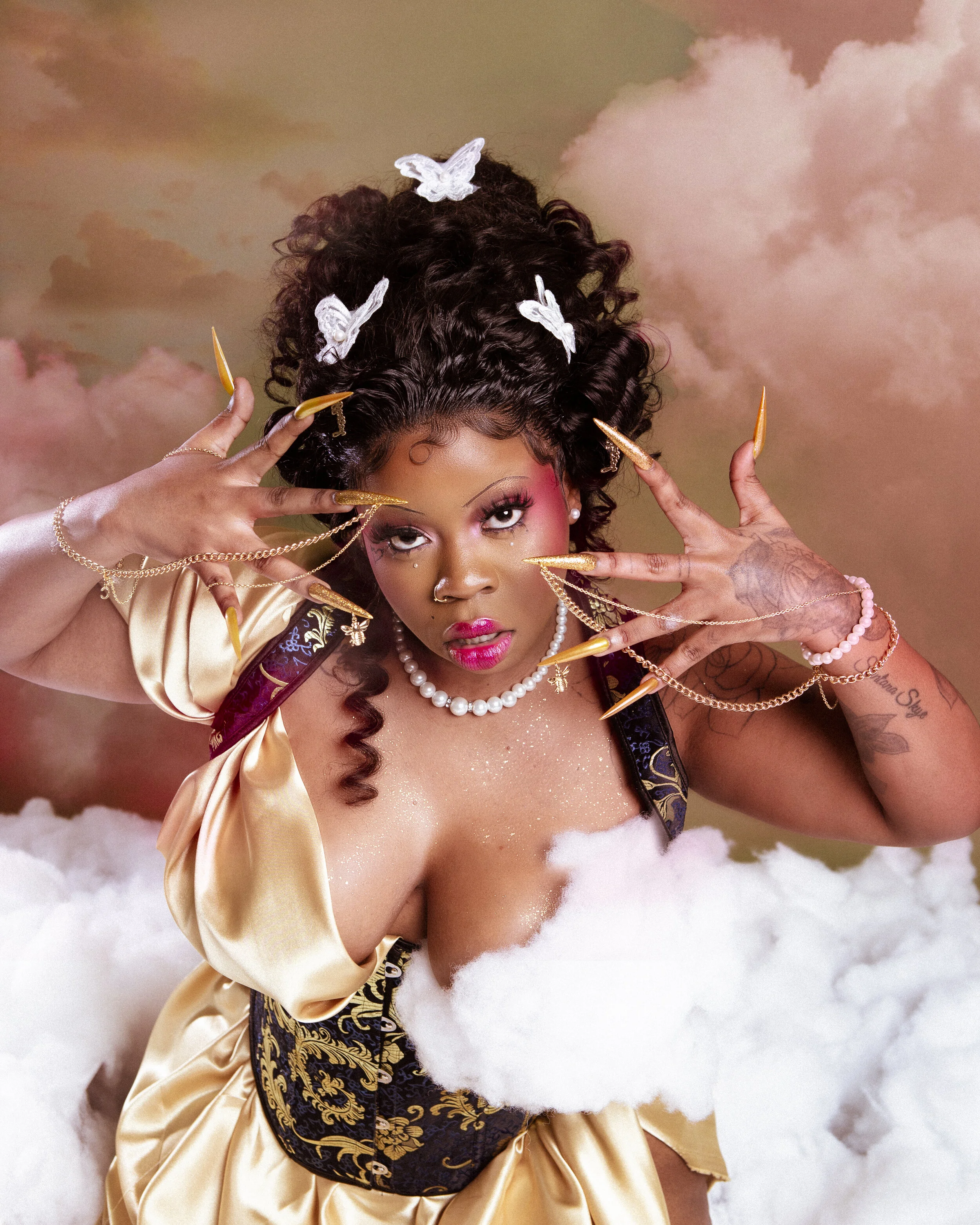
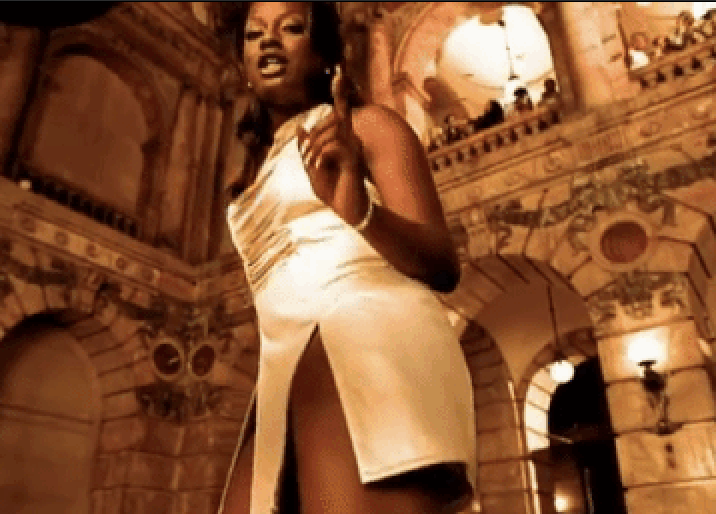
Kelis photographed by Jonathan Mannion (1999)

Kelis photographed by Jonathan Mannion (1999)

by Gina Physic

On her debut album, the “Caught Out There” singer blended hip-hop and R&B, among other genres.

In the moments before the turn of the century, Kelis burst into the industry screaming, quite literally. In her debut single “Caught Out There,” from the studio album, Kaleidoscope, Kelis was herself, unafraid and ready to meld genres in a frantic time that desperately needed new energy. With her single, and the album as a whole, Kelis repackaged sounds familiar to hip-hop, R&B, rock, and funk, forever transforming the former two.

While Ol’ Dirty Bastard’s “Got Your Money” is one of Kelis’ best known hooks (the track samples “Cold Blooded” by Rick James), it, nor “Caught Out There,” was her first step into the music industry. After graduating high school, Kelis was featured on “Fairytalez” by horrorcore rap group Gravediggaz. But even before this, the singer played violin, saxophone, sang in the Girls Choir of Harlem, and grew up with a musician father. She often would share that she found inspiration in everything---and it was this love, plus past experiences with music, that made Kaleidoscope as impactful as it was. 

During a 2021 Sundance Film Festival panel on speculative fiction, the self-proclaimed “foremother of Afrofuturism”, Jewelle Gomez, stated, “For us, the past is more than prologue. The past is a really deep stew that we are cooking in and we cannot go anywhere without the aroma of that past.” The same was true of the sound Kelis introduced as a signee of Virgin Records, which was also the home to other genre-blending Black performers like Janet Jackson and Aaliyah. She was unlike anything hip-hop or R&B had seen before---experimental, while leaning on some of the very sounds that helped to birth both hip-hop and R&B: jazz, gospel and disco. With the help of The Neptunes, who fully produced Kaleidoscope, she was able to forge a new sound that remained in conversation with the sounds of the past.

Songs like “Ghetto Children” (the first track N.E.R.D appeared on) offered a futuristic and playful take on 80s rapper Slick Rick’s “Hey Young World” while laced with Kelis’ effortless, honey-dipped vocals. With “Roller Rink,” she took listeners bouncing on a psychedelic ride through space over a sample of Al Jarreau’s “No Ordinary Romance.” Kelis was repackaging an existing musical lexicon to formulate her sound, and as a result, bridging the worlds of hip-hop and R&B. 

Shortly after Kaleidoscope was released, Kelis completed a promotional stop on the BBC’s Later… with Jools Holland, a show she frequented since her work was received warmly in the United Kingdom. In the 2000 interview, she explained why she called her album Kaleidoscope, saying “Well, I mean, just think about what a kaleidoscope is. It’s a really great blend of many different things and together they’re each individual pieces, but when you put them all in one… it’s a big picture.”  During the interview, Holland also noted a conversation he had with Kelis’ band, sharing that they were heavily influenced by Willie “The Lion” Smith, a jazz and stride pianist who was a predecessor of composer and bandleader Duke Ellington. The band was also inspired by James P. Johnson, “The Father of Stride Piano,” and Jelly Roll Morton, who is widely recognized for aiding in the evolution of ragtime into jazz. 

Jazz, with its reliance on improvisation and sample-ready percussion, lent its back to the building of hip-hop, directly playing a role in the sonic territory Kelis explored. 

Beyond Kaleidoscope, when Kelis toed the line between hip-hop and R&B, she was part of some of the most influential collaborations across the genres, establishing a formula that would dominate radio waves and later, streaming platforms.There was a time, as she recalls, that she was a “feature girl on every hook there was.” From her offerings with Foxy Brown, to Angie Martinez, to Busta Rhymes to her former labelmates, The Clipse – Kelis left her mark. Her music has since been sampled by James Blake, Xzibit, The Internet, Disclosure, and when it isn’t directly sampled, it’s referenced heavily. 

Much like the lineage from which Kaleidoscope pulled, Kelis’ own influence is sprawling. Her early musical contributions bridged a gap between hip-hop and R&B, encouraging change and inspiring a generation of music makers. But of course they did, since she came in the game telling us that the good stuff was right here. 

LaToiya Williams’ Undeniable Star Power

by Nadirah Simmons

A quick Google search on the relationship between Hip-Hop and R&B will affirm that it is a tight one, from the inception of new genres like New Jack Swing and Hip-Hop Soul to the increased presence of Hip-Hop and R&B collaborations. And anyone who is a fan of Hip-Hop knows the right collaboration can take a song from good to great. Enter Los Angeles-based songstress LaToiya Williams, whose unique voice and work with heavyweights like Snoop Dogg, JAY-Z and Busta Rhymes cements her as a Hip-Hop staple.

Originally a Gospel singer, LaToiya found herself singing background for Gladys Knight and Yolanda Adams before meeting Snoop Dogg. She appeared on his 2002 compilation album ‘Doggy Style Allstars Vol. 1,’ an offering that included the standout track “Fallen Star.” On it LaToiya lamented the broken promises of a lover.

“You promised me Saturn, Venus and Mars/But all I got was bullshit and a fallen star (Fallen Star)/Out of this world, galaxy so far (So far)/Constellation tells me it's not from the heart,” sang LaToiya over a G-funk beat. In combination with lyrics rooted in Soul and R&B tradition, Williams masterfully delivered a ballad on love and heartbreak that encouraged a two-step and self-reflection at the same time. The accompanying video-just one of two shot for the album-paid homage to the 70s and Soul music of the past with a set reminiscent of Soul Train.

She would go on to lend her vocals to JAY-Z’s “All Around The World” from ‘The Blueprint 2,’ Anthony Hamilton’s “My First Love,” Young Buck’s “U Ain’t Goin Nowhere,” and the soundtracks for movies like “Baby Boy” and “Soul Plane.” In 2018 Williams released her first full full-length album ‘Blue Rose,’ a project she described as therapeutic:

“[It] starts off as we’re a happy couple. We’re doing well and then in the middle of the CD, it changes. I find out that he has a wife somewhere. I find out that he has a family. That’s where the Blue Rose comes in. That’s where the sadness the color blue comes from, that pain of me finding out the guy that I’m with is actually married to someone. Every single last song is true to life and it’s true to my life. Literally, this ‘Blue Rose’ album is a book about me and my feelings and what I been through in the last 10 years without being signed to Snoop Dogg and the stuff I’ve gone through with my man. So, it’s all true.”

The truth, honesty and authenticity in LaToiya’s voice guarantees that any song she is on will hit you right in your soul. So whenever we talk about Hip-Hop and R&B collaborations, LaToiya must be in the conversation. Her voice was the glue that pieced together cuts by the biggest rappers in music.

The Joi of Freedom

Source: alljoieverything.com

Source: alljoieverything.com

by Brooklyn White

Joi Gilliam is a conscious rock star. Unbound to the beaten road of pop’s trendsetters (constantly producing content and publicized struggles with sonic evolution/personal growth), she’s walked tall during her 25+ years in the music industry and shows no signs of slowing. “I get excited to pull the machete out and clear my own path,” she says in her official bio. “After all of these years, music is still a lifeline to sanity, memory, and inspiration for me. It’s the most powerful medium, for better or worse. I hope you feel what I’m doing.” Not only is Joi deeply felt, she is admired by many and her album ‘The Pendulum Vibe’ proves she is a staple in avant garde soul focused on liberation.

The singer/songwriter is a proud Tennessee native, which is made apparent by her use of the alias “Tennessee Slim Kitty.” After leaving Tennessee State University and moving to the everlasting musical-hotbed of Atlanta in the early 1990s, she crossed paths with Dallas Austin, the producer/songwriter famous for his work with TLC, Boyz II Men and Macy Gray. Together they crafted Gilliam’s 1994 debut, ‘The Pendulum Vibe,’ a cult classic adored for its feminist themes, over the course of three weeks.

“She is the truth and the most famous person I know,” -André 3000

Black feminism, particularly sexual liberation, equality and freedom from archaic ideas of womanhood, have been further explored by newer singers like Teyana Taylor, Jazmine Sullivan and Ari Lennox, with the former’s emphasis on maintaining personhood while raising a family echoing Gilliam’s. But at the time of Gilliam’s ascent, mainstream R&B was still very much married to the blues (and truthfully, cash) and while that can be looked at through a feminist lens of its own, the one used to observe Gilliam was rather limited. After issuing her debut, she was implored to be more like R&B’s biggest commercial successes, but thankfully, she pushed back and continued to allow her sense of self to guide her.

Source: alljoieverything.com

Source: alljoieverything.com

On ‘The Pendulum Vibe’s’ “Freedom,” she spoke specifically about the oppression that Black women face.

“You thought that I would never wise up/And I showed you what a Black female can do her thang/You cannot continue to keep me oppressed/'Cause I ain't goin' out like that,” she sang over the jazz-inspired cut with canned vocals. Less than a year after the song’s release, it was re-recorded for the Panther soundtrack and featured over 60 Black women in music, including Aaliyah, TLC, Mary J. Blige and SWV.

Gilliam delved into sexuality in her song “Narcissa Cutie Pie,” a loud and proud anthem about bisexuality. “I tantalize, I mesmerize, I can do whatever I want to...The other side is calling and I want to go with you,” she sings, referencing a potential sensual encounter with a woman. At the time, popular songs about queerness from Black artists were not overwhelmingly common, further setting Gilliam apart and helping her carve out her own lane as an artist and a sensual being. Decades after the song’s release, you’re much more likely to hear Black women explore their sexuality on record (Victoria Monét, Janelle Monae). 

With her debut, Gilliam showed posterity how to address the worst of society’s conditioning without coming off as contrived or preachy, which tend to have serious overlap. Though she’s underground, Gilliam is the “most famous person” Andre 3000 knows, she was tapped to assist D’Angelo on his most recent tour and has even inspired Madonna. Her honesty remains refreshing, her freedom is well deserved.

A Requiem for Party Spaces of My Past

IMG_30BAD55B7E42-1.jpeg

by Summer Jones-Oden

I love a good party. You know the ones where EVERYONE is dancing and singing out loud? Maybe a couch stand or two? No pretentious bottle service or restrictive dress codes, just a good old-fashioned party. 

I haven't seen or heard music outside of my house or in a car in over a year. No concerts, lounges, bars, parties or functions with a DJ. I never thought I’d ever type those words-much less say them out loud-as Hip-Hop has been my source of joy for as long as I can remember. I have a very personal connection to a few spaces where I always felt safe and seen as a Black woman who loves the fellowship that music brings. So when I started jotting down notes to prepare this piece, memories of the Summer of 1994 came rushing back. 

At that time I was preparing for my senior year of high school while working a part-time job ridiculously optimistic about the next phase of my life. A chance meeting with a coworker’s daughter would change everything. Enter Club Fever in Philadelphia, Pennsylvania. 

IMG_1944.jpeg

“The Underground at Club Fever” was the 18 to enter, 21 to drink Friday and Saturday night Hip-Hop, Reggae and R&B party presented by the legendary DJ Storm. My friends and I would usually arrive around 10pm to stand in unbelievably long lines to enter the basement-level space. Upon entering we’d be shoulder to shoulder with friends from all across the tri-state area, and the energy truly encapsulated what it meant to enjoy Hip-Hop in the early 90s, when the genre had started to take on a life of its own. DJ Storm kept the crowd engaged and rocking with everything from Black Moon to Buju Banton. Ciphers would go on by the bathrooms. Dance battles would break out in the middle of the club frequently throughout the night-the kids from Philly would always win.

Club Fever began to book Hip-Hop shows that hosted artists like Da Youngstas, Mobb Deep, members of the Wu-Tang Clan, The Boot Camp Clik and an infamous New Year’s Eve show that featured the Notorious B.I.G and a newly signed group that he formed and mentored, Junior Mafia. The security was friendly but tight, much like that one uncle you knew not to test. There were never any fights, with small skirmishes being quickly de-escalated so the party could continue. And continue it did, until it was time to go home and drag ourselves up that stairwell and do it all over again next weekend. 

In the summer of 1998 I turned 21 years old and was now freed from the shackles of the obviously fraudulent ID card that I had been flashing at the door up and down what was then called Delaware Avenue. Today the location goes by the name Columbus Boulevard, home to the Penn’s Landing waterfront area and many restaurants, bars, clubs, parks and the pier.

IMG_2032.jpg

The clubs that lined the aforementioned pier put Hip-Hop at the forefront each and every weekend. A personal favorite spot of mine, especially during Greek Picnic Weekend, was Bahama Bay, a tropical tiki bar-themed indoor and outdoor space where DJ Kool would film the video for the classic “Let Me Clear My Throat.” Just down the street was Vegas, a mildly upscale Las Vegas-themed club that hosted some of Philly’s most notable NBA and NFL players. Just across the street was the grittier Gotham Nightclub, a converted warehouse with impeccable acoustics. The opportunities for partying were endless, and at the age of 21 I had the freedom to go wherever I wanted to without breaking into a cold sweat at the door as the bouncer looked back and forth from me to my fake ID.

My newfound freedom also found me in New York City, traveling there most weekends with friends and making it back to Jersey by Monday morning. One particular weekend provided me with my most memorable moment of my 21st year of life and remains the only time I wish we had phones with cameras back then. A chance encounter with some women who lived in the same building as I found me in The Tunnel. The night remains a blur to me-hence the desire for camera phones-but I can recall a few things: the line to get in was extraordinarily long, it took forever to get in and inside there was literally no room to move around, much less dance or get a drink. About halfway through the night Funkmaster Flex announced DMX to the stage, and what resulted was an energy unlike anything I had ever experienced. On the train ride back to Jersey I couldn’t wait to get home and tell everyone I had been to The Tunnel and saw DMX perform. The release of the “Get At Me Dog” video affirmed my recount of the night’s events at the infamous club. I never went back, although I often wished I had. But these days I’m mostly just grateful for the experience. 

My 23rd year of life placed me back in Jersey with the homegirls I had known since I was a teenager. Yet things were different, the kind of different you would expect as you age deeper into adulthood. We weren’t the same people with the same freedoms we had at 15. Some of us were traveling. But we were older, with jobs, bills and obligations. And as a result life became a little slower. The desire for the raucous clubs we were used to frequenting had dissipated and began looking for more laid back spots. That’s when we discovered the Five Spot.

Nestled in an alleyway in the Old City neighborhood of Philadelphia, The Five Spot was a jazz club, restaurant and lounge. It was the first place I would hear a Roots record played not in my own home. The space also marked the first time I heard Erykah Badu and India Arie sing and Jill Scott recite poetry. Tuesday nights were reserved for The Black Lily, a hub of sorts where women vocalists, lyricists and musicians came to hone and perfect their craft. The vibes were celebratory of the expression of Black women and dedicated to creativity. The DJs had the freedom to play whatever they wanted and on any given night you’d hear everything from the Stylistics to Mos Def. 

The Five Spot, photo source: Haute Girl Fresh

The Five Spot, photo source: Haute Girl Fresh

On February 3, 2007, The Five Spot burned down and the landscape of the Hip-Hop genre and nightlife were changing quickly. The same could be said when it came to the parties I wanted to attend. I was not interested in the huge, shiny clubs where everyone was dressed to kill and barely broke a sweat. I longed for something more intimate that reminded me of the old days at Fever and the eclectic mix of Hip-Hop, Classic R&B, Breakbeats, samples and Reggae I grew up on. Fortunately, Philly remained a progressive and creative nucleus and many of the promoters and DJs knew there were people who would dance to JAY-Z, Fela Kuti and Prince in the same night. A few months later I bumped into an old friend who invited me to a party and promised me “a good time where people actually danced.”

I passed Fluid Nightclub a hundred times and never once thought to go in. Located right off of South Street in Philly and across from a tattoo shop, the entranceway and sidewalk were always crowded with a friendly and eclectic mix of people who greeted you when you walked by. However when my friend said he’d meet us at the door I was a little skeptical. My friends and I made our way up the stairs and heard a 90s R&B song blaring out of speakers that seemed too powerful for the small space. Again, skeptical. Nonetheless, I found the person who had invited me to the spot behind the bar. (I’ll never forget the moment, because it was located in an enclave that was tiled an iridescent blue to resemble water.) He took our drink orders while we stood around checking out the club making small talk. It was at that moment that I looked over at the DJ booth and saw “Questlove.” I began softening up. Perhaps I would have the good time I was promised after all.

In what seemed like minutes after this realization, people began to trickle in by the dozens. It seemed like everyone knew everyone, greeting one another with kisses, daps and hugs. The energy was contagious and it was all gathered in this one place that felt like it was just for those of us who had the privilege of walking up those stairs. There was no place else like this on earth. Later on in the night a new DJ by the name of Mike Nyce stepped behind the booth and  welcomed us to “Tastytreats each and every Saturday at Fluid Nightclub.” Throughout the night he transitioned flawlessly through Classic and 90’s R&B, Boom Bap, Jazz, Funk, Breakbeats and House as Stacey would walk around and thank people for coming and occasionally join us on the dance floor. On any given Saturday night you could find guest DJs like Premier, Ali Shaheed Muhammad, Pete Rock, Beverly Bond, Aktive, J.PERIOD, Rich Medina, Ultraviolet, 9th Wonder and Jazzy Jeff behind the booth and the small space packed to capacity.

Fluid closed on April 6, 2013, a few months before my 36th birthday. The memories of the parties, nightclubs and moments that defined my teenage years and my 20s and fulfilled me in my 30s are some of my most cherished. Now, at 43, the global pandemic has taught me not to take for granted all the social experiences I’ve had where I felt safe and seen as a Black woman who loves Hip-Hop culture. And if i could, I’d do it all over again. 

At least until 10pm. 

IMG_2030.jpeg

Charmaine Is Poised For A Takeover with 'HOOD AVANT-GARDE'

Hood Avant Garde_PRESS-5.jpg

by Nadirah Simmons

Zimbabwe born, Toronto-raised rapper Charmaine is a woman to watch out for. In 2020 she released her debut single “BOLD," which now sits at 1.9 million streams and has earned cosigns from Ebro Darden on Apple Music 1, the legendary Fatman Scoop and COLORS Studios. Additionally, Complex named Charmaine as an artist to watch in 2021, she’s been tapped as a Spotify RADAR artist and just a few weeks ago she was selected as a First on SoundCloud artist which highlights musicians from across the globe, even celebrating the announcement on IG Live with Rico Nasty. We caught up with her last week on IG Live to talk about her success, her debut EP HOOD AVANT-GARDE which is out today, women in rap who inspire her and more.


The Gumbo: Your latest single “WOO!” is the follow-up to “BOLD,” which released this past Fall and now sits at 1.9 million streams. You’ve been co-signed by Ebro on Apple Music 1, Fatman Scoop, COLORS Studios, and then this week you’ve been named one of the ten artists to watch for in 2021 by SoundCloud. You are out here! 
Charmaine:
I’m tryin’, I’m tryin’! [Laughs]

How does it feel to release your debut single in a pandemic and get 1.9 million streams? That is...wild.
It is very wild. I believed in the record and it was definitely my first choice to debut it. But, I had no idea that I would get the kind of response I got, especially now. So, I’m just really humbled by the fact that everyone’s fucking with it like that. I’m just like, “Ok, I mean, maybe I did something now! Maybe I did something!” [Laughs]

I feel like oftentimes, over here in the States, everyone kind of looks at [Canada] like, “Oh my God! Canada, there’s Drake and there’s all these different things that are happening over there.” Talk to me a little bit about the music landscape in Canada and how it shaped you and your sound.
Canada has some amazing artists. That’s bottom line. So many talented people are over here. Of course we have the Drakes, and The Weeknd, the Biebs, you know what I mean? But I feel like a lot of, like, the really dope artists are not given the platform or the spotlight that they need and that’s something that I really would like to change. Because I feel like if people actually got the backing and the opportunity to showcase themselves, we’d have so many more Canadian artists blowing up, and I don’t understand why yet. I’m hoping that’ll change in the future but, yeah. [Laughs]

Look, I love that...I wanna know, when did you know that you wanted to rap and enter this space?
Ok, so this was a complete accident! It wasn’t pre planned, it wasn’t thought out. One day, I was in the studio with my production team. We already had finished the songs that we were supposed to finish for that period. And we had a couple more tracks left to do, and one day I just walked in and my producer was like, “Yo, you wanna try rapping?” I was like “...Yeah, sure. [Laughs] I guess.” I’ll try anything once, because you never know. It could work, it could not. I don’t really care, but it just happened to work and it happened to work a lot better than I expected it to. I feel like I actually love rapping way more than I love singing now, which is kind of crazy but it was a complete accident. It was a complete accident. [Laughs]

And now we have “Woo”, and I just wanna say the opening of “Woo” is so explosive:
“Yeah, he know he just a number and he’s cool with that.” What was your thought process when creating this particular song?
Honestly, I was just really missing going out with my friends and going out to clubs and just enjoying music as a whole. So, I just wanted to make a record that sounded like that. That gave me that same feeling that I would get when I would go out with my girls. On top of that, just kind of mocking men and, you know, just having my way with them and doing whatever I want and it’s just kinda like...if you don’t give me what I want, when I want it, how I want it, I will find somebody else to do it. But, in the meantime, I will be partying with my girls. [Laughs] You know what I mean? That’s really how that one came around.

Between the lyrics in your songs and some of your previous interviews that I’ve watched, you really are standing so firm and tall in your autonomy and represent for Black women, letting us know that we can do whatever we want, we can act however we want, and we’re not worried about what someone might say or think about how we need to be presenting ourselves. Has that been something at your core you knew had to be in your music?
Oh, 100%. You know, it took me a while to get the place that I’m at right now within myself and you know, growing up we’re always told we have to fit this certain mold. We can’t talk too loud or we can’t have our hair too bright, we can’t do all these things and then, just like, who said that? Nobody said that. That’s not a written rule or a law. I refuse to abide by that and I just want other Black women to feel the same way. We don’t gotta do shit anybody tells us. We can do whatever the fuck we want and you can either take it or leave it but we’re not gonna change ourselves to conform to whatever imagery or idealistic concept you think we should be.

Absolutely, I love that! I want to move on and talk about your debut EP [HOOD AVANT-GARDE]. Tell me more about it.
So, the whole concept of this EP was just to redefine what it is to be a renaissance woman. Typically, you see imagery, like, you see this white man in the middle of everything as like the leader, the power, the hero, the person who’s doing everything, you know, great. And everyone around him, especially the women are being subjected in some type of way or objectified and I was just like, “Nah, what can we do to redefine this?” So, what we did is take that concept and flip it. Now, it’s about women being in the forefront, it’s about a powerful woman being in the forefront and in the center. It’s about redefining what it means to be a renaissance man...Nobody has heard anything like this before and we took our time to make sure that every record was perfect, from the instrumentation to the lyricism to the cadences. Every little element is so thought out and I feel like the world is really gonna respond well to it.

Now, I wanna switch gears a little bit. I feel like I know what you’re gonna say ‘cause I was reading all of your stuff, so I might already know the answer to this. But, I wanna know: who are some women in rap that you look up to?
You already know what I’m gonna say for sure! [Laughs] Cause I’m kind of giving her vibes right now, so definitely, hands down, Missy Elliot by far. [Laughs] And I think, at this point, it’s evident and people are picking up on that and, I don’t know, there’s just something about the way that she’s creative and she’s not afraid to push the envelope. She plays around with her appearances. The visuals are crazy, the talent is crazy, the production is crazy, like, she is just a legend in my books, and I’m pretty sure in anybody else’s book. If not, you trippin’! [Laughs] So, hands down Missy. I mean I also have other inspirations such as Lil’ Kim, Da Brat, Queen Latifah, Foxy Brown. And, like I also draw influences from southern rap, like Lil Jon & The East Side Boyz, Lil Scrappy, Dem Franchize Boyz. So, like, it’s a whole mixture of a lot of things going on. [Laughs]

Another question that I wanted to ask is: what advice would you have for younger Black women who are looking to get into rap?
I think it’s as simple as just start. Start! Don’t be afraid of failure because you only grow from failure and then you can adjust as you go along and try different things. But just start. Don’t be afraid to be yourself. Don’t be afraid to walk into rooms and into spaces and  demand your respect because you deserve that respect. And, you ain’t gotta listen to anybody who has anything negative to say about you! Honestly, just focus on the people who are supporting you. Focus on the people who are speaking life into you and bringing that positive energy into you and I promise you the opportunities will just start to come to you. But, definitely have confidence in yourself. Understand that you’re a bad bitch and you are talented and you can reach big levels, you just gotta put your mind to it.

How do you prioritize self care in the midst of making music and recording videos and just working?
I’m working on it! [Laughs] I’m not the best at doing that right now. I’m trying to. What I have been doing lately, though-like, it sounds terrible but it’s completely fine with me. I’m ok with a little toxicity in my life-whenever I’m not working I’m probably just watching Netflix, eating Captain’s Boil like I don’t care. [Laughs]

What’s Captain’s Boil? Is that seafood?
Yup!

Ok, hold on, timeout! I love seafood boils. Where is this at? Like, this is in Toronto? Where?Yeah, there’s multiple. Like, there’s a lot of different locations around the city and the GTA. Thankfully there’s one that delivers close to my house. There’s one that delivers close to my brother’s house and I’m usually at either/or place. So I just be ordering me some shrimp, you know what I’m saying? Some crab legs, a little seafood fried rice [Laughs] And just binge watching Netflix.

Yo, can I tell you at the beginning of the pandemic...all of my friends know, like I have a problem. Everyday I’m like, “Y’all wanna get a seafood boil?” They’re like, “Nadirah, no. We’re not going every single day!”
I wish somebody would tell me to stop eating it! Like, no. I would rather cut you off than to cut out the seafood boil. Like, no.

[Laughs] Well I’m super duper excited for your project and I am gonna finish off with a question that we ask everyone that we talk to, which is, “When did you fall in love with hip-hop?”
I fell in love with hip-hop when I saw Lil’ Kim’s “Jumpoff” and heard Lil’ Kim’s “Jumpoff” video. I mean, I was too young to be listening to that anyway, but I was in the living room like [hums “Jumpoff”]. I was like, “Yo, why is this so fire?” [Laughs] Yeah, so from then on…

Listen HOOD AVANT-GARDE here: https://charmaine.lnk.to/hoodavantgarde

Brandy As The Star Card

brandy 615 berlatsky.jpg

by Omega Agee

Brandy, an Aquarius born on February 11, has embodied the star card from the early days of her fame to her cemented place as an R&B legend.

The tarot is a deck of playing cards created in the late 14th century, most likely in Italy. Originally used to play the bridge-like card game of tarrochi, tarot cards evolved for use in divination in the 18th century. Unlike astrology, which predicts human behavior and what happens on Earth based on the position of the planets, tarot offers a highly personalized reading from a spiritual guide. According to clairvoyant healer Molly Burkett, “[tarot] cards reflect your highest potential, your deepest insecurities, and your greatest strengths, and show you the pathway to balance." In traditional tarot, when the star card is pulled upright it represents hope for the future, inspiration, optimism and creativity, much like Aquarians themselves. 

The star card signifies inspiration and the ability to have an effect on someone’s feelings, character, behavior or development. Rolling Stone describes her ascent as “meteoric,” with her self-titled debut album selling over six million copies worldwide and spawning three top 10 singles with “I Wanna Be Down,” “Baby” and “Brokenhearted.” Fans clamored to support the artist, whose success was aided by her youthful presence and technical skill as an artist.

“As sappy as some of it was, there was maturity to it too, as if tokens of wisdom fell into a batch of diary entries,” wrote Clover Hope in a Billboard retrospective for the album’s 20th anniversary. Brandy had a unique aptitude for sharing general experiences, but imbuing them with such feeling that they feel personalized for each listener. 

Brandy has been a staple in Black girls’ childhoods, whether we were sitting cross legged while watching her star in the 90s show Moesha or singing our hearts out to her music. Yet even before the release of her debut album and show, Norwood’s role as Danesha Turrell on the short-lived ABC sitcom Thea made it evident that she was a star. In 1993, television critic Greg Dawson described Brandy’s role on the show as the “sweet, cerebral sister” who contributed to a “terrific, talented cast” filled with heart and soul. Brandy’s early career catapulted her into lifelong stardom, and set the tone for a future that would continuously build upon her talents. 

Creatively, Brandy has experimented with the intent to push R&B into new territory. She has been lovingly coined “The Vocal Bible” due to her stacking of  harmonies that served as backgrounds, her effortless vocal runs and her tone. Moreover, she has proven capable of innovating within music while remaining true to her own style by utilizing her unique approach to crafting harmonies. On her fourth album, Afrodisiac, Brandy worked with Timbaland to create a body of work whose sound was unique and distant from other R&B music.

“Afrodisiac is that rare album in which a pop star kicks her brand to the curb. Instead of default ballad after default ballad, Timbaland and Milsap provided a series of stuttering, burping productions in which Brandy's vocals swerved and bounced like velvet superballs,” said Noah Berlatsky of The Atlantic.

Today, the Vocal Bible’s innate ability to deliver her signature vocal arrangements over any beat and within any genre remains intact. Look no further than her most recent album, B7, and her prominent use of falsetto on personal favorite songs “Rather Be” and “Say Something,” for support of her long-standing reign of success. It is this kind of creativity that is emblematic of what the star card represents, and its connections to the innate innovativeness of Aquarians.

Source: Amazon (Tarot Card Notebooks)

Source: Amazon (Tarot Card Notebooks)

On top of the star card’s many meanings, there is a part of that card that offers up an obvious means for interpretation: its design. The image on the star card displays a woman pouring water out of two jugs into a pond as the star shines on her—the same symbol that represents the sign of Aquarius. If we know the star card to reflect, as Burkett said, your highest potential and your greatest strengths, then we can imagine the water on the card to represent Brandy influence, and her ability to pour into and inspire others. Artists like Jazmine Sullivan, India.Arie and Kehlani have been candid about Brandy’s influence on their own careers. Brandy’s multi-generational impact is on target for the star card, leading the way with her talents.

Traditional tarot offers insight that enables people to recognize their greatness, and through the star card we are able to learn about our hopes for the future, what inspires us, what encourages our optimism and what sparks our creativity. In the case of Brandy, the star card is not only strongly connected to Brandy’s albums, movie debuts, and even tv shows, but also her ability to connect with the masses is what sets her apart.

Black House, Black Joy: On The Home of the Jersey Sound

Broad_St_Sta_Newark_tower_jeh.jpg

by Jamara Wakefield

430 Broadway Street is an unassuming location in downtown Newark, New Jersey. But for lovers of House music, this site conjures memories of an era that continues to influence musicians today. It is the former address of Lincoln Hotel, the home of the Club Zanzibar. This nightclub not only changed the history of the Jersey Club sound, but also fostered a community of people who continued to dance, fellowship, and express joy together for over four decades. 

Zanzibar first opened its doors in 1979. Three years later, DJ Tony Humphries began his residency there and, along with others, helped "spawn the sometimes raw but always soulful, gospel-infused subgenre" of house music known as the Jersey sound. Humphries’ sets blended R&B, soul and gospel lyrics into their mixes, a technique that is still largely popular today. When asked about the emergence of the sound in Jersey at the time, Humphries told XLR8R, “There were a number of house producers coming up; I liked quite a few of the records. there was a certain groove I would try and build, using records to bridge to others, a vocal to an instrumental and vice versa, keeping a flow—I liked how that built the dancefloor.”

This sonic revolution was furthered by advances in sound technology, specifically that by Richard Long of Richard Long & Associates (RLA). RLA developed, designed, and installed the cutting edge sound system at Zanzibar, which is credited for making disco spaces the “immersive audiotopias that they were.” This meant that Jersey was now able to offer a sound experience equal to that of other popular dance clubs, like Chicago’s The Warehouse and Studio 54 in New York. Performances from Chaka Khan, Patti Labelle and Grace Jones, coupled with a sound system that allowed party goers to not only hear the music clearly but feel the vibrations coming from the speakers, helped the Zanzibar create a full-body experience that remains sought after within the House Community.

Tony Humphries playing at Zanzibar New Jersey.

Tony Humphries playing at Zanzibar New Jersey.

This importance of community was apparent not just in the sound, but in the guests who frequented Zanzibar. 

The Queer Newark Oral History Project (QNOHP)  reports that LGBTQIA+ friendly club spaces in Newark date back to the 1930s. Over half a century later, the Zanzibar was continuing the tradition of inclusivity and in 1988, American drag performer Paris Dupree held her now-famous Paris Is Burning ball at the club. The ball was documented by Jennie Livingston for her 1990 film( also called Paris Is Burning) and gave straight, mainstream America a glimpse into the lives of the queer Black and brown community. Additionally, Dance Music Hall of Fame inductee DJ Larry Levan, an openly gay man who was also active in the drag scene, was the opening jock for weekly gay nights at the club. Zanzibar wasn’t just an immersive music headquarters, but also a communal sanctuary for Black and Brown LGTBQIA+ people where their bodies, voices and lives were valued.

Grace Jones at Zanzibar, date unknown, by Vincent Bryant.

Grace Jones at Zanzibar, date unknown, by Vincent Bryant.

Memories of Zanzibar live in the hearts and minds of Jersey House heads. Annual summer events, like the Roselle House Music Festival in Warinanco Park, the Weequahic Park House Music Festival, and the Lincoln Park Music Festival in Newark, serve as unofficial "Zans" reunions. And a connection to Zanzibar is the cultural capital that proves you are a part of the rich history of House. 

Alice Jenkins, of mother-son dance duo Alice and Charon, remembers sleeping in between the speakers at the club to rest before getting back on the dance floor. “Zanzibar was something I couldn't believe,” she recalls. “They were playing disco music but with a different flavor.” 

Zanzibar sits at the intersection of music history, Black history and Jersey history.  

When I think about Black joy, I consider the resilience of New Jersey’s Black House community. This legacy runs parallel to the decades-long struggle by Black people and our allies to end institutionalized racial discrimination and disenfranchisement in the United States. This history is the story of a community that is self-sustained and created space for those who are outcasts. Zanzibar is one house but the entire community is a place many call home.The festival cultures, the clubs, the virtual DJ sets, are Zanzibar’s most obvious legacy, proving that community is alive. It has a heartbeat, it has a pulse.

Learn more about supporting the Black House, Black Joy film here.

Bake: From "the Book" to Booked and Busy

Screen Shot 2021-01-07 at 11.07.47 AM.png

by Kaz Gratz

         Music unites people from all over the globe and lifts our spirits. Even in a global pandemic, you notice people of all ages staying connected by posting their favorite dance moves on TikTok and other social networks. Every culture and section of the world has their own unique sound that moves the natives. Dance is deep rooted in spirituality, culture, and wellness. You may know a bunch of popular dance styles, like the Cha-Cha, ballet, salsa, or breakdancing, but not where they began. In New Jersey, Jersey Club Music is that sound urging not to be forgotten.

         Jersey Club music originated in Newark, NJ in the late 90's/early 2000's. Pioneers like DJ Tameil, Tim Dolla and Mike V were inspired by Baltimore Club, house music, and Hip-Hop to create this new genre of swift upbeat tempo, bass drops, and repetitive, catchy lyrics. These songs often come with instructions to certain original dance moves like: the sexy walk, slow motion, rock your hips, or sharp bounce to name a few. It was originally called Brick City Club, after Newark's nickname Brick City, but was changed to Jersey Club when producers all over the state chimed in to amplify its sound.

         DJ Bake, a young producer from Trenton, has been instrumental in revolutionizing the genre and helping it transcend state lines. At the start of his career, he called himself DJ Stackz. He changed it after his friends in high school started calling him Bake (after his last name Baker). His DJ tag, Bake from the Book, was borrowed from North Jersey slang around the beginning of the Facebook era. With 70.8K YouTube subscribers and over 15 million views, he is just one of the many producers who’s used the internet and social media to help popularize Jersey Club Music all around the world. I spoke with Bake about the start of his DJ career, the challenges of being a DJ in a pandemic, the future of Jersey Club music, and more.

Kaz (KG): When did you start DJing and why?
Bake (B): I started DJing around 2010, but I took it more seriously in 2013. They used to have these firehouse parties in Trenton, but I was too young to go. They were in high school already and I wasn't. I thought if I started DJing maybe they would let me in.

KG: What does Jersey Club music mean to you?
B: I've met so many people because of Club music. Not even just in Jersey, I've met people from Philly who make their own Club music and Baltimore too. It's not really what it means to me, it's more like that's what I stand on.

Honestly, it's a lifestyle.

KG: I like that answer a lot. I grew up listening to Jersey Club too and learning all of the dances. We’d watch the videos on Youtube and then be doing them at the next party. It literally is a lifestyle for many of us. How do you think Jersey Club Music has evolved over time?
B: It's getting bigger and bigger. A lot of famous people are kind of copying it, but it doesn't sound right because it's not coming from somebody from Jersey. They'll get a Hollywood producer to try and imitate it. I feel like if that's happening, then it's soon to be its own genre. A known genre. Right now, it's very international but people in America aren't really seeing it yet. But famous people are definitely watching.

KG: Let’s talk about the evolution of the sound. How’s it changed over time?
B: The sound definitely did change from when DJ Tameil first bought club music to Jersey, to like Jayhood, to me, and to the newer producers. It’s way different. I call it childish club because it’s basically for dancers and teenagers. We don’t play that in the club. But I’ll play that if I’m DJing at a sweet sixteen or something. It’s way faster, there are mad chops, more added on sounds and stuff like that. It’s way different but, that’s the new generation of music. Everybody respects everybody’s craft. I’m still going to do my thing and keep my flow. They got their own wave.

KG: You touched on this earlier and I really want to circle back. What do you think of Jersey Club music being used in mainstream songs?
B: I feel like they should come to Jersey. It's not hard. Nobody out here in Jersey who makes Club music is too famous that it would be hard to get in contact with. I feel like artists should just come here and grab somebody. It'll start a chain reaction. Everybody who makes Jersey Club Music rock with each other, so if one person goes, they'll collab with another person. Now that's two people with their name out there. It'll just start a train, but they don't want to do that. They just want to get people to imitate it, and it never sounds right.         

KG: With that in mind, what do you think the future of Jersey Club looks like?
B: Internationally, Jersey Club is already big. People in China and Japan dance to it and shout us out when they play our songs or dance to it. I feel like it's America that is stuck outside of the box. But I can't blame them because every part of America has their own type of music. Sooner or later, it'll be everywhere. I think Florida is the only place that imitates our music, but they still give us our shout-outs and they add their own flavor to it. Everyone else acts like they don't like it. In the next 5-10 years, I promise you it’s going to be a mainstream genre. It’s going to be way bigger than it is right now. I feel like famous people are going to come to Jersey to get producers to make songs for them. People are going to want their songs remixed in Jersey Club. It’s already getting there now.

KG: We are already seeing that type of shift happen. Who would you say are your biggest music influences?
B: I'm going to stick to Club music on this. Number one, would definitely be DJ Sliink. It's crazy how I grew up listening to him and kind of imitating his style, but then when I got to college I was at his house making music with him. That was a crazy moment for me. Can't forget DJ Jayhood. I'm going to say a couple younger guys too, like Carvell on the Beat. I was listening to him before I met him, now that's my best friend. Those three are definitely my top. It's always fun working with other DJs, it's like a creative bubble. None of us really have the same style, it's fun combining our styles together and making music from scratch.

KG: A little earlier, you said that the virus was your biggest overall challenge right now. How specifically has the virus impacted your work?
B: When the virus first happened, I probably didn't DJ for like 3-4 months. No cap. Then I guess places started adapting to it like us DJing on Zoom, Facebook live or Instagram live. Then Instagram started flagging us for copyright issues with certain songs, so it was just making it corny. Then it got to a point where I wasn't touching my DJ equipment for weeks. Then it opened back up a little bit, there were a lot of rules, but it hasn’t been the same. I feel like since January, the party and club scene hasn't been the same.

KG: You bought up an interesting point about DJs having a following earlier. Do you  think that social media impacts your work?
B: Yes. That's where DJ's have to promote themselves. I feel like social media has watered down the DJ world. Now anybody can jump on there, go buy some followers, and call themselves a DJ.

KG: I never thought of it like that. We talked a bit about some of the negatives, but what does success as a DJ look or feel like to you? 
B: I’m also an event planner. When I throw my own event and someone tells me it's legendary, that’s success. Or when people go home and tweet or post about it and leave all good reviews. When I sell out also, that’s success to me. Another example on the DJ side, when I’m booked for an event - let’s say I’m DJing a 60 year old birthday party and everyone leaves happy, that’s success to me.

KG: It’s so dope how you basically taught yourself how to DJ and produce. I’m sure there are a lot of people out there who don’t even know where to begin. Do you have any advice for anybody who’d like to start DJing?
B: Just do it. Don’t think about it, just do it. It might be hard, but with time and practice you’ll get it. In my city, there’s a lot of older DJs. I became a DJ at a young age. I felt like nobody wanted to deal with me because they were older and I was a kid. I literally stayed in my basement everyday and just learned. To the point where now, those same older people are giving me my props.

KG: I just have one last question to wrap up this interview. What would you say to anyone who doesn't like or recognize Jersey Club as a genre?
B: That's BS! At the end of the day, there’s a thousand genres out there. America only acknowledges certain genres, which is why we have to break those boundaries. Jersey Club's been going on since the 90’s and it's still going strong. So it might be slow, but we're definitely going up! 

Jersey Sound and Jersey Club Music: Two Generations of New Jersey Culture

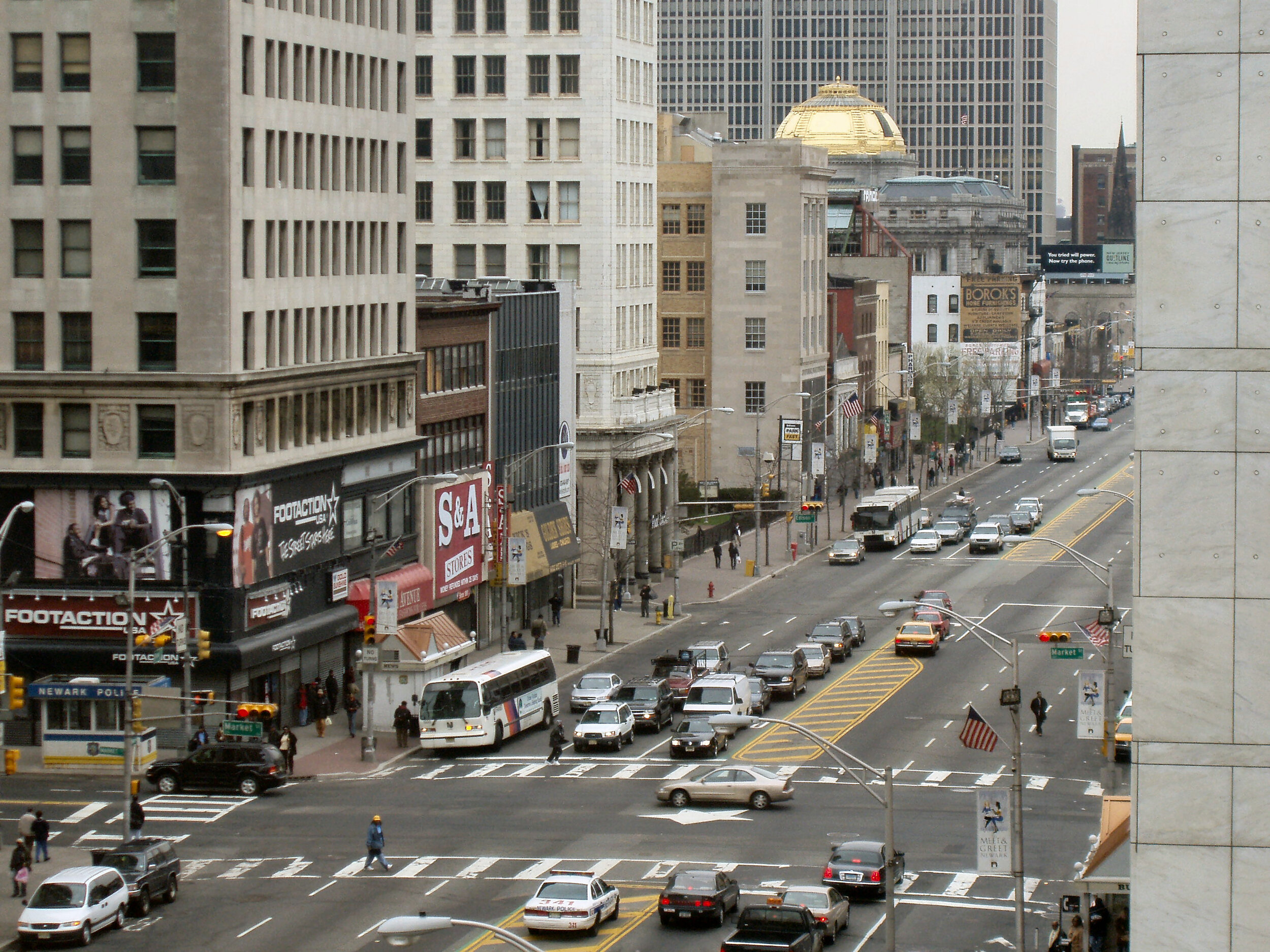
Downtown Newark, New Jersey

Downtown Newark, New Jersey

by Ayanna Costley

If you were to visit 430 Broad Street in Newark, NJ, in 2021, you would be met by the Rutgers Business School looming in the near distance, bus stops, and the light rail station. There would be no way for you to know that the location birthed the house music known as Jersey Sound just 41 years ago. Two decades later, at the turn of the millennium, a new generation of DJs and producers created yet another revolutionary sound, Jersey Club music. While Jersey Sound followed cues from Chicago’s house music innovations in the 70s, Jersey Club music looked to Baltimore for inspiration in the early 2000s. These aren’t disconnected moments in history. Both Jersey Sound and Jersey Club Music represent generations and city-defining sounds that stand the test of time. 

In 1979, 1500 patrons arrived at The Lincoln Motel on Broad Street for Club Zanzibar’s Labor Day Weekend grand opening. The club, outfitted with vines, velvet, flowers, and even live tigers, created the perfect backdrop for the bold, eccentric fashions of the late 70s and emerging 80s. Zanzibar’s sound was an undeniable product of the 80s as well with DJs spinning sophisticated, soulful disco like MFSB’s “Love is The Message.” Everyday people flocked to the club as an escape from the realities of life. Celebrities like Kool & the Gang and Tasha Thomas also frequented the club, with Gerald T premiering “Rapper’s Delight” for the first time on the east coast at Zanzibar’s opening:

“Joe Robinson hands me a record, and I’m like, ‘Let me see what this record is.’ So I put it on to listen to, and I was like, ‘Oh, my God!’ At the time I was listening to it, I was already playing Chic’s “Good Times,” and when it got to the breakdown, it was just like this new record! I mixed the new one in when that breakdown came on, and the place went berserk.”

Not relegating itself to the dark shadows of neighboring NYC, Club Zanzibar emerged as a vibrant hotspot home to Jersey’s own house music, the burgeoning Jersey Sound. The subgenre positioned soulful lyrics and vocals atop pulsating, electronic production, departing slightly from the funk-disco heavy electronic house music born out of Chicago’s Warehouse club. Resident DJs like Hippie Torrales, Gerald T, Larry Patterson, Tee Scott, Davis Morales, Larry Levan, and Francois K all left their mark on Zanzibar and house music, but Tony Humphries, my mom says, “was a legendary DJ.” He would use house records as “mixing tools” and “bridge records” because they were easier to blend and mix, saying “If I was going to play Aretha Franklin or something, and wanted to play Luther Vandross after that, I would use a house track to get from one to the other. I would almost always go from vocals then tracks, tracks then vocals – it was easier to blend with those Thorens.” It was his relationship with Abigail Adams, owner of Movin’ Records, and Shelton Hayes, one of the club’s managers, that helped birth what they titled Jersey Sound.

City officials and real estate developers demolished Club Zanzibar in 2007, highlighting Newark officials’ and land developers’ complete disregard for the city’s culture. Former Newark Mayor and current U.S. Senator Cory Booker delivered the first blow to the cultural landmark, noting, “We’re going to see an incredible new light shine from this site. But right now, I have a lot of built-up energy that I need to unleash on this building.” Booker believed destroying the physical structure, although rampant with drug users and riddled by violence for years, would help revamp Newark’s image to benefit gentrifiers, downtown college students, and workers commuting from NYC. I argue that transforming the motel into a community art center honoring the advancements Club Zanzibar and its history would have done wonders for the Newark community instead. Nonetheless, the erasure of historically and culturally significant landmarks from our physical space makes documenting and collectively coming together to share this history extremely important.

At the turn of the new millennium Jersey Club Music emerged out of the same regional space. Originally called Brick City Club as a nod to Newark’s nickname, the music was pioneered by DJ Tameil, Tim Dolla, and other DJs/producers who took direction from the quick and aggressive sound of Baltimore club music. Social media’s rise helped spread Jersey Club music videos beyond state limits, often racking up thousands and sometimes even millions of views. Artists filmed their videos at home, in basements, parking lots, and even during parties in warehouses. Songs, sprinkled with sampled adlibs from hip-hop and R&B, built on hard drum kicks, and featuring catchy vocals that often called out dance moves, took over. One of the earliest songs that I remember is Tim Dolla’s “Swing Dat Shit.” I didn’t know if people around the country were dancing to it, but it didn’t matter because the city tuned in. 

From spending hours alone learning the dances at home to showing those same moves at school talent shows or parties, Jersey Club music gave the youth autonomy to create their own culture in the same way Jersey Sound had years prior. It spread to those in other regions listening to the music, learning the dances, and even adopting the music’s characteristics to make remixes of popular songs. For my eighth-grade graduation party, my parents hired DJ Jayhood as the entertainment/DJ. In Newark, that was the equivalent of having a huge, mainstream rapper or artist at your party. 

In recent years, Jersey Club has received praise and celebration from mainstream Hip-Hop and R&B artists. Whether through mutual collaboration, such as Missy Elliott working with Jersey producers in 2014, or mainstream co-opting, namely DJ Khaled and Drake’s hit record “To The Max” bearing undeniable similarities to DJ Jayhood’s 2007 “Heartbroken” remix, or Ciara’s “Level Up” which repurposed DJ Telly Tellz’s “Fuck It Up Challenge,” it is clear that Jersey Club wasn’t just a moment in time or history, it is a movement. But those artists rooted in the history and culture of Jersey Club, not just the techniques, are responsible for its explosion and export from Jersey to the world. UNIIQU3, a pioneer Jersey Club artist, started out DJing in local parties before becoming the first Black woman DJ to play at Holy Ship!, an annual electronic music festival. She’s booked gigs at Afropunk, Coachella, and even international events. In 2019, she helped launch PBNJ, an international club music sandwich made in Philly, Baltimore, and N.J., whose events highlight emerging, local talent in the club music scene, sharing east coast club culture with the world. 

Most recently, Cookiee Kawaii gave her viral song, “Vibe (If I Back It Up), the video treatment, racking up two million views on Youtube, and maintaining virality across social platforms. Watching Cookiee Kawaii and her dancers sexy walk and rock their hips in a cinematic video transported me back to middle school when Ms. Porsh called out these moves on songs with DJ Lil Man and DJ Jayhood. 

Imprinted on Newark’s memory and legacy, these two generations of club music have forged themselves as legitimate, generation-defining sounds, heard and celebrated not just locally, but around the country and the world. My parents had Jersey Sound, and I’ve had Jersey Club, so there’s no telling what the next generation will create out of Newark and New Jersey. The legacy is strong, and despite attempted erasure and appropriation, it will undoubtedly continue to be home-grown for generations to come.  

The Unsung Women Innovators of Jersey Club Music

flisadamupdated.png

by Flisadam Pointer

The rebellious child of House music, New Jersey Club should stand as one of the most widely-recognizable and unique contributions from the state. The impact of the genre founded in the early 2000s has spread far beyond the confines of the Garden State. Music that at one point was only being played by local DJs at underground house parties now finds itself on international music festival stages and in songs by artists like Ciara and dvsn. In fact, the genre is just as much of a style of music as it is a culture. However in what feels like an intentional act, mainstream coverage of Jersey Club often omits the major role women have played in it.  

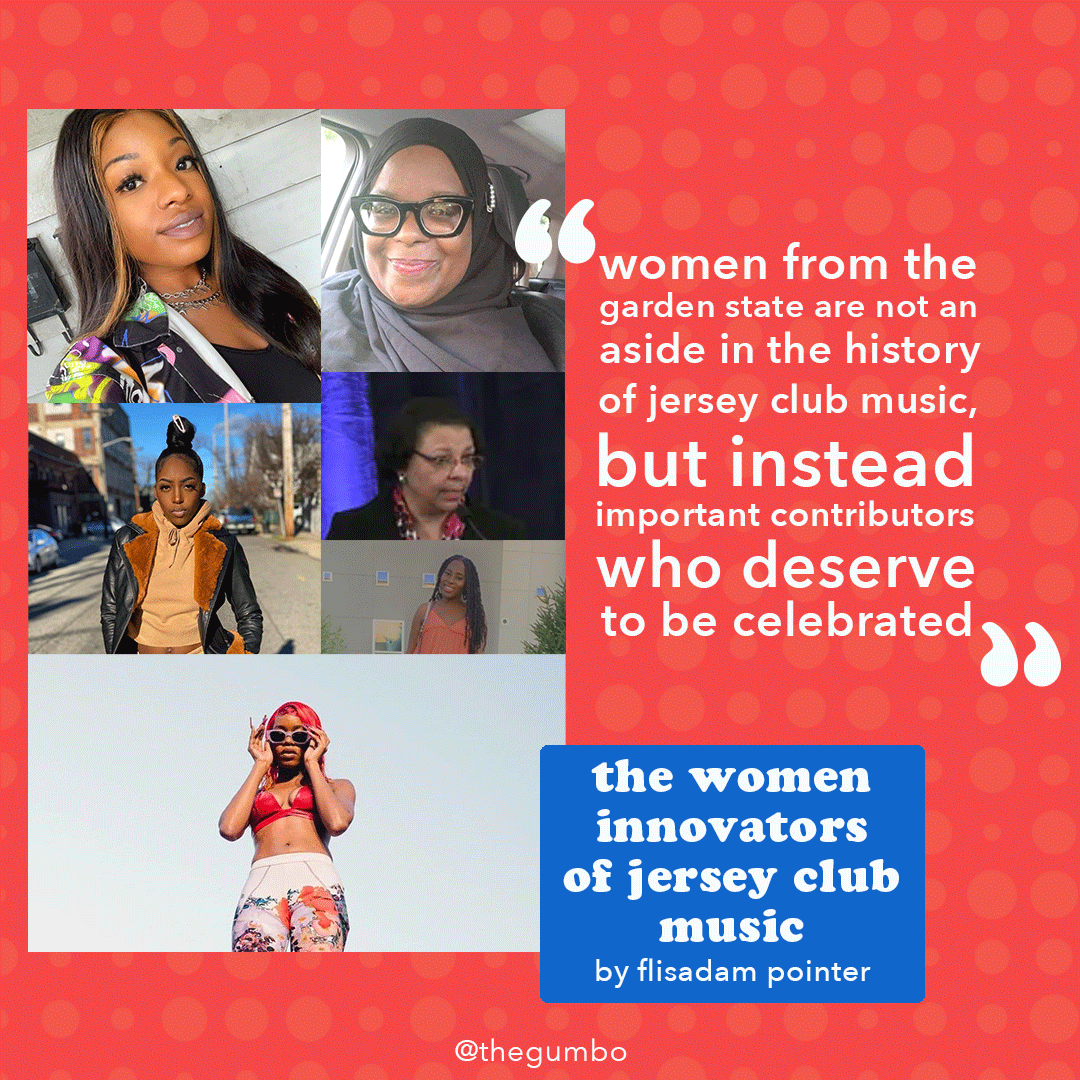
The contributions of DJ Tameil, Tim Dolla, Mike V, DJ Frosty, DJ Lil Man, and DJ Wallah cannot be understated. DJ Tameil, Tim Dolla and Mike V are the forefathers. DJ Frosty served as a bridge between adult and children listeners. DJ Lil Man mastered video content and helped transition events from home basements to large venues. And DJ Wallah dominated the radio airwaves in a way that had not yet been seen. But as often happens within Hip-Hop, Rap and music at large, the work and talent of the women within Jersey Club music are pushed to the background. From vocals to production to event promotion, women from the Garden State are not an aside in the history of Jersey Club music, but instead important contributors who deserve to be celebrated. Here are some women you should know.

UNIIQU3

UNIIQU3

DJs and Producers

From creating original songs, producing mixes, live emceeing at parties and ushering in the next dance craze, DJs are the heart of Jersey Club music. Women Hip-Hop DJs such as DJ Cocoa Chanelle, DJ Diamond Kuts, and DJ Lazy K amplified and supported the genre, but it wasn’t until UNIIQU3 entered the scene that there was a woman on the boards who focused solely on Jersey Club music. Dubbed the “Jersey Club Queen,” UNIIQU3 has played festivals like AfroPunk and Coachella and headlined international shows, playing a huge role in spreading the genre across the globe. UNIIQU3 is also a producer, vocalist, dancer, digital innovator and businesswoman. When she’s not creating music she’s hosting her Twitch show UNIIQU3’s Club Chronicles, hosting workshops to educate POC & LGBTQ+ creatives on DJ etiquette and managing their business with her outreach company BE UNIIQU3, or building what she calls an “international club music sandwich” of Philly, Baltimore and New Jersey DJs with her event company PBNJ. 

“I definitely wanted to become a DJ because I did see a lack of women behind the booth at the parties I would go to. I Googled Black women EDM DJs and would find nothing. So after I learned [how to DJ] I made it my mission to [be that representation]," said UNIIQU3. 

She also discussed how heavily DJs relied, and still do, on the attendance and participation of women partygoers. Prior to her arrival the men who DJed utilized commands like “ladies booty bounce to this” and drops like “hit it to beat” to encourage women to shake their behinds or men to dagger them. UNIIQU3 intended to “set a new vibe” during her sets and create a space for women to reclaim their bodies and autonomy on the dance floor, “I would call the girls into the circle! I was over the misogyny. Tired of the girls being told to booty bounce for the enjoyment of the guys.” 

When asked about her legacy she replied, “honestly, I still have so many more things to do. This pandemic has forced me to slow down from touring. I started [my career] wanting to make an impact on my community. So everything I’m doing now, in terms of production, is to help women who want to learn [how to produce themselves]. Nurturing my girls here [at home].”

Ms. Porsh

Ms. Porsh

Vocalists

Vocalists with Jersey Club Music serve as the unofficial ambassadors of the culture. Known for classic tracks “Rock My Hips,” “Get Up On The Wall,” “Can’t Bounce Like Me,” and “Sexy Walk” Ms. Porsh was the first woman recording artist to receive featured vocal credit in Jersey Club music, opening the door for acts like Cookiee Kawaii to come nearly a decade later. 

“I didn’t realize the trail I was blazing back then especially as a junior in high school. I didn’t have any management or any representation. I was just recording [music] and putting it out. Now that I’m older, had I had the opportunity to hire someone I would have seized a lot of opportunities that were available at the time and progress my career further,” said Ms. Porsh. 

When discussing her signature vocal stamp, she credits DJ Lil Man for giving her popularity a boost: “I said it one time. He took the vocal and locked it in the vault. Later placing it on all the tracks [we created together].” 

We also discussed the lack of other credited women vocalists, to which she replied, “I wish there would have been more us! We could have teamed up and did great things. Female unity would have been great for the culture.” And when asked about what she would like to see in the future for Jersey Club music she replied, “I would love for Jersey to receive its credit. Mainstream artists will jump on a Jersey record but we won’t get our just due. We don’t get the recognition for the sound.”

Cookiee Kawaii

Cookiee Kawaii

Cookiee Kawaii burst on the scene with her single “Vibe,” an infectious cut that took the world and TikTok by storm and is Jersey through and through. We talked about the lack of women vocalists within the genre, saying "there weren’t that many females that really dominated in the club field. I definitely looked up to K Swift because she put on for Baltimore club music heavy, rest her soul. UNIIQU3 also put on for the ladies. Others were Ms. Porsh and Double C Chanel (formerly Empress Tokyo) as they were the heavy hitters of club vocals before I really seriously started doing music. The fact that I now have the opportunity to be the front runner in Jersey Club is a blessing."

When it comes to her future in music and the future of Jersey Club, Cookiee shared the same sentiment as Ms. Porsche: "I honestly just want to put Jersey Club into the same conversations with the other bigger genres. To be recognized for what it is and how influential it is. It's a genre that can stand up with pop, EDM, and techno. The world needs to see there’s a whole culture behind Jersey Club music."

Dancers

Self-taught dancers played a huge role in Jersey Club’s wildfire-like-reach on social media, with many spending hours on YouTube to learn the latest dance moves in time for an upcoming party. The Sexy Walk, one of the most famous Jersey Club dances, is a blend of Harlem’s heel-toe and Chuck Berry’s duck walk and also the first dance move in the genre created and credited to a woman. Originated by Ashley Ford and later popularized by Miss CTE (for then-popular dance crew Chuck Taylor Entertainment), how convincingly the dancer could exude confidence while executing the move, neck snaps and head rolls. Although not exclusively a dance crew, West Side High School’s Kick Up Girls, also contributed to the Sexy Walk’s popularity. Today the most popular women dancers include Pack Rat, 3l3v3n, Quee, Danielle Morina, Ke Ke Nia, and Coach Neyy.

Kiyante Grant

Kiyante Grant

Event Promoters/Street Teams 

The rise of Jersey Club music’s popularity meant promoters needed venues for the next big party and street teams on the ground to spread the word. The first all-women-led street team that doubled as a dance crew was founded by UNIIQU3 and called The Viixens. Irvington native Kiyanté Grant founded the first all-girl-led event promotion company Lady Rock Star (LRS), hosting self-funded teen parties at small venues across the city. When asked why she founded LRS she replied, “my initial objective was to earn extra money. In all honesty it wasn’t until after our first teen party that I realized how much more significant what we were doing actually was! We were packing out venues, selling out tickets, being a part of photoshoots... completely violence-free. Reflecting on it now what we’ve done was legendary for 14+-year-old girls.”

Although Grant is no longer in the event promotion business when asked what she would like to see next she quickly said, “the future of the Jersey Club music scene deserves the full participation of women just BOLDLY this time around.”

Space Owners

Many event spaces weren’t willing to open their doors to the genre’s young demographic. The first large scale facilities to do so were the Newark Public Library’s (NPL) main branch and the historic venue Newark Symphony Hall (NSH). Then library director (2005-2015) Wilma J. Grey was a fierce advocate for the city’s youth and found it imperative for them to have a safe place to enjoy themselves. NSH events manager and avid House music lover Marie Thompson made it her mission to do the same. When asked about the role women played in the genre she answered, “the Jersey Music Scene has been a male dominated industry since its inception. Very few women break into the good ole boys club of Djing, promoting, owning record stores, production, and sound. I was fortunate to break into the game as a promoter and host of a monthly party [Deliverance] that garnered at least 500 people a month." The East Orange native turned that passion into a career.  “I parlayed my love of planning and great events into a full-time job at Newark Symphony Hall,” continuing, “if the floor could talk it would tell you stories of young and old dancing and falling in love with this thing called Jersey House. The Terrace Ballroom had become known for some of the most epic college and house parties.”

----

So, what’s next for the genre and the next generation of women curators? The lifeblood of the Jersey Club music heavily relies on social gathering and with the coronavirus restrictions that is not possible at this time. However, the pandemic hasn’t seemed to stop the genre by any stretch of the imagination thanks in part to applications such as Thriller, TikTok, and Instagram. There is a new wave of women in the Jersey Club music scene currently creating a presence online that cannot be denied. The culture is alive and well and the women are coming for what’s theirs.


PAP Chanel Talks About What Lies Ahead For Women In Hip-Hop

tumblr_77950b7c0cf08f08dd5fae92dcea7b80_96c46061_1280.jpg

by Brooklyn White

PAP Chanel says that rapping has always been "in her, not on her," as she began reworking classic nursery rhymes at age 11. "It all grew from when I was younger and I would just write down different rhymes,” she said to The Gumbo via Zoom.

Years later she's grown in her skills, dropping an EP in 2018, The Definition of P.A.P and most recently her debut mixtape, Pretty and Paid. Pap named the project after an acronym of her moniker "P.A.P,” which stands for “pretty and paid.” The mixtape includes seven songs and only one feature, as she wanted to work on her own sound with this tape. "I know a lot of people were anticipating my new project," she said, speaking on the gap between her releases. But she maintains that she wanted to "put it on hold" to make sure the rollout was fitting. "I waited a year and a half and I don't have any complaints,” she added.

The mixtape’s sole feature is Blac Youngsta. The Memphis-based rapper approached a song she had already written for the project, “2 Way Street” and added what PAP called “the icing on the cake.” For production on Pretty and Paid, she worked with J. Reid, who has credits with talents like Lloyd, City Girls, Salma Slims, Lil Baby, Lil Wayne, and one of PAP’s idols, Nicki Minaj. "Every time we work together it's magic," PAP said of her relationship with Reid. The two met before she moved to Atlanta and gained the following she has today, and he was among the first to support her saying, "he liked [her] sound and flow."

As far as future collaborations go, PAP says her main goal is to work with more women in the industry. "I feel like times are changing for women,” noting how the competitiveness usually associated with Hip-Hop’s best performers is fading, as she sees multiple women on the Billboard charts at the same time. “Back in the day, they always used to put them against each other," she says, referring to the feud between Lil’ Kim and Foxy Brown. PAP wants to do her part to change that narrative, saying "It's still so much more work to be done and I think we're off to an amazing start.”

With the year winding down and COVID-19 lockdowns seemingly imminent, the rapper shared plans of releasing a deluxe version of Pretty and Paid with more guest features. She’s in what she calls “study mode,” a time she’s using to experiment with new sounds and alter egos. PAP also teased a forthcoming lipgloss line, due out soon. At the end of our call, she tells us to “be on the lookout” for all that she has coming next. 

From King DeLarverie to Queen Latifah: Stormé DeLarverie’s Impact on Gender-Bending Fashion

screenshot-storme-delarverie-main.jpg

by Amanda Wicks

Let my mama tell it, I was never going to “catch” a man. She thought I would grow out of my love for wearing oversized clothes and running with my older brothers as I transitioned into young adulthood, but I never did. My image didn’t mesh well with her idea of what a man wants but I had no desire to change. Not only did I abhor the idea of living my life just to appease the male gaze, but my mama was also loud and wrong. 

From Janelle Monae tippin’ on the tightrope in her well-tailored pant suits to Aaliyah being everybody’s 90s crush in her oversized Tommy Hilfiger gear, Black tomboys are gender-bending phenoms, defying the feminine-masculine binary. Though this seems normal in Hip-Hop culture, these women occupy a space that had to be carved by somebody, and one of the Black women who set the foundation for people like Missy Elliott, Queen Latifah, TLC, and MC Lyte is the force known as Stormé DeLarverie. 

A quick Google search of DeLarverie will garner countless hits for articles, but they’ll most likely be about her notoriety as the spark that ignited the Stonewall Uprising, the catalyst for the  gay rights movement in the United States. While this is a grand claim to fame, her impact on Black women and fashion is often overlooked because of it. 

Born in 1920s New Orleans to a wealthy white father and a Black mother who was his servant, the soul of jazz was infused into DeLarverie’s life at a very young age. Her life centered a love for entertaining as she wowed crowds doing everything from riding horses for the Ringling Brothers Circus to touring with jazz bands. Even then, while she presented herself as stereotypically feminine, her deep baritone voice both captivated the audience and transcended their understanding of what a woman should be. 

image4.png

by Amanda Wicks

DeLarverie’s world shifted in 1995 when she made her way to New York City and joined the Jewel Box Revue, a female impersonator company,as the only woman and MC. She invigorated the historic Apollo Theater in Harlem night after night and helped cultivate a space where everyone, specifically the LGBTQ community, could be safe and free. The creators of the Jewel Box Revue actually prioritized hiring an all gay staff since the other revues of the time weren’t as “gay-friendly.” They were known for being no-nonsense about homophobia while touring, offering protection to those who simply wanted to enjoy the show. The world outside those doors showed no mercy, however, and DeLarverie had to grapple with that reality. 

In her decision to become the first, and only, drag king in the company, DeLarverie was urged to reconsider. In an interview, she recounts this distinct moment in time when she says, “Somebody told me that I couldn’t do it, [be a drag king], and that I would completely ruin my reputation and that I had enough problems being Black. But I said I didn’t have any problem with it, everybody else did.” Despite pushback, she went on to do whatever the hell she wanted and became the star of the show. 

unnamed (1).jpg

Ironically, though, it wasn’t her masculine attire that garnered negative attention, it was her feminine street clothes. Between the 1940s and 60s, law enforcement drew upon legal codes against costumed dress, otherwise known as “masquerade laws,” to target the LGBTQ community, effectively arresting people for cross-dressing. Sexual deviancy and cross-dressing went hand-in-hand in the eyes of the law and the laws were their way of ridding the streets of “bad” people. DeLarverie was detained twice for dressing as a drag queen, so even when her garb “matched” her gender, she was seen as a threat to social normativity. 

DeLarverie’s entire being represented a life suspended between masculine and feminine. Eventually, she became known for her butch attire. Well-tailored suits from London and men’s black leather jackets were her staples; still, however, the people closest to her asserted that DeLarverie maintained a stereotypically “womanly” presence. Her partner of many years, photographer Diane Arbus, captured one of the most well-known images of DeLarverie eloquently titled “The Lady Who Appears to be a Gentleman.” As noted in Arbus’ biography by Patricia Bosworth, Arbus once wrote, “[Stormé] has consciously experimented [with] her appearance as a man without ever tampering with her nature as a woman.” In this case, DeLarverie’s “womanly” nature was her inclination to help others. She was known by many as a caretaker of sorts, nurturing and protecting those around her.  

unnamed (2).jpg

Though one’s gender and sexual identity is often reduced to visible markers such as physical features and clothing, DeLarverie created a tension between perception and reality by tearing down the false dichotomy of masculine/feminine. Her suave yet tough exterior coupled with her gentle and loving nature subverted all understanding of what it means to be “ladylike.” DeLarverie’s unapologetic presentation of self is a manifestation of the Black feminist radical tradition that reimagines what resistance looks like. When tracing a history of rebellion, grand gestures are most applauded (I’m talking violently overthrowing slavery and leading a whole bus boycott), but it’s the resistance in the everyday that inches us closer to being able to live freely, especially for Black women. 

DeLarverie chipped away at respectability and the patriarchal standards for Black womanhood simply by showing up and showing out in her menswear. Her attire didn’t render her less of a woman, instead, it accentuated her feminine prowess—turning heads with an ethereal beauty while exuding a depth and strength that nourishes and fortifies. On the shoulders of her resilience and courage stands a whole generation of Black women who aren’t afraid to be tomboys. Whether rocking a red lip and a tuxedo, or some lip gloss and baggy jeans, they defy societal norms and still manage to be the baddest. As written in a poem dedicated to DeLarverie, “Sometimes war paint is made by Maybelline, and sometimes the King is a woman.” Gender-bending women in Hip-Hop and beyond can stand a little more firmly in their true selves because King DeLarverie stood firmly in hers. 

Hip-Hop Dynasties: Why Docuseries are Critical Storytelling

Ruff-Ryders-Chronicles.jpg

by Sade Hawthorne

Imagine a world where you had the choice to watch a marathon of compelling historical narrations of what was once the biggest musical acts in the world. In the late 90’s/early 2000s, you could find entertaining yet critical shows that displayed extensive musical archives. Take, for instance, VH1's hit show, Behind the Music. Airing from 1997 to 2014, the TV series allowed fans to take a deep dive into the careers of our favorite artists, across all genres. Many of the stories featured on the show were spoken of for the first time. Case in point, the Mad Hatter of Rap, Busta Rhymes. During his episode he disclosed his personal truths, like battling his way to mainstream recognition while dealing with the tragic loss of his son, among other setbacks. How else would we find intimate details about the likes of Busta Rhymes and TLC from their own point of view back then? When we think about Hip-Hop’s golden era, we usually pinpoint the mid-1980s into the 1990s. Hip-Hop docuseries are critical storytelling not only for the continued progression of the genre, but also for the community, especially as we look to an unpredictable future. 

Looking into a well-known episode, VH1 aired a telling of the iconic trio from those that knew them best for the world to see. On April 18, 1998, insights shared from Lisa 'Left Eye' Lopes, Rozonda 'Chilli' Thomas and, Tionne 'T-Boz' Watkins allowed those to connect with the artists on a deeper level in just 60 minutes. Not to mention the unforgettable moment where Left Eye opens up about the group's financial woes, "how can a group sell 10 million records and be broke?"

Alongside Behind the Music came The Greatest, another juggernaut curated by VH1 where each episode featured a countdown of songs, albums, moments, or musicians. A mini-documentary in its own right, each countdown was coupled with commentary from entertainment industry figures telling a quick story or a fascinating fact. A prime example would be the 40 Greatest Hip-Hop Songs of the 90s episode, which premiered in December 2012. This episode introduced a fair amount of new music to their audience from the likes of Big Pun and Arrested Development, especially for those that did not have the privilege to enjoy the music at its peak. Personally hearing "Who you trying to get crazy with ése/Don't you know I'm loco?" for the first time on this program was the reason why I went online and downloaded dozens of songs (with potential viruses attached). Outside of familial influences, shows like these were the catalyst for further research in Hip-Hop going as far back as the 1970s.

Fast forward almost a decade, and these documentaries and television series have diminished. Thus, imagine my excitement when I saw BET's promotional ad for a new docuseries highlighting No Limit Records. As someone who grew up in the South and watched BET religiously, hearing "Make 'Em Say Ugh" and "Ruff Ryders' Anthem" brings back a sense of home. From the moment I heard the news, I was hooked. Listening to Percy Miller, aka Master P, talk about his journey during the 5-part docuseries was nothing short of inspirational. Being a fan of Hip-Hop is one thing, but being able to receive valuable life lessons from these impressive feats only makes the music sound that much better.

Talking to Billboard, Master P expressed that he "wants to continue to inspire and educate my fans and introduce my journey to a new generation," and he did exactly that. The opportunity to get a more in-depth look from artists such as Silkk The Shocker, Mia X, and Mystikal provided a holistic approach to the 90s dynasty that was No Limit. We always see the glitz and the glam that comes from hard work and dedication, but through these docuseries we’re reminded that artists are regular people like you and I. Whether young or old, there’s a message for anyone wanting to listen. 

Immediately after came the stirring Ruff Ryder chronicles. Unless you live under a rock, you know of DMX. Still, through the installment, we're able to view how the music empire and all of its encompassing artists came to be. With interviews featuring label founders Joaquin "Waah" Dean, Darin "Dee" Dean, and Chivon Dean, the series peeled back the layers back with each defining episode enabling viewers to glimpse what it truly looks like to deal with the ugly side of entertainment. The first lady of Ruff Ryders, Eve, spoke on how she had to grapple with dealing with fame and the burgeoning pressure that eventually led to her leaving the tour early to get her mind right. Then there was DMX, the one to never shy away from difficult conversations, disclosing his continuing fight with mental illness. Regardless of their struggles, Ruff Ryders went on to create unforgettable history.

The recurring theme of both of these docuseries was family, and when you really think about it, Hip-Hop at its nucleus is a community that has influenced the lives of many just as a family would. Hip-Hop has as many as six elements according to scholars, the fifth being “knowledge”. So eloquently put, the Kennedy Center elaborated on the fifth element further:

“Hip-Hop’s fifth element of “knowledge” teaches the Hip-Hop community about its identity and ways to express that identity. It places great importance on claiming a stake in one’s own education. “Knowing where YOU come from helps to show YOU where YOU are going,” writes legendary MC KRS-One. “Once you know where you come from you then know what to learn.”

To the artist breaking through the industry or the inquiring kid who wants to learn more about Hip-Hop, these docuseries are needed more than ever. A discussion can and have been made between the quantity and quality of Hip-Hop as of late. There’s a place for it all, but there seems to be a disconnect between what was and what is. To truly advance, how can we continue to break barriers without a sense of direction? If we allow the past to be forgotten, then we are in serious trouble. However, there seems to be brighter days on the horizon. Looking at recent events, we can still see the influence of Hip-Hop's Golden Era making a comeback in all facets in today's music (see 21 Savage's Savage Mode II album cover.) Here's to honoring Hip-Hop history and the progression of the genre one documentary at a time.


How 90’s Black Teen Shows & Hip-Hop Ruled

GettyImages-111158160-1443278759.jpg

by Crystal Bridges

Growing up as a young preacher’s kid in the late 90’s and early 2000’s, I had no idea that any music for Black people existed beyond the gospel and oldies R&B my parents raised me on. One of my earliest encounters with Hip-Hop culture came when I watched the Sister, Sister episode of Mya and Blackstreet performing “Take Me There.” While the song technically falls into the R&B category, it’s charged with the same uptempo, beat-knocking rhythm that captivated me and so many other Hip-Hop heads at the time. When Netflix became the streaming home of classic Black teen shows like Moesha and Sister, Sister this past September, it reminded me of a time when Black teen shows were deeply intertwined with Hip-Hop. Watching cool, stylish and relatable Black characters embrace a culture specifically for us provided some semblance of self love and pride in my Blackness as a kid. The Hip-Hop theme songs, show scores, musical guest stars and performances and often the storylines themselves set the stage for the consumption of Hip-Hop music with millennials and the world. It was these Black teen shows of the 90’s that celebrated and embraced the culture in a fresh way that has yet to be duplicated.

Many Black teen show theme songs of the 90’s followed the classic Hip-Hop song formula: rapping and drums, a sampled song or baseline, a synthesizer. etc. Kenan and Kel’s intro performed by Coolio is the first to come to mind, with the rapper spitting rhymes about the pair’s schemes while reminding kids to tell their “homeboys and homegirls” to watch the show over a synthesized beat. Although All That didn’t have an all Black cast, the show’s diverse cast and content made TLC’s theme song a perfect fit. The R&B/Hip-Hop group’s use of the catchy phrase “all of that” became an indispensable part of the show’s identity, and a quick shout “oh oh oh” in a room full of people will surely be followed by the harmonization of “this is all that.” And I would be remiss to not mention The Fresh Prince of Bel Air theme song, the timeless “story all about how” rapper Will Smith’s eponymous character of the same name’s life changed, just as it did off of the small screen by charting the course for rappers in television sitcoms.

The theme songs weren’t the only pillar of Hip-Hop celebration on television. Moesha and Sister, Sister were both vocal about their characters’ love for Hip-Hop culture, made evident by the guest appearances from musicians-either as themselves or written in as a part of the cast. Appearances by artists like Lil Kim, Master P, Kid of Kid N Play, Bow Wow, Mc Lyte, and more, affirmed Hip-Hop as both a cultural powerhouse and pop culture period. And while many musical acts did indeed perform, they were also often characters with plot points that added to the drama and hilarity that ensued during the show.

After the 90’s the 2000’s saw a decline in Black television shows, as a result of the 2007 writer’s strike, the WB and UPN merger that led to the cancellation of many of our Black primetime favorites, and a general deprioritization of Black-centric sitcom content overall. it seemed that networks looked at Black teen shows and the Hip-Hop culture pulsating through them as a passing fad instead of the rich, resilient and ever-evolving culture they represented. With the inception of the CW network, television programming on the CW and Fox leaned back into shows that catered to mainstream, white audiences. In 2018, Sesali Bowen interviewed Kenan & Kel and Sister, Sister producer and writer Kim Bass, who said:

“Black teens are just like all other teens except how and where they are not. And how and where they are not, oftentimes, has to do more with perception, pride, and placement than any particular penchant for any particular programming.”

According to Bowen, companies are less concerned with delivering Black shows because “they aren't revolutionary or progressive to a generation of young people who have grown up watching these programs in syndication.” She says that Black teen stories being everyone's stories is no longer a new concept, affirming the aforementioned statement that Hip-Hop culture and more broadly Black culture are popular culture. As a result, while more calls can and will be made for more diverse representation in television, “diversity” is no longer predicated on casting when every character, no matter who they are, is given the space to occupy and perform our culture.

One could describe the introduction of shows like Insecure and Atlanta to our screens as a renaissance for Black people on television, and the same could be said of shows aimed at younger audiences such as Grownish and All American, whose incorporation of artists directly from the Hip-Hop culture like Diggy Simmons and Coop’s character rapping alongside a Hip-Hop score, respectively, incorporate the culture into the shows in a way that is somewhat reminiscent of televisions shows of the past. However most examples are far and few between, and the cancellation of The Get Down represents yet. another loss of the representation of Hip-Hop culture through Black characters. Lauren Cramer notes in “A Hip-Hop Joint” that:

Blackness and Hip-Hop exist in a recursive loop: Blackness generates the spatial organization of Hip-Hop and Hip-Hop is so racially charged that it produces blackness. As a result, Hip-Hop images can serve as the site for unexpected encounters with Blackness—specifically, visualizing Blackness in spaces that are not occupied by actual Black bodies. 

Therefore, the same Hip-Hop theme songs, show scores, musical guest stars and performances and storylines that once seemed to belong exclusively to Black people can. now present across all races and ethnicities. A quick scroll through your favorite streaming services or television channels will show you non-Black characters rapping and performing parts of Hip-Hop culture. Thus, we might never get a time as golden as the 90’s again. Thankfully, streaming services and video archives allow us to look to those shows and reminisce. And I personally hope that a writer, directors and producer will be inspired to use those Black teen shows to tell more stories that show the evolution of Hip-Hop and its ever present role in Black teen life.

Social Change, as Told Through Mics and Presented on Television

hiphoptv.jpg

by Elle McKenzie

Since the advent of television, the key issue associated with the medium has been representation. In a #RepresentationMatters study, as reported this past September by USA Today, 86% of Black Americans still yearn to see our culture told on both the silver and small screens. Let us rewind to the 1950s — the “Golden Age of Television” as they call it — when Black people were portrayed with large, red lips, wide noses, overly-exaggerated coarse hair, and more often than not, confined to subservient positions. This deliberate degradation at the hands of white folks forced our Black ancestors to struggle with telling our own stories, beliefs, opinions and identities. But make no mistake, though a ploy to cement the unwritten laws of the Jim Crow era, television also proved to be a strategic tactic for Black people to reclaim the power that we innately possess. The timely birth of Hip-Hop, conceived stylistically through the poetic-sultry sounds of bebop jazz and rhythm & blues, presented the visual awakening for artists to convey our stories in a positive (and televised) light.

The political radicals saw overwhelming whiteness in institutions of power and fought for multiculturalism and diversity. I mean, damn, the 2016-17 tv season was oversaturated with white showrunners — and a great majority of these gatekeepers were white, cis men. I think we can speculate what the percentage was at the onslaught televisions began to enter the American home. Similarly, the cultural radicals saw an ocean of negative images and tried to reverse the tide with their own visions. When Dr. Martin Luther King led thousands of protestors to the steps of the capitol in Montgomery, Alabama, they knew they would be met with force. And television would capture it all, instilling the notion of an antiquated, injustice time that can no longer be restrained. It’s not far off to imagine the generation of Chuck D and Public Enemy emphatically portraying their rightful, passed-down frustration in the visuals of “Fight The Power.” For the Hip-Hop generation, popular culture became the new frontline of our struggle.

In the 1970s, we began to see The Jeffersons, Good Times, and Soul Train grace Zenith’s televisions (imagine, first wireless remote controls!). Outside of “dy-no-mite” humor and Soul Train lines, we, as a Black culture, were also introduced to the essential, spiritually elevating teachings of Tony Brown’s Black Journal and Petey Greene’s trailblazing, ingenuity for the future of Hip-Hop in Petey’s Greene Washington. Positive illumination was jolting! And from these programs, each episode absorbed, ignited Black people’s will to shed the layers of false, oppressive  societal norms ingrained in our psyche. The Black experience was undergoing a new renaissance, and this time, was televised for the world to consume.

While the victories of the civil rights and Black Power movements had expanded the consciousness of Black people, we had not yet entered the proverbial promised land. Historical representations of Black people in the media, specifically in prime-time television, as poignantly expressed by author and social activist bell hooks, still imposed “stereotypical depictions that reinforce negative perceptions of Black men and women and too often serve as justification for racist behaviors, attitudes, and social practices.” It is important to gauge accurately the level and nature of prejudice and stereotyping of Black people in contemporary society if one is to intervene effectively in these areas. The overall objective, curated by Black artists, was to offer and influence actual self-perceptions among Black people. Black people for self-preservation, Black people for self-expression, Black people for self-affirmation are all, ultimately, the leading battle cries that hone the vanguard for the generating Hip-Hop movement we witness and indulge today.

During the Ronald Regan era, when crack cocaine was irreverently pushed into our communities, MTV burst onto the scene by championing rock and new wave — all by excluding Black artists. Only after Columbia Records reportedly threatened to boycott the young network, in 1983, did MTV begin airing Michael Jackson music videos. Winning and achieving the objective to influence our self-perceptions meant desegregating radio and television. The seismic 1986 arrival of Run DMC kicking down the industry’s doors in unlaced, low top Adidas and bucket hats to their own rendition of “Walk This Way” could not have been more metaphorical. A true cultural reset, to be honest.

While the new political radicals were out in the streets and on the campuses fighting apartheid and racism, Public Enemy and Boogie Down Productions (BDP) provided the soundtrack and repped the new cultural radical forefront. In preparation to emerge from the darkness, Hip-Hop pioneers alike demanded to be heard (and seen) as the expression of a new generation’s definition of Blackness. “Coming to you live!” was more than an introduction we regularly heard from Fab 5 Freddy on Yo! MTV Raps. Rather, transported through the air waves, the visuals of Hip-Hop — bleeding-edge music conceiving the discussion of social implication — offered a much more radical, much more successful voluntary desegregation plan to turn our culture into a weapon of resistance. Through the machines of television, Hip-Hop was our guerilla strike to not only take our message to the media, but also, take over the media with our message.

The rallying “FTP” chant of today’s protests, once eloquently spit through the words of five Niggaz Wit Attitude, resounds the fervor to publicize our political and social message to secure our civil rights and liberation embedded in the Constitution. It’d be wise for white folks to abandon their incessant need to appropriate our culture and revisit the socially-conscious report of Grandmaster Flash before we reach our brink and finally do go over the edge.

Representation in the media is a result of experiential contexts that help people to understand racial identity. These direct experiences, that we live through everyday, demonstrate that racial identity is (and always will) be influential to self. Black people, let us forever remind ourselves that racial socialization involves a transfer of messages about how to adapt to living in a racist society without internalizing how others perceive you. It lays the foundation for the development of identity frames. Personally, when I absorb the visuals of Queen Latifah injecting social change practices of unity or Kendrick Lamar calming my anxiety that we’re gonna be alright, I find myself in tune with the reciprocal deliverance of self- and communal love our political ancestors fought so hard to achieve. By suspending our disbelief and seeing our stories told through the artistry of Black individuals rather than through the lies of preconceived stereotypes, we can continue this change on an unapologetically Black, collective level.

Making "The Cut" On MTV's Hip-Hop Competition Show

screenshot_2017-02-01-00-39-07-1.png

by Charne Graham

The act of cozying up on the couch to watch aspiring superstars perform from the comfort of your home has persisted for nearly 72 years. The Original Amateur Hour, one of the first audition-based music competitions, aired on television in 1948. Hosted by Ted Mack, the televised version of what was originally a radio show featured legendary acts like Pat Boone and a young Gladys Knight, the only Black person on the show at the time. At just 7 years old she charted the course for Black women and Black people as a whole to participate in music competitions on television, a space that would showcase Black talent and shape music television for years to come.

Musical competition shows have dominated television for years. BET’s 106th and Park hosted a segment titled Freestyle Fridays that premiered in 2000, a segment that allowed aspiring, up and coming rappers to battle in front of the audience and three judges. Prior to the NY-based countdown show was another legendary program that happened further uptown, Showtime at the Apollo. Apollo, which aired late Saturday nights from 1987 to 2008, allowed artists to perform for the theater’s crowd, in the hopes that they would receive praise instead of “boos” and being dragged off of the stage by The Sandman.

The timeline of the emergence of Hip-Hop as popular culture and shows that placed the culture at the forefront coincided. But while CBS’s Star Search-the renowned program that featured contestants like Aaliyah and Destiny’s Child-existed as the premiere music competition show, there was not much of a focus on the genre emerging that was shaping the culture at  large. In fact, music competition television went years without a show dedicated to finding the next big superstar artist in Hip-Hop. So while the shows existed as a site for potential stardom, a space to build a relationship with viewers, and the opportunity to find professional guidance and feedback from industry professionals as judges, Hip-Hop was virtually missing from the music competition lineup during primetime.

On September 28th, 1998, the first episode of The Cut premiered on MTV. Airing right after the network’s illustrious music video show, Total Request Live, The Cut set a precedent for music competition shows to come. Hosted by the late rapper of the multi-platinum selling group TLC, Lisa “Left Eye” Lopes brought with her a charisma and quirky supernova style that gave The Cut a unique edge. Not only did she style herself in some of the most innovative fashion, makeup and hairstyles each episode, but she also brought with her a level of honestly and support that could only come from an artist themselves-and a Black woman more specifically. 

The 30-min show consisted of 4 musical acts, with more than half of the featured musicians coming from Hip-Hop or a sub-genre inspired by it. The performances varied from solo to group acts, after which a panel of 3 alternating judges record industry executive professionals and one entertainer-would give scores based on what they would. “hear and see.” The scores were given on a scale of 1-10 and would decide the winner. The person with the highest score at the end of each episode would also advance to the finals. The overall winner of The Cut would receive an undisclosed record deal along with a $5000 sponsored wardrobe and a music video funded by MTV that would be put into Heavy Rotation.

The Cut
introduced the world to a few contestants who later continued to pursue a career in music. R&B singer and songwriter Ne-Yo who then went by his first name Shaff performed in a group called Envy. The third-place winner of The Cut finals singer and dancer Anastacia later got a record deal after the show aired. The grand prize winner of the show was a Bay area Black female rapper and singer by the name of Silk-E, who performed alongside her hype man G-Nut. She impressed the judges so much that the celebrity judge KRS-1 offered her a record deal on the show if she didn’t win. She released her debut album Urban Therapy in 1999.

The Cut made history with MTV being one of the first reality music competition shows airing primetime, with a Black woman host and Hip-Hop at the forefront. Audiences got to see another side of Left Eye outside of being an artist, music industry feedback and backstories. With Hip-Hop artists like KRS-1 as judges, audiences also got to see a Black woman rapper like Silk-E win the competition with a major artist co-sign. Moreover, the show was conceived by a Black woman, Edna Sims-Bruce, who knew that The Cut’s structure was unlike anything that had ever been seen on television: 

The backstories give you a sense of who you're seeing and what they're like outside of the music. Having the judges tell them why they scored something can give the kids and the audience tips on things that can really make a difference in advancing their career. Yes, judging is always about people's opinions, but all of the judges are music-industry professionals.

There was a special kind of care and attention paid to the artists, that one can argue dissipated as more and more shows hit our television screens. 

After the first season of The Cut wrapped, Adam Tyler wanted Left Eye to return as the host. She declined as she was in the midst of working on TLC’s Fanmail album in addition to her solo debut album Supernova, and as a result, the show never returned for a second season. In the new millennium, we were introduced to music competition shows like American Idol, Making the Band, P. Diddy’s Starmaker, The Road to Stardom with Missy Elliott, The Voice and America’s Got Talent. Although it had only one season, The Cut became the very first of many shows that gave us an origin story of the contestants with Hip-Hop and R&B/soul backgrounds along with celebrity judges and hosts. The Black woman-created show opened the doors for Hip-Hop and many other different styles and genres to be featured in primetime television talent competitions, and put one of our most beloved Black women rappers at the helm. On the show, Sims-Bruce told the Star-Bulletin:

I want to teach the kids that the music industry doesn't just consist of a record company and the artist. The artists who judge have been where the contestants are, and a lot of times they're harder judges than the industry representatives because they know what it takes to make it in the music industry.

It's Time To Discuss The Impact of UPN's 'Eve'

p184943_b_h6_sb.jpg

By Njera Perkins

Eve, the Grammy-winning, Philly-bred rapper deemed Ruff Ryders’ First Lady, had already secured her place in Hip-Hop by the early 2000’s as a standout talent. Her skills as an emcee were undisputed – she could outrap many of her male counterparts – and her success manifested in chart-topping singles and platinum albums. A year after her breakout performance in Barbershop, a television opportunity came along that added another layer to her “eve-olution.” Every Monday night on UPN she tapped into another lane on the path of Hollywood success at the height of her music career, bringing her Hip-Hop starpower to the small screen. Her show further cemented what most should have already known: that women in rap didn’t have to compromise themselves, and could exist across professions triumphantly.

On September 15, 2003, the avowed pitbull in a skirt stepped into the world of television and debuted her self-titled sitcom Eve. Originally pitched under the working title The Opposite Sex, the show – which followed the lives of a bubbly Miami fashion designer named Shelly Williams and her group of friends – was the successor to hit series Moesha, with the network looking to capitalize on the starpower of another successful Black woman in music. Shelly – fashion-obsessed and girlier than most – may have appeared to be the complete opposite of the Eve we knew, but the rapper and her character shared a lot of similarities. Both had a true passion for their crafts, fashion design and music, and represented women who rejected the expectations society set up for them. The theme song, performed by Missy Elliott, encapsulates this entirely:

She's the kind of chick who likes to look fly
Can pick up any guy with a slick rap line
Give him the eye, get the keys to the ride
And live the single life, a little teasing on the side
She's the type of chick who likes to wear fly clothes
Who rocks stilettos, but will be ghetto
If anybody knows, let me tell you who knows
Who would spin the cash flow, let the story be told
E-V-E, how you do that?

In spite of the obstacles they each encountered in their careers and personal lives, they were determined to thrive through it all. And thrive they did.

On her debut album, ‘Let There Be Eve...Ruff Ryders' First Lady,’ Eve revealed a vulnerable side of herself rapping about heavy subjects like domestic violence, rape, revenge, love and heartbreak. The same topics manifested in the Eve scripts, with episodes of her show exploring the depths of friendship, gender roles, and the hectic relationships in her character’s love-life that took center stage. It should come as no surprise that the show had incredibly high ratings amongst young Black women, as the sitcom tackled the same issues that existed off-screen.

Outside of Queen Latifah’s role on Living Single - which ended five years prior to the start of Eve - there have been little to no Black women rapper led sitcoms, with the few Black women rappers we would see on tv appearing as cameos or guest performances. Eve’s sitcom carried the torch that declared women in Hip-Hop as multidimensional and capable of obtaining multiple bags, with Brian Josephs of Spin declaring Monday nights on UPN as the place "where Eve transformed from Ruff Ryder to sitcom actress." And transform she did, but she never strayed from the tough, honest, Black woman that was so authentically Philly. This was important, because Black Women in Television: A Short History asserts that creative control over the images of Black women in mass media remained, for decades, in the hands of white men who perpetuated stereotypical representations of Black women as mammies or sapphires. Actresses like Diahann Carroll and Phylicia Rashad came along and helped reshape our narrative on the tv screen, and much like the actresses before her, Eve used her show to combat the the anti-feminist rhetoric that trapped women in Hip-Hop and television since their inception. 

The show was cancelled after three seasons, in a move that Fern Gillespie of The Crisis described as detrimental to the future of Black sitcoms. "Without that opportunity for some of the younger artists to hone and develop their skills, it will potentially have a generational impact,” he wrote. A quick look at the Black actors in network television lineups in the years thereafter - or lack thereof - will confirm this as true. The cancellation was widely accepted as a result of low overall ratings, but a few weeks ago Eve offered up another potential reason for its cancellation to TV One’s Uncensored:

Having my own sitcom was everything. It was pressure, it was fun, it was stressful. It was amazing. I was the youngest at the time, of the cast. And a lot of them were just getting married, just having babies or just buying their first house. I was still going to the club trying to get to set at 9 a.m. Trying to get to a table read, which was—don’t do that, ever.

It took me a minute to figure out that rhythm because I had always been on tour, all my life, pretty much, up until that point. I think for me to offset some of that, I was still trying to hang out at night. Which was not good.

When the show ended, it was definitely heartbreaking because at that time, we had done three seasons and we were family at this point. I do believe a lot of it had to do with the fact that I was trying to straddle both sides of my life, still trying to hold on to kind of hanging out. And I was late a lot. That’s not cool. I do think a lot of it had to do with my actions at that time.

And I do think about it sometimes. When I look back on it, I’m like, wow. I don’t believe in regrets but that is one time in my life where I wish I would have taken it a little more seriously than I did.

Nonetheless, Eve and the actress-rapper were able to rack up several award nominations. Eve was nominated at the 2004 Teen Choice Awards for Choice TV Actress: Comedy while the show earned a nomination for Choice Breakout TV Show that same year. She was nominated for the same award the following year along with two nominations for the Blimp Award for Favorite Television Actress at the 2005 and 2006 Kid's Choice Awards. Moreover, the show earned Eve a 2005 Image Award nomination for Outstanding Actress in a Comedy Series and Outstanding Lead Actress in a Comedy Series at the 2005 BET Awards. Moreover, Eve would go on to land other acting roles, including The Cookout, Barbershop 2, Single Ladies, and most recently becoming a daily fixture on The Talk alongside co-hosts Sheryl Underwood, Sharon Osbourne, former news anchor Julie Chen, and actress Sara Gilbert. 

To this day, Eve is considered a signature sitcom that arrived at a time where Black talent were given the space to exist and more importantly explore television. Eve, becoming a trailblazer in her field, doubled-down on representation as a Black woman in Hip-Hop who broke gender norms inside and outside of the genre. By exploring uncharted territory on behalf of Hip-Hop, Eve was one of many who affirmed Black women in Hip-Hop could exist in and explore all of their interests wholeheartedly. 

Santigold’s Liminal Space within Hip-Hop

Screen Shot 2020-09-22 at 12.29.44 PM.png

by Beza Fekade

Hip-Hop can be fundamentally understood as a resistive cultural production fusing new and old, past and future; merging artforms widely known as sealed off from one another. It foregrounds the necessity for retrieval and repurposing in order to sustain itself. And through Hip-Hop’s constant alterations yields emergent challenges to its style. Santigold, born Santi White, journeys a defiant road that cements her as an initiate of fusion and originality. Without the familiarity of lyricism and word play, she evades Hip-Hop’s customary structure of rhyme, dispositioning her from the women who we deem instrumental in the artform’s expansion. However, with a closer listen and a stretch of time spanning twelve years, we can hear her more clearly in the sounds that have surfaced, post her exalting debut album. On the surface, we find her at the margins of our understanding of Hip-Hop, however as we begin to dig deeper, she seamlessly melds into the very fabric of its innovation. 

In the 2003 text Theorizing Diaspora, Stuart Hall states that cultural identity is a matter of becoming and being, and is not intrinsically defined nor something that already exists; it adheres to critical points of deep and significant difference in order to map the “unstable points of identification, or suture.” For decades, Hip-Hop music has been a global site of cultural formation amongst African-descendant communities to engage in the state of “becoming” and “being.” Santi White is a testament to this cultural ecosystem, molded within Hip-Hop’s reach, and at large the African diaspora. What ensues is an intimate process of cultural identity that equips her to tap into new and unpredictable points of becoming.

 Born in Philadelphia, White grew privy to a variety of genres as a child, such as reggae, jazz, the legendary Fela Kuti, the great soul singers Aretha Franklin and James Brown, and punk artists such as Devo and Siouxsie and the Banshees. In a 2012 interview with Spin Magazine, writer Caryn Ganz shared that White had a dream of becoming a professional musician at the age of 15, but it wasn’t realized until a decade later. Throughout her adolescence she roamed between an all-black school to an all-white girls school, and later, public school to prep academy. Parsing through her early life, she realized the ease of her mobility; she understood that she remained as a constant, the bridge to multiple localities. “I was a connector, because all these different people would never hang out together, but they’d be together with me…That’s what my music does. And that’s what I realized" (Spin Magazine, 2012). Just as Hip-Hop engages in the process of joining two or more things to form a single entity, so did White’s construction of her artistic performance. 

White spent most of her summers working at her father’s law office in downtown Philadelphia where she discovered “fly girls,” the dance troupe on the sketch comedy In Living Color. The ladies would perform hard-hitting choreography to notable hip-hop and R&B records during intermissions and before commercial breaks. White immediately found herself emulating their wardrobe and demeanor.  Here, she engages in Hip-Hop’s production of cultural and aesthetic performance by re-inscribing the appeal of “fly girls.” Although small, it points to a series of sutures in her ever-evolving artistic form.  

After the completion of high school, White attended Wesleyan University and double majored in music and African American studies. She eventually began her musical career as an A&R representative for Epic Records. In 1999, White collaborated with GZA of the Wu-Tang Clan on the titled track of his album Beneath the Surface. The following year she made another collaboration with GZA with “Stay in Line,” featured on the album Legend of the Liquid Sword. Her musical influence began to find footing with Philly rock-soul singer Res, as she co-wrote and produced her debut studio album How I Do. Res’ debut album stands as an early indication of White’s refusal to be categorized, with the project merging pop, Hip-Hop, Rock, and R&B. 

As lead singer of the Philadelphia-based punk rock band Stiffed, White and her bandmembers released the ep Sex Sells (2003) and album Burned Again (2005), incorporating new wave and no wave musical elements. The group soon disbanded leading to White and former bandmate, John Hill, joining forces to begin working on her solo self-titled debut, Santogold (later changed to Santigold due to a lawsuit dispute). Like her work with Stiffed, the album blends sounds of new wave, as well as reggae, dub, punk, electro, Hip-Hop, grime, indie, and more. White’s aim was to create a genre-defying album that blurred sounds and artforms deemed frictional in relation to one another. What culminated was a gaudy no-skip assemblage that positioned her as a spearhead toward dismantling rigid musical genres. 

Ironically, her music became easy pickings for commercialization and pop culture. Santigold’s songs could be heard in Bud Light ads and television shows like Grey’s Anatomy. Conversely, White collaborated with Jay-Z and Kanye West for the record “Brooklyn Go Hard,” which sampled “Shove It” from her album and included an additional verse from the artist. Although White denounced, in 2008, that her music is solely Hip-Hop, the collaboration reinstates the essence of Hip-Hop’s re-mixing while highlighting the dexterity of White’s sound and rebellion

 Dating back twelve years to its release, Santigold still proves as a pivotal shift in Black women’s contributions to performance and music. Subsequent to White’s 2008 release, the ensuing decade brimmed with new, adventurous talent. The likes of Tierra Whack, Rico Nasty, Kari Faux, Leikeli47, and others, altered standards of sound and rhyme. Although listeners may not label her within Hip-Hop’s pantheon, her proclamation of connector reigns true, as evident by the ladies she precedes and comes after. Without realizing, White’s emergence as a rioter of category and sound, cloaks her with intersecting musical styles that inform the interrogation of Hip-Hop music. Her subversion unsettles normative identifiers of genre and challenges the idealistic players that occupy its arena. Like her predecessors, White challenges the implications that race, sexuality, and gender often present in the realm of Hip-Hop and its misogynoiristic habits. She runs from definitive labels and shares in a tradition of deviation; she is as just a part of the past as she is bound to its future. Santi White’s musical entrance created and continues to create a breeding ground for hybridity, rupture, and infinite becoming.


Sources:

Ganz, C. (2012, May 17). Santigold's Killah Instinct. Retrieved August 02, 2020, from https://www.spin.com/2012/05/santigolds-killah-instinct/

Hall, S. (2003) Cultural Identity and Diaspora.  Theorizing Diaspora, Blackwell Publishing.

MC Lyte Made Hip-Hop Take Notice

mc-lyte.jpg

by Sibylla Nash

Before there was Megan, Nicki, or Lil' Kim, there was MC Lyte. 

It was 1988 when Lyte, born Lana Moorer, made Hip-Hop take notice with her debut album Lyte as a Rock. At the time you could count the number of solo women emcees on one hand, and when she came on the scene, she kicked down doors and paved the way as the first woman rapper to drop a solo album. Lyte accomplished a lot of firsts. She was the first Hip-Hop artist to perform at Carnegie Hall, first woman Hip-Hop artist to have a gold single and solo Grammy nomination for her 1993 track “Ruffneck,” and first solo woman rapper to be honored/inducted on VH1’s Hip Hop Honors.

I don’t remember when I first heard her, but I remember how I felt. Emboldened. Empowered.  Ready to kick some…booty or get some. I dare you to listen to “Ruffneck” and not want to bust a move. After being inundated with male rappers' bravado, it was liberating to hear a woman emcee flip the script with her lyrics. She eviscerated the fragile male ego in “Paper Thin.”  Her 1989 single, “Shut the Eff Up (Hoe),” another diss track for her rival Antoinette (in case “10% Dis” didn’t get the point across) let you know she was battle rap-ready. Her distinctive voice, smooth with a punch of bass, head-nodding beats, and lyrical wordplay were hypnotic.  

She was hard, yet owned her femininity, and was unapologetically talented. She was the Mike Tyson of rap; she didn't come to play. Stripped of embellishments with her t-shirts, sweatsuits, and sneakers, she’d knock you out with a lyrical one-two punch. She set the bar for all rappers, with her complex storytelling and lyrics that sometimes straddled political subject matter yet still got the crowd hyped. 

She achieved platinum sales, both domestic and international, with the 1996 singles “Keep On Keeping On” featuring Xscape and “Cold Rock A Party” with Missy Elliott. She has collaborated with ground-breaking artists including Beyonce, Sinead O’Connor, New Kids on the Block, Janet Jackson, Sinbad, Brandy, Missy Elliott, Gerald Levert, Keith Sweat, Johnny Gill, Xscape and Jamie Foxx to name a few.

You get the picture; she's dope.

But before she was MC Lyte she was just a girl with a notebook who loved dancing, acting, theater and chronicling life in Brooklyn as she saw it. She and her mother went to museums and found all sorts of free things to do in the city. Her mother had a friend that worked at one of the theaters.

“I went to a lot of plays. Heard a lot of music. Through a bunch of different relatives, I was introduced to hip hop in Harlem in the late 70s,” remembers Lyte. 

“I Cram to Understand U (Sam),” her first single, was the first song in her rhyme book and put her on the map. It detailed the effects of crack cocaine and how it destroyed a burgeoning relationship.

Her origin story, as told, was one of destiny. Her brothers Giz and Milk Dee of Audio Two had found success with their 1987 hit, “Top Billin’” (still sampled today) on their father’s label, First Priority. They turned to little sis when the time came to release another album.  In reality, DJ Clark Kent (before he was DJ Clark Kent and was just Tony) helped her with a demo of “I Cram to Understand U."

“He was friends with a co-worker of mine who took me to Latin Quarter, [a club in New York City]” says Lyte. “We met there and talked about music and recording. I told him I had a rhyme written, and he had a studio at his house. We recorded ‘I Cram 2 Understand U’ there first. He was extremely supportive through my journey.”

When she was a junior in high school, Eric Cole, who had been a classmate in junior high and was a member of the rap group, The Alliance, took her to audition for First Priority Music because they were looking for a female emcee.

“I can’t remember what time of year it was, but it was cold because it was in Staten Island. I remember the frost over the water taking the ferry over... I auditioned,” she chuckles, “and it worked out.”

After he heard her demo, Nat Robinson, founder of First Priority, remembers thinking, “This girl is a hit, she’s going to blow up. I told Milk, ‘she’s going to take over the female part of the game.’ She was unique, had a raw, powerful voice that just dominated.”

Robinson put her in the studio, and she re-recorded the track with Milk Dee as a producer. 

A former corporate executive and club promoter, Robinson worked his magic pushing the single from his storefront on St. John's in Brooklyn. He plastered the city with stickers on subway cars and phone booths, and stood in front of clubs to give away records. It paid off. 

Lyte stayed true to her Brooklyn roots and included the track, “Kickin’ 4 Brooklyn,” on her debut album: “That's the thing about Brooklyn, they never get enough, Of the rap and the music and all the good stuff.”

Her lyrics were prescient as Brooklyn has consistently gifted us with Hip-Hop legends like Notorious B.I.G., Lil Kim, JAY-Z and so many others. Since Lyte’s debut over 30 years ago, she’s added actress, entrepreneur, and philanthropist to her resume. And she’s never compromised as an artist and keeps her Brooklyn roots close. 

Her firm, Sunni Gyrl, handles production and development of television and film projects. She also manages several artists, performs voice over, and acts.  

“I’m grateful to do what I love,” says Lyte.

Her non-profit, Hip Hop Sisters Foundation, has given away over a million dollars in scholarship funds to young women and men attending college. 

“It’s a beautiful gift from God to be in a position to give!”

Gangsta Boo, The Southern Rap Pioneer

Screen Shot 2020-09-10 at 11.08.57 AM.png

by Precious Fondren

A few weeks ago, following the release of Flo Milli’s Ho, why is you here?, I tweeted, “Women rappers are carrying the year of music on their backs AGAIN.”  The Alabama bred-rapper’s release comes a little over a month after the City Girls’ second album City on Lock.  And as women like Megan Thee Stallion, Cardi B, Mulatto, Flo Milli and so many more continue to use their music  to advocate for sex that centers their pleasures and equity amongst the genders, most of the conversations about the women who influenced them often only center Lil’ Kim, Trina, and Nicki Minaj. 

While the impacts of these women along with Queen Latifah, Foxy Brown, and Mia X are evident, one vital woman from the South played her part in influencing the new rappers with little to no credit: Gangsta Boo.

Born in Memphis, Tennessee, Gangsta Boo-real name Lola Mitchell-was the only woman part of legendary rap group Three 6 Mafia. She made herself known with her hit single “Where Dem Dollas At?” from her debut album Enquiring Minds, and left the group after her second album Both Worlds *69.

So how does her impact manifest in the women of rap today? With her debut album Enquiring Minds, there’s a gloomy trap sound, lyrical content that centers money, sex, and work ethic, and overall braggadocious nature that is seen in many of today’s women rappers, whether consciously or unconsciously. 

Released in 1998, Minds was the soundtrack for many southern Black women looking to find their voice in a rap community that was hell bent on using them as just props in music videos. Although Minds is clustered with plenty of features from her male counterparts, it still manages to pull off the task of sounding uniquely feminine. 

Boo repped for the girls that did everything the boys did. That headstrong ability to be the only woman in rap crews or on songs has endured since Boo’s time with Three 6 Mafia, and there’s no doubt many looked to her for inspiration. 

Before “W.A.P” got politicians’ and men’s panties in a bunch, Gangsta Boo did her part in advocating for pleasurable sex.  On “Suck a little D*ck” featuring Dj Paul and Juicy J, Boo proudly proclaims “Eat a little cat or something” before launching into a lyrical breakdown of her sexual desires.

And as Three 6 Mafia were pioneers in perfecting the trap rhythms and beats that we hear today, it’s important to mention that Boo’s early sound is also prevalent. 

It’s evident that Megan Thee Stallion’s Fever was influenced by the sound of Three 6 Mafia, with Megan even nabbing a couple Juicy J produced songs on the project, but a closer listen to the project nods to Boo's content and sound. 

On “Where Dem Dollas At” Boo asserts her position on money and romance as one that can’t be achieved without the other. Don’t look her way if you don’t have the pockets to match as she is not the type to “to be looking sad and broke.” 

Enquiring Minds isn’t a rap album hell bent on preaching women to respect hypermasculinity, the fragile male ego or respectability politics as a whole. Through song and lyric, Boo was on a mission to insert herself in the bigger conversation of best women rappers.

Gangsta Boo is a pioneer whether given her flowers or not. Her style, cadence, and lyricism have left an enduring and familiar mark on much of today’s women in rap. With Enquiring Minds, the Queen of Memphis challenged all of us to never lose sight of the hustle in our everyday lives.